Best Vegan Chili Recipe – Rich, Hearty & Easy
Best Vegan Chili Recipe – Rich, Hearty & Easy
This Website contains affiliate links. That means I may earn a small commission if you purchase through my links, at no extra cost to you.
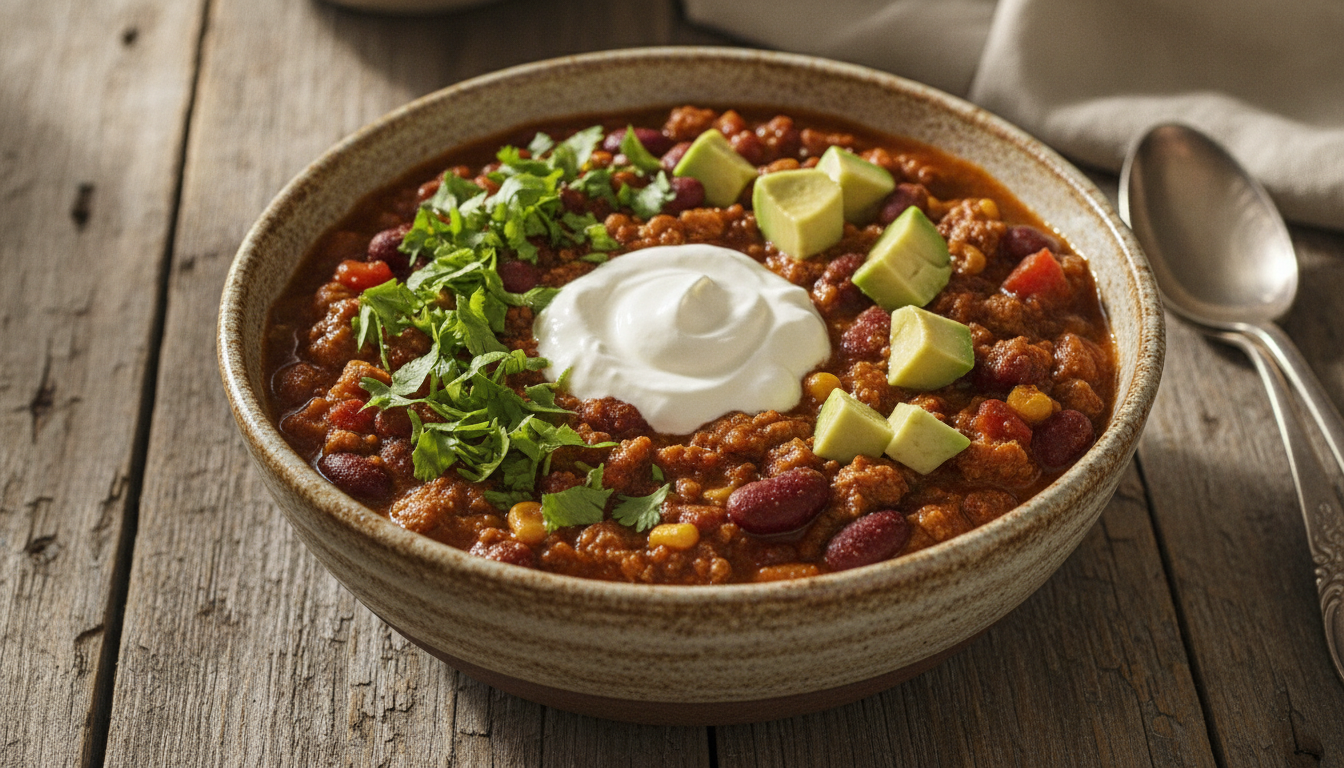
Finding a satisfying vegan chili that delivers deep, complex flavor can feel like an impossible quest. Most recipes fall flat, tasting bland or watery.
This recipe changes everything. We have perfected a formula that creates rich, hearty chili bursting with savory depth.
The secret lies in layering spices correctly and building flavor at each step. You will discover how to make chili that even meat-lovers request again and again.
This recipe takes about forty-five minutes from start to finish. The result is a pot of thick, aromatic chili that tastes like it simmered for hours.
Ready to Master Plant-Based Cooking?
Unlock hundreds of flavor-packed vegan recipes and cooking techniques that will revolutionize your kitchen. Transform simple ingredients into restaurant-quality meals your whole family will love.
Why This Vegan Chili Recipe Stands Above the Rest
Most vegan chili recipes rely on a single can of beans and basic chili powder. This approach produces one-dimensional flavor that disappoints.
Our method uses three types of beans for varied texture. We also toast whole spices before adding ground powder.
The toasting process releases essential oils in the spices. This creates aromatic complexity that transforms the entire pot.
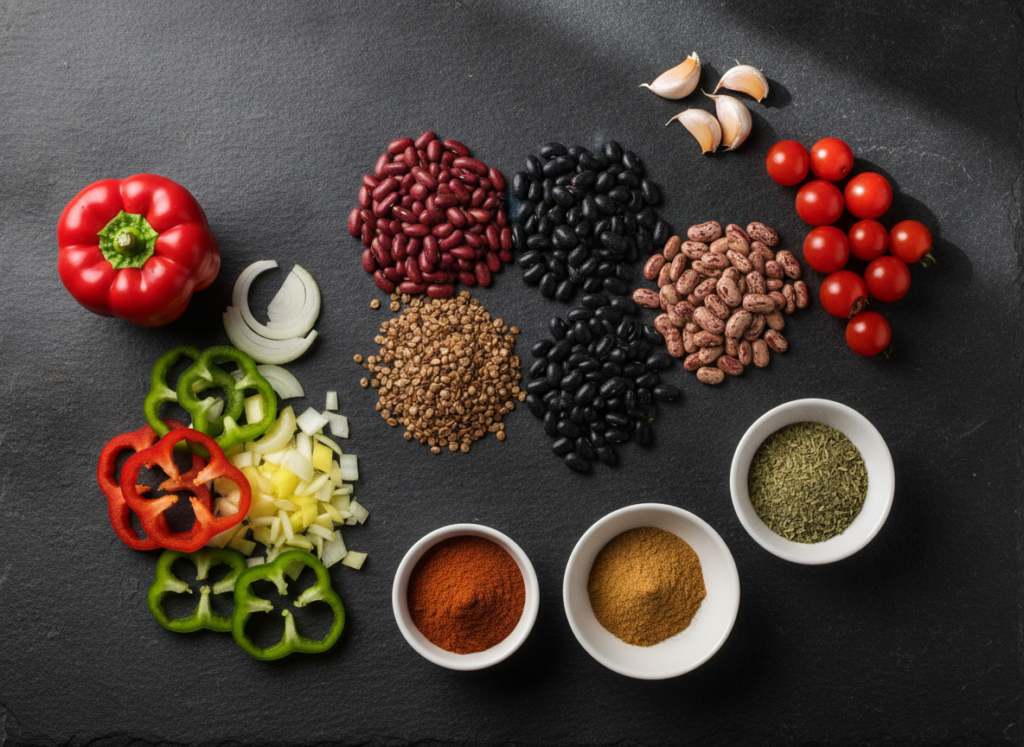
We build layers of flavor by sautéing vegetables until caramelized. This step develops natural sweetness that balances the heat.
Adding soy sauce might seem unusual in chili. However, it contributes umami depth that mimics the savory quality of meat.
What Makes This Recipe Special
- Three bean varieties create perfect texture contrast
- Layered spice technique builds complex flavor
- Natural umami from soy sauce adds savory depth
- Caramelized vegetables provide balanced sweetness
- Thick consistency without flour or cornstarch
Common Mistakes to Avoid
- Adding all spices at once without toasting
- Using only one type of bean
- Skipping the vegetable caramelization step
- Adding too much liquid too early
- Not adjusting seasoning at the end
The recipe scales easily for meal prep. You can double or triple quantities without adjusting cooking times significantly.
Take Your Vegan Cooking to the Next Level
Learn professional cooking techniques that make plant-based meals irresistible. Access step-by-step video tutorials and proven methods used by top vegan chefs worldwide.
Essential Ingredients for Perfect Vegan Chili
Quality ingredients make the difference between good chili and extraordinary chili. Each component plays a specific role in building flavor.
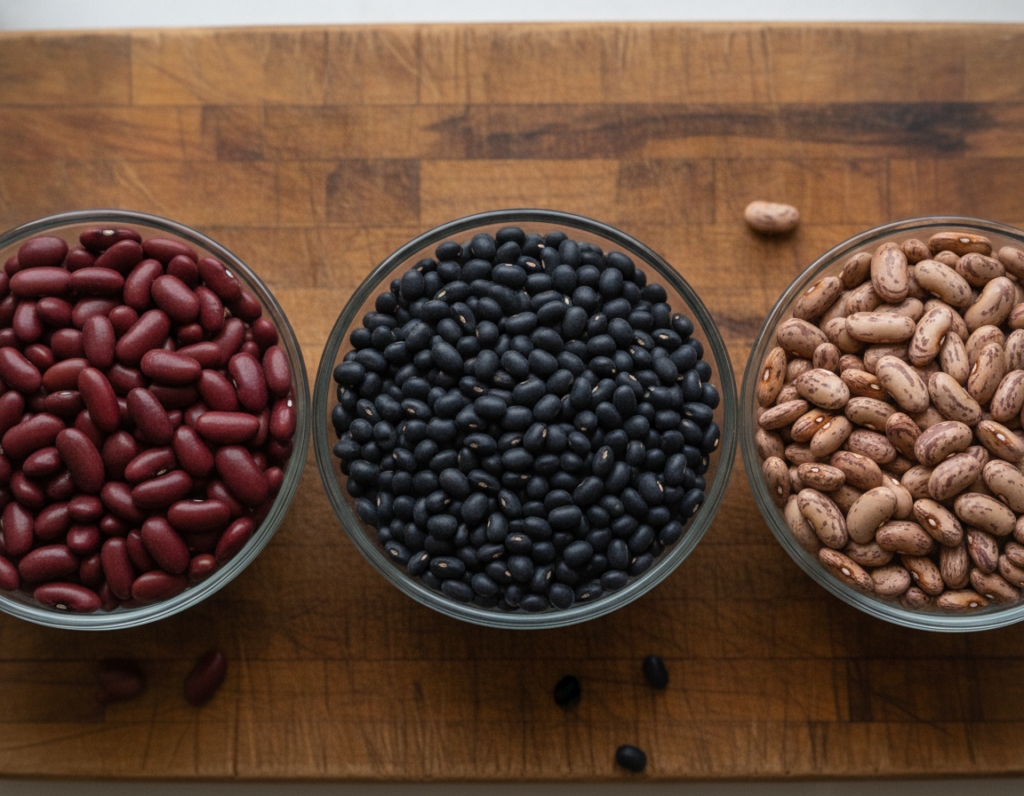
The foundation starts with beans. We use kidney beans for their firm texture and ability to hold shape during cooking.
The Bean Trio That Creates Perfect Texture
Black beans contribute earthy flavor and creamy texture when partially broken down. They also add visual contrast to the pot.
Pinto beans offer a neutral base that absorbs surrounding flavors. Their soft texture helps thicken the chili naturally.
You can use canned beans to save time. Just drain and rinse them thoroughly before adding to the pot.
For dried beans, soak overnight and cook until tender. This method produces firmer beans with better texture control.
Spices and Seasonings That Build Complexity
Chili powder forms the flavor base. Use a quality blend that contains multiple dried peppers rather than just cayenne.
We add extra cumin for earthy warmth. Ground cumin and whole cumin seeds both appear in this recipe for layered flavor.
| Ingredient | Quantity | Purpose | Substitution |
| Chili Powder | 3 tablespoons | Base flavor and color | Mix paprika with cayenne |
| Ground Cumin | 2 tablespoons | Earthy warmth | Coriander (milder) |
| Oregano | 1 tablespoon | Herbal brightness | Italian seasoning |
| Smoked Paprika | 1 teaspoon | Smoky depth | Regular paprika plus liquid smoke |
| Soy Sauce | 2 tablespoons | Umami and saltiness | Tamari or coconut aminos |
Oregano adds herbal notes that brighten the heavy spices. Mexican oregano works best if you can find it.
Smoked paprika contributes a subtle smoky quality. This spice mimics the depth you would get from smoked meat.
Vegetables and Aromatics
Yellow onion provides the aromatic base. Dice it finely so it melts into the sauce during cooking.
Bell peppers add sweetness and texture. Use a mix of red and green peppers for visual appeal and flavor complexity.
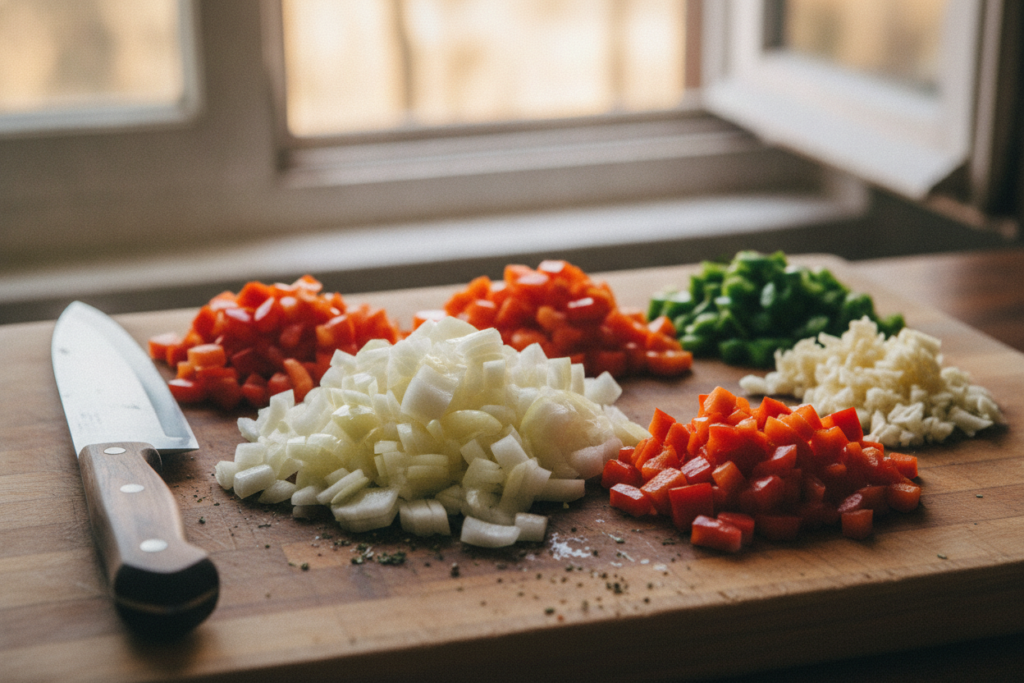
Fresh garlic brings pungent flavor that mellows during cooking. Use at least six cloves for noticeable garlic presence.
Tomatoes create the liquid base. We use both crushed tomatoes and diced tomatoes for varied texture.
Liquid Components
Vegetable broth adds savory depth without animal products. Choose low-sodium broth so you control salt levels.
The broth should be rich and flavorful on its own. Weak broth produces weak chili.
Some recipes call for beer or coffee. These additions contribute bitterness that balances sweetness from vegetables and tomatoes.
Water works in a pinch. However, broth produces noticeably richer results worth the minimal extra cost.
Essential Equipment for Making Vegan Chili
The right tools make cooking faster and more enjoyable. You do not need specialized equipment for this recipe.
Cookware Essentials
A large, heavy-bottomed pot prevents scorching during the initial sauté. We recommend at least six-quart capacity for this recipe.
Dutch ovens work perfectly because they distribute heat evenly. Cast iron retains heat well and can transition from stovetop to oven.
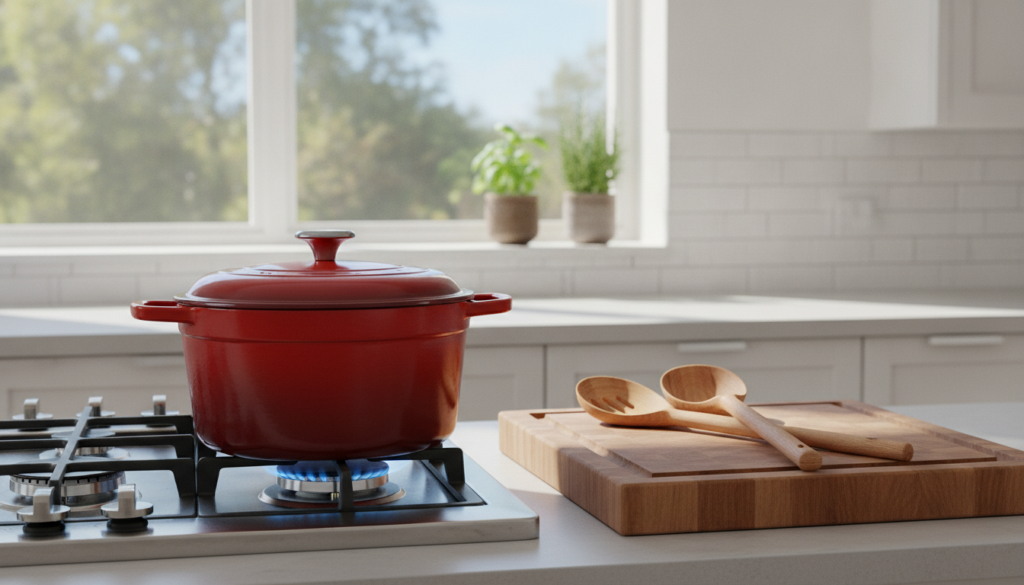
Stainless steel pots also work well. Just watch the heat level carefully during the vegetable cooking stage.
Avoid thin aluminum pots that create hot spots. These cause ingredients to stick and burn.
Cutting and Prep Tools
A sharp chef knife makes vegetable prep quick and safe. Dull knives require more pressure and slip easily.
You will need a large cutting board with enough space for all vegetables. Wood or plastic both work fine.
A garlic press speeds up garlic preparation. However, mincing by hand produces slightly better texture and flavor.
Build Your Perfect Plant-Based Kitchen
Discover the essential tools and equipment that make vegan cooking effortless. Learn which gadgets actually matter and which ones waste money and counter space.
Measuring and Mixing
Measuring spoons and cups ensure consistent results. This recipe tolerates some variation, but accurate spice measurements matter.
A wooden spoon prevents scratching your pot surface. It also will not conduct heat like metal spoons.
Keep a ladle handy for serving. The best size holds about one cup of chili per scoop.
Step-by-Step Instructions for Making Vegan Chili
Follow these steps carefully for best results. Each stage builds flavor that carries through to the finished dish.
Stage One: Preparing Your Ingredients
Start by preparing all vegetables before you begin cooking. This approach prevents burning while you chop mid-process.
Dice the yellow onion into quarter-inch pieces. Smaller pieces cook faster and integrate better into the sauce.
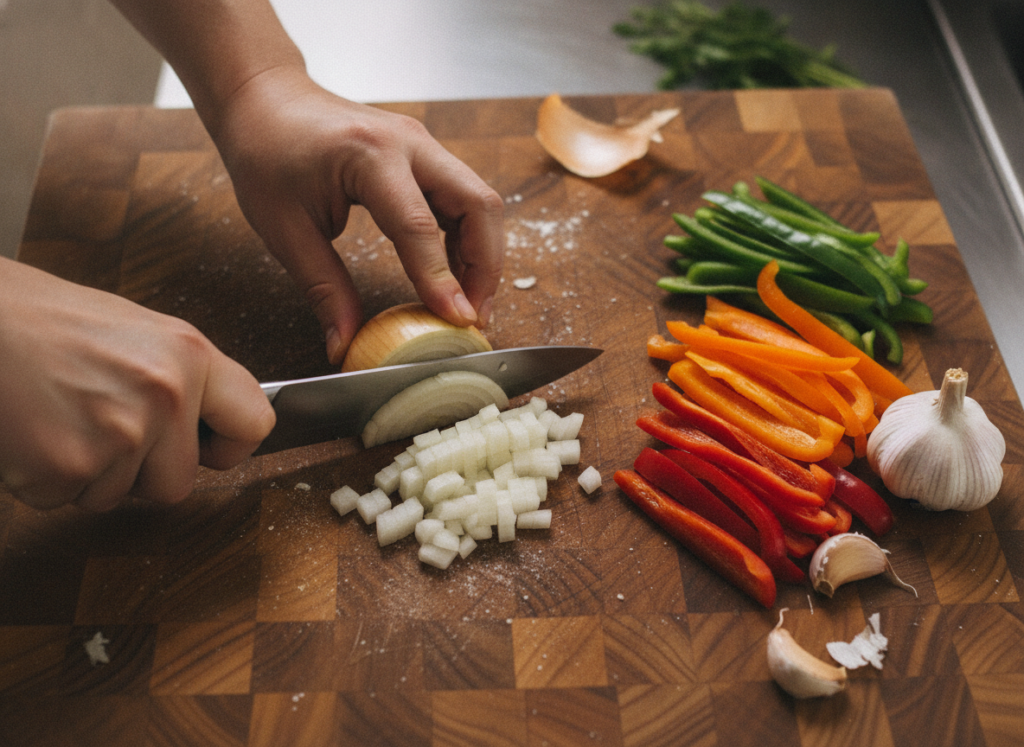
Cut bell peppers into similar-sized pieces as the onion. Consistent sizing ensures even cooking throughout.
Mince garlic finely or press it through a garlic press. The smaller the pieces, the more flavor they release.
Measure out all spices into a small bowl. Having them ready prevents scrambling when the pot gets hot.
Stage Two: Building the Flavor Base
Heat two tablespoons of oil in your pot over medium-high heat. The oil should shimmer but not smoke.
Add the diced onion and cook for five minutes. Stir occasionally until the pieces turn translucent and edges brown.
This caramelization process develops natural sugars in the onion. Do not rush this step by turning up the heat too high.

Add bell peppers to the pot and cook for another four minutes. They should soften but retain some texture.
Stir in minced garlic and cook for thirty seconds. Garlic burns quickly, so watch it carefully.
Stage Three: Toasting and Adding Spices
Push vegetables to the sides of the pot. Add chili powder to the center and toast for thirty seconds.
The powder will darken slightly and smell intensely aromatic. This signals the oils have released.
Quickly stir in cumin, oregano, and smoked paprika. Mix everything together thoroughly.
Add one teaspoon of salt and half a teaspoon of black pepper. You will adjust seasoning later, so do not oversalt now.
Stage Four: Adding Liquids and Beans
Pour in crushed tomatoes and diced tomatoes with their juice. Stir to incorporate all the spices from the bottom.
Add vegetable broth gradually while stirring. Start with three cups and add more later if needed.
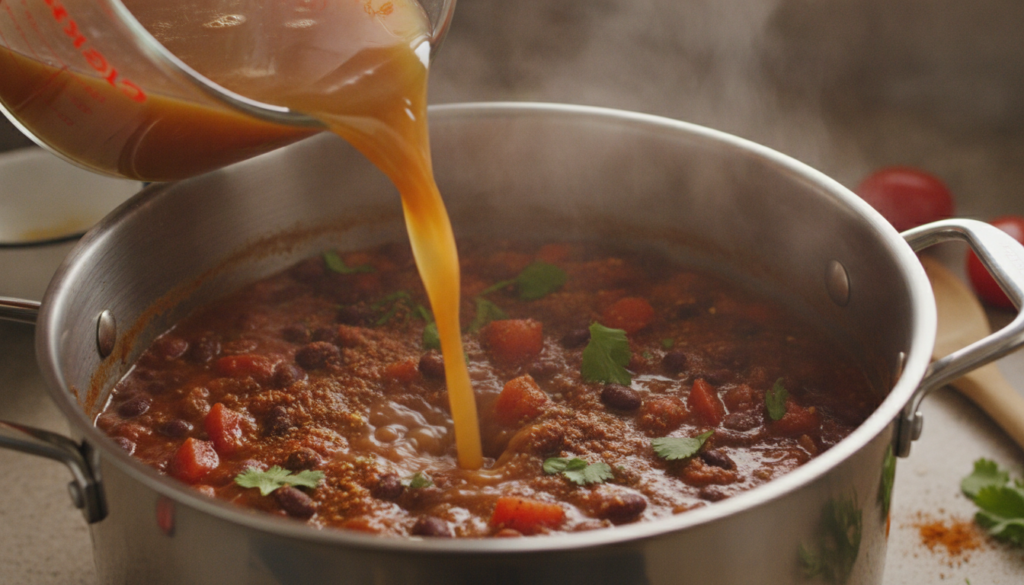
Drain and rinse your beans thoroughly. Add all three types to the pot and stir gently.
Pour in soy sauce and stir well. This ingredient adds crucial umami depth to the vegan chili.
Bring the mixture to a boil over medium-high heat. This should take about five minutes.
Stage Five: Simmering to Perfection
Once boiling, reduce heat to maintain a gentle simmer. The surface should show small bubbles but not roll violently.
Partially cover the pot with a lid. This allows some evaporation while preventing too much liquid loss.
Simmer for thirty minutes, stirring every ten minutes. The chili will thicken as it cooks.
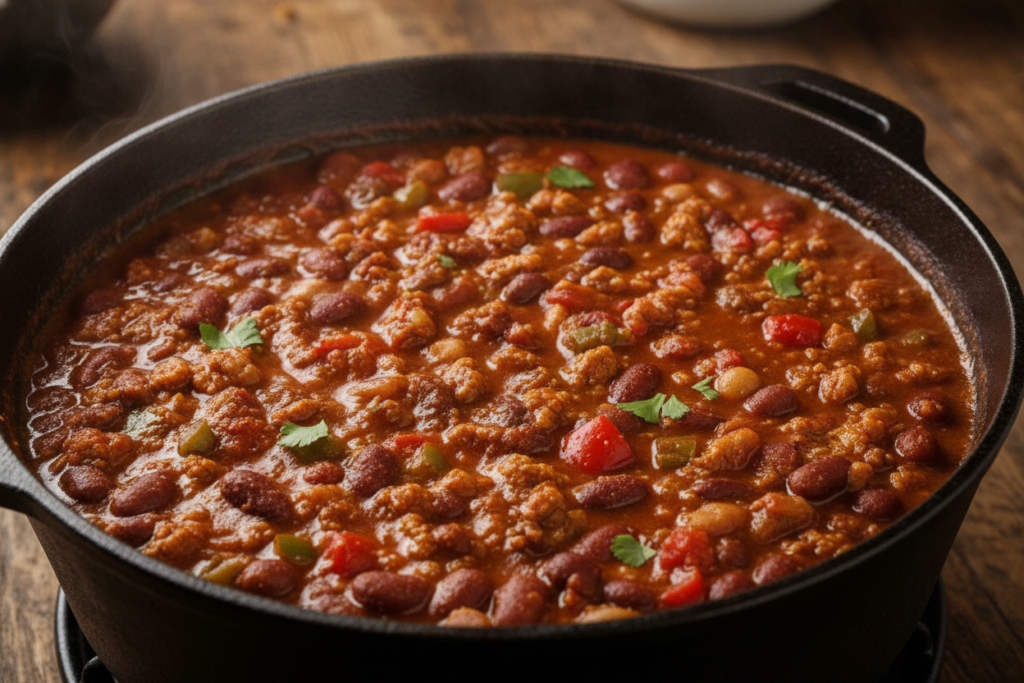
Check consistency after twenty minutes. If the chili seems too thick, add water or broth a quarter cup at a time.
If too thin, continue simmering uncovered for the remaining minutes. The liquid will reduce naturally.
Taste and adjust seasoning. Add more salt, pepper, or chili powder according to your preference.
Final Touches Before Serving
Remove the pot from heat and let it rest for five minutes. This allows flavors to meld and settle.
The chili will continue to thicken as it cools slightly. This resting period improves texture and flavor.
Stir once more before serving. Check that beans are tender and vegetables have fully softened.
Expert Tips for Next-Level Vegan Chili
These professional techniques elevate good chili to exceptional. Small adjustments create significant flavor improvements.
Enhancing Depth and Complexity
Add a tablespoon of cocoa powder or dark chocolate during the simmering stage. This contributes subtle richness without tasting like chocolate.
A splash of apple cider vinegar at the end brightens all the flavors. Just one tablespoon makes a noticeable difference.
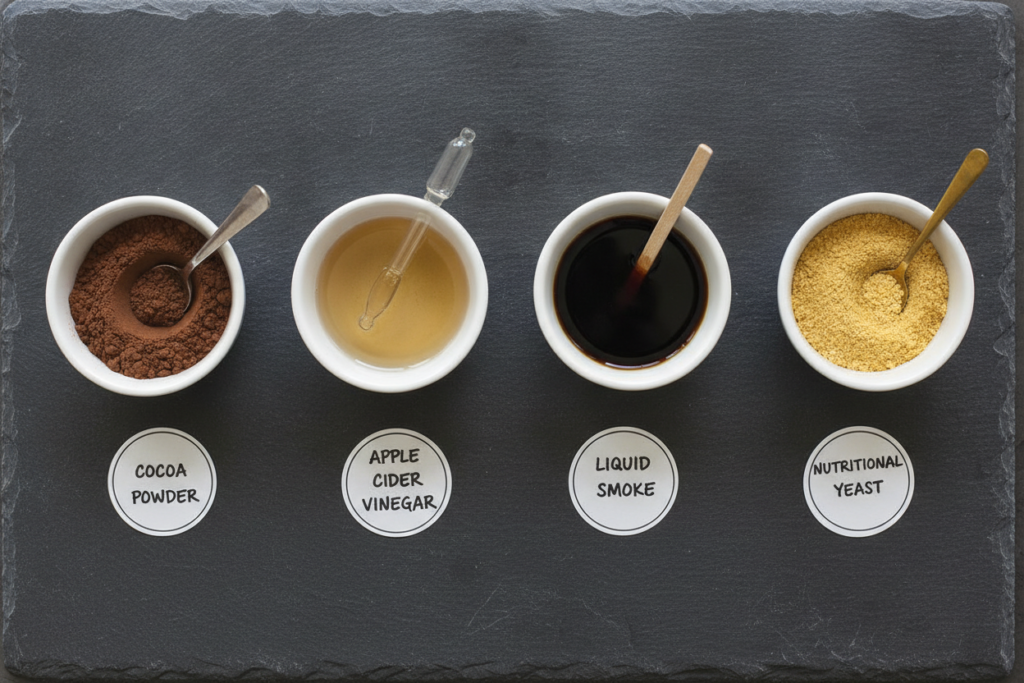
Liquid smoke adds authentic barbecue flavor. Use it sparingly – just half a teaspoon transforms the entire pot.
Nutritional yeast contributes cheesy, nutty flavor. Stir in two tablespoons during the last ten minutes of cooking.
Unlock Secret Flavor Techniques
Professional chefs use specific methods to create restaurant-quality flavor at home. Learn the insider techniques that transform ordinary recipes into extraordinary meals everyone requests.
Texture Optimization
For thicker chili, mash some beans against the pot side with your spoon. This releases starches that thicken the liquid naturally.
Adding a tablespoon of tomato paste creates richer texture and deeper color. Stir it in with the other tomatoes.
Let chili sit overnight in the refrigerator before serving. Flavors develop significantly during this resting period.
Reheat gently over low heat, adding small amounts of water if needed. Chili thickens considerably when cold.
Adjusting Heat Levels
For mild chili, reduce chili powder by one tablespoon. Replace it with sweet paprika to maintain color.
To increase heat, add cayenne pepper one quarter teaspoon at a time. Taste between additions to avoid overshooting.
Fresh jalapeños or serrano peppers contribute bright heat. Add them with the bell peppers at the beginning.
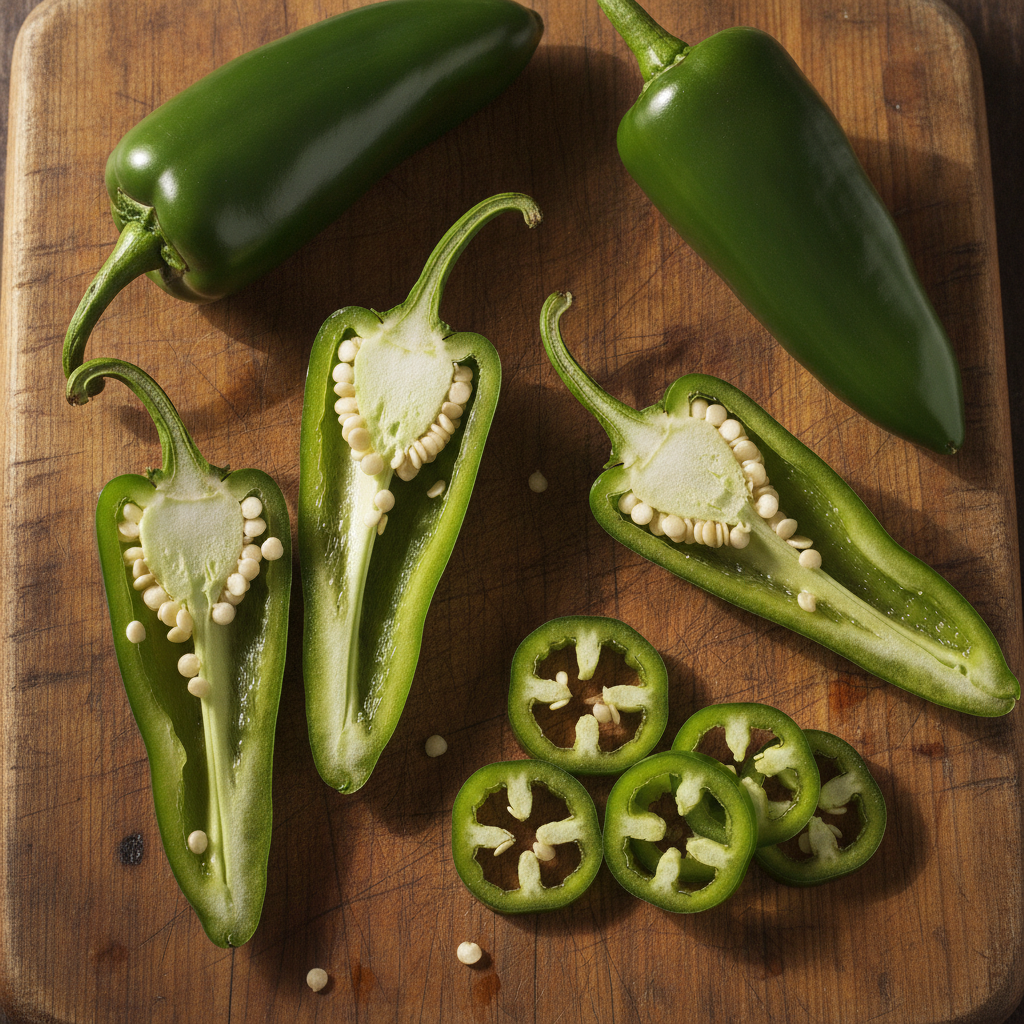
Remove seeds and membranes from hot peppers to reduce heat while keeping flavor. The seeds contain most capsaicin.
Making It Meal-Prep Friendly
This recipe scales perfectly. Double or triple all ingredients using the same cooking time and method.
Cool chili completely before storing. Hot food in sealed containers creates condensation that promotes spoilage.
Portion into individual containers for grab-and-go lunches. This makes weekday meals effortless.
Freeze portions in airtight containers for up to three months. Leave headspace for expansion during freezing.
Creative Variations to Transform Your Vegan Chili
Once you master the base recipe, endless variations keep meals interesting. These adaptations use the same technique with different ingredients.
White Bean Vegan Chili
Replace traditional beans with cannellini, great northern, and navy beans. This creates a lighter-colored chili with milder flavor.
Use green bell peppers exclusively instead of red. Substitute green chiles for some of the chili powder.
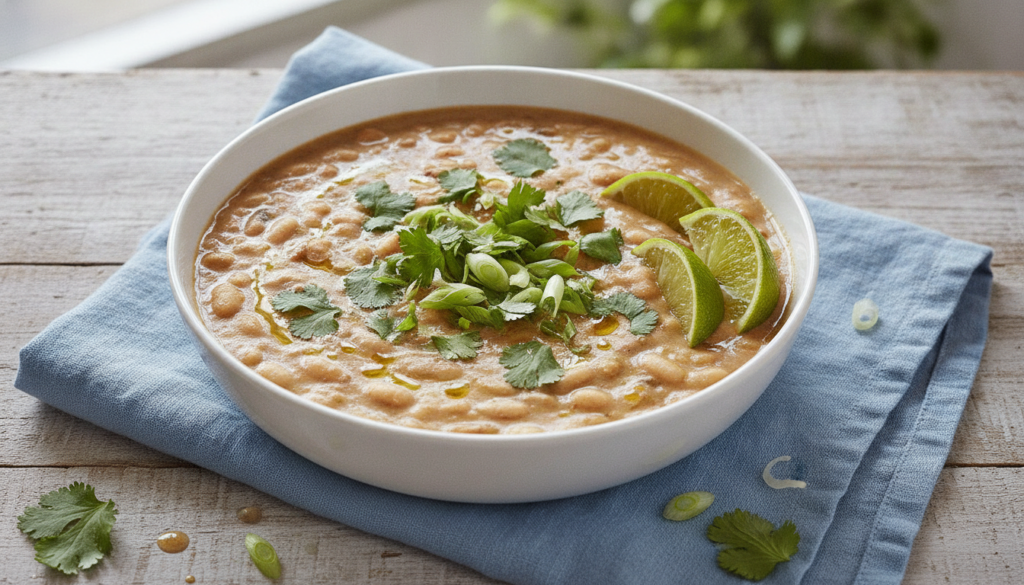
Add fresh corn kernels during the last ten minutes of cooking. They contribute sweetness and textural variety.
Top with fresh cilantro and lime juice before serving. This brightens the milder bean flavors.
Sweet Potato Vegan Chili
Dice two large sweet potatoes into half-inch cubes. Add them when you add the beans.
The sweet potatoes will soften during simmering. They add natural sweetness and extra heartiness.
Reduce beans by one can to compensate for the additional volume. This maintains proper chili consistency.
Sweet potato chili pairs excellently with cornbread. The flavors complement each other perfectly.
Smoky Chipotle Version
Add two tablespoons of chopped chipotle peppers in adobo sauce. These contribute both heat and smoky flavor.
Increase smoked paprika to one tablespoon for more intense smokiness. Reduce regular chili powder by one tablespoon.
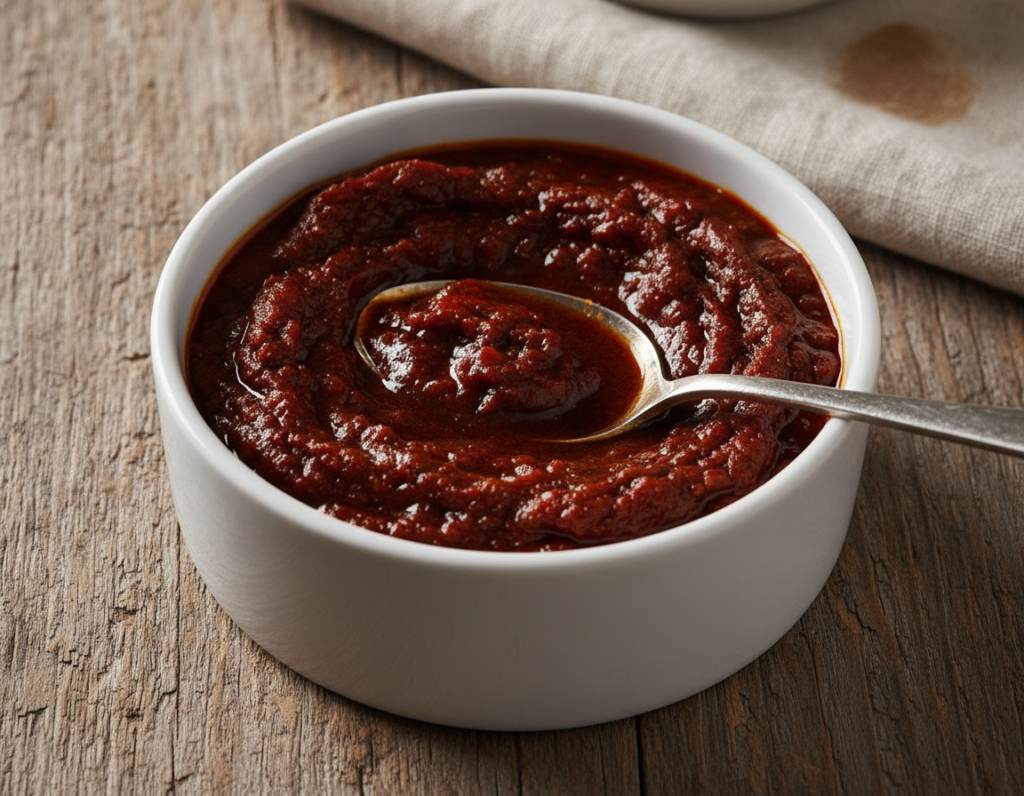
This variation works beautifully as taco filling. The bold flavor stands up to additional toppings.
Explore Endless Recipe Variations
Access a comprehensive database of plant-based recipe variations and customization guides. Learn how to adapt any recipe to your taste preferences and dietary needs with confidence.
Pumpkin Vegan Chili
Add one fifteen-ounce can of pure pumpkin puree with the tomatoes. This creates creamy texture and subtle sweetness.
Increase cumin to three tablespoons to balance the pumpkin flavor. Add one teaspoon of cinnamon for warmth.
This version shines during autumn months. The seasonal flavors feel especially comforting as weather cools.
High-Protein Variation
Add one cup of dried textured vegetable protein with the beans. Rehydrate it first in hot water for ten minutes.
Include one cup of cooked lentils for additional protein and fiber. Green or brown lentils work best.
This variation satisfies hunger longer due to increased protein content. Perfect for active individuals or post-workout meals.
Proper Storage and Reheating Methods
Correct storage preserves flavor and texture. These methods keep your chili tasting fresh for days or months.
Refrigerator Storage
Cool chili to room temperature before refrigerating. This process should take no more than two hours.
Transfer to an airtight container with a secure lid. Glass containers work better than plastic for preventing odor absorption.
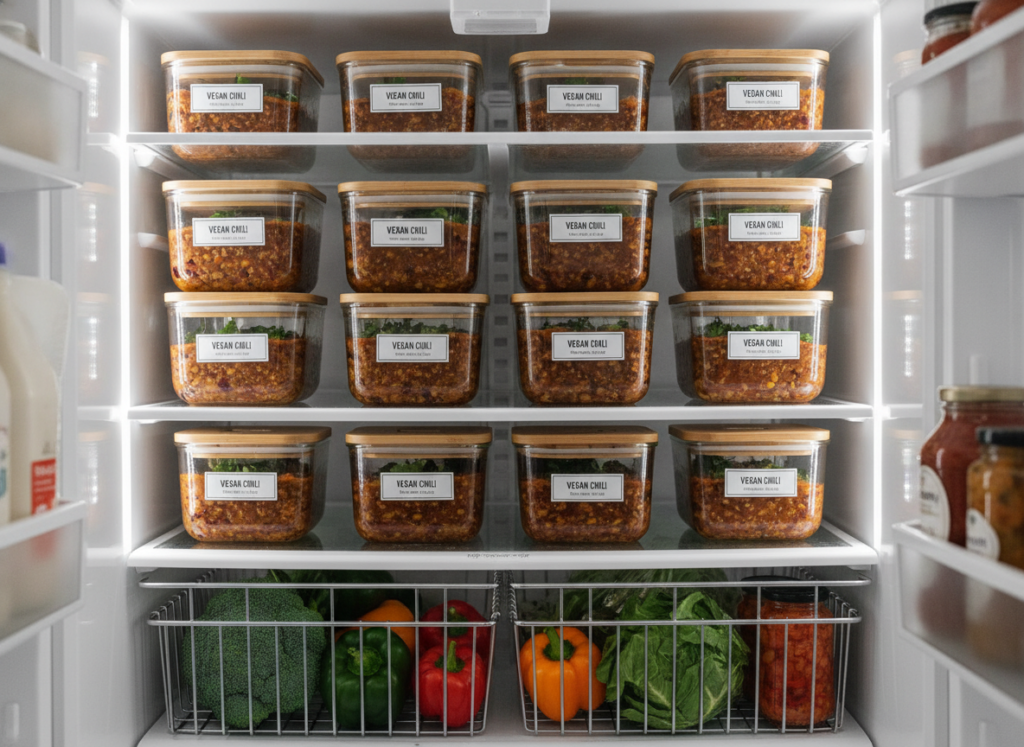
Store in the refrigerator for up to five days. Always check for off odors before consuming older leftovers.
The chili will thicken considerably when cold. This is normal and does not indicate spoilage.
Freezer Storage
Portion chili into individual serving sizes before freezing. This allows you to thaw only what you need.
Use freezer-safe containers or heavy-duty freezer bags. Remove as much air as possible to prevent freezer burn.
Label containers with the date and contents. Frozen chili maintains quality for three months.
Leave one inch of headspace in rigid containers. Liquid expands during freezing and can crack full containers.
Reheating Best Practices
Thaw frozen chili in the refrigerator overnight. This gradual process maintains better texture than quick thawing.
Reheat on the stovetop over medium-low heat. Stir frequently to prevent sticking and ensure even heating.
Add water or vegetable broth as needed to restore original consistency. Start with two tablespoons and add more if necessary.
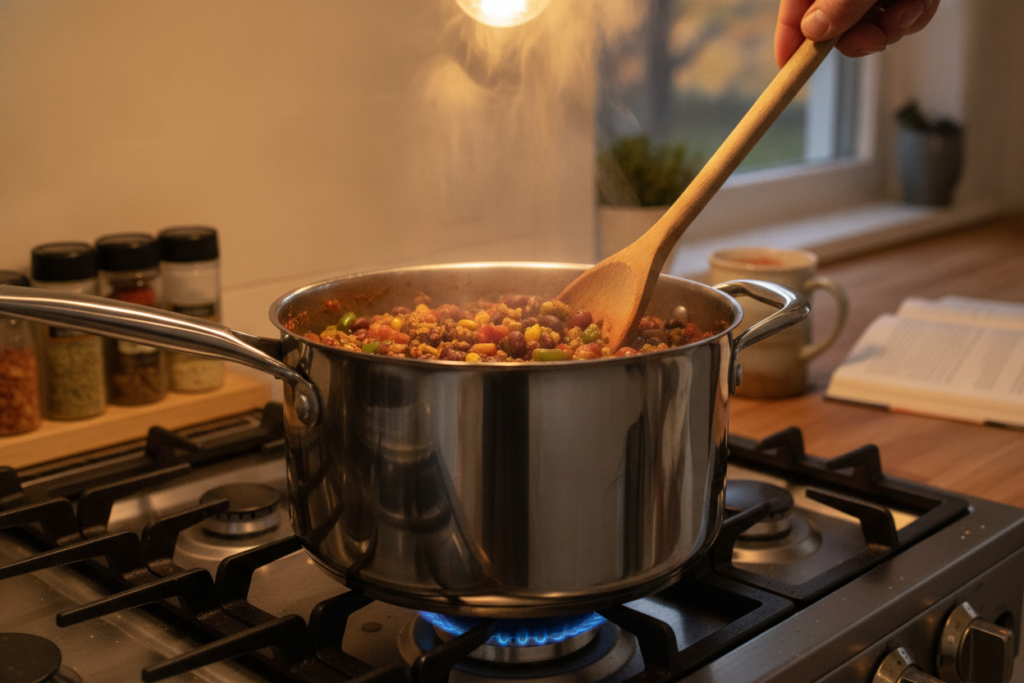
Microwave reheating works for individual portions. Use medium power and stir every minute for even heating.
Cover the container with a microwave-safe lid or paper towel. This prevents splattering while allowing steam to escape.
Reheated chili often tastes better than fresh. The flavors continue developing during storage.
Perfect Serving Ideas and Toppings
The right accompaniments transform good chili into a memorable meal. These serving suggestions complement without overwhelming the main dish.
Classic Toppings
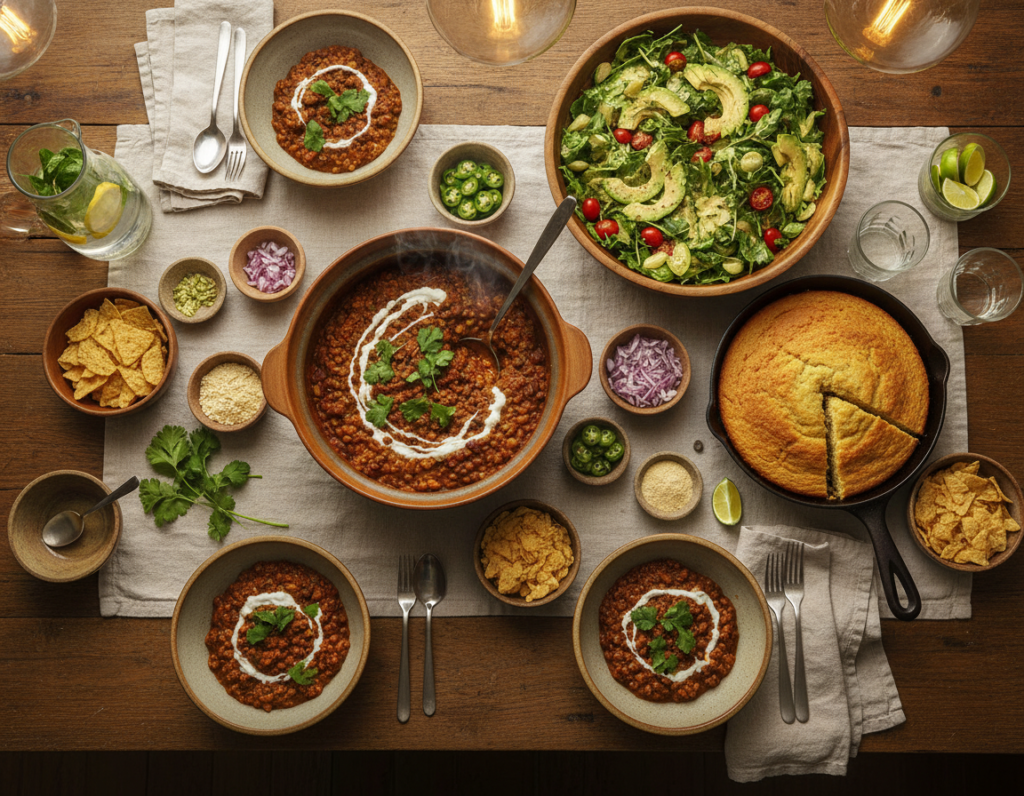
Vegan sour cream adds cooling richness that balances the spices. Make your own by blending soaked cashews with lemon juice.
Store-bought vegan sour cream also works well. Look for brands with minimal ingredients and no artificial flavors.
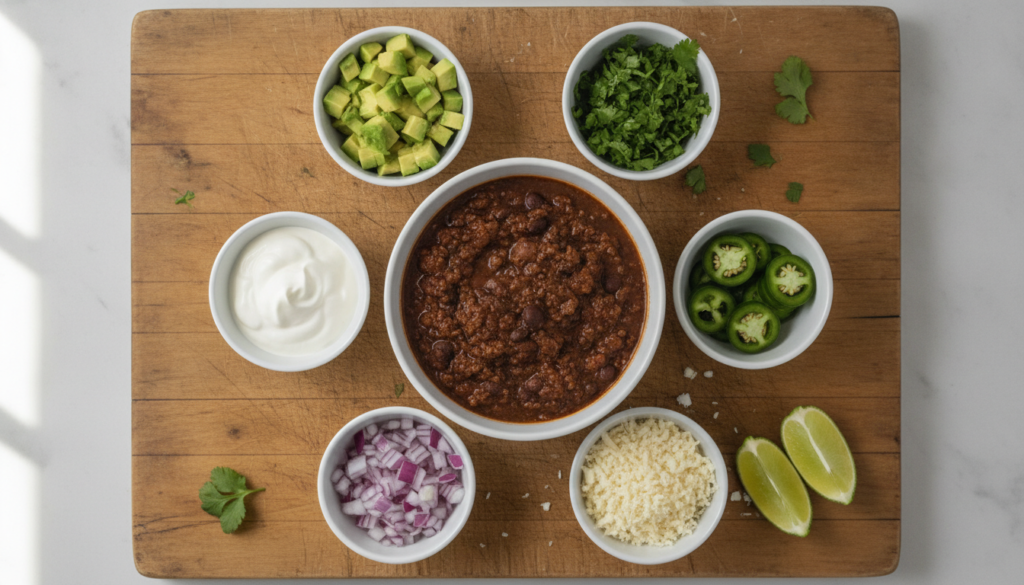
Fresh avocado slices contribute creamy texture and healthy fats. Add them just before serving to prevent browning.
Diced red onion provides sharp, fresh contrast to the cooked flavors. Soak the pieces in cold water first to reduce bite.
Fresh cilantro brightens the entire bowl. Some people taste soap when eating cilantro due to genetic factors.
Sliced jalapeños allow diners to customize heat levels. Offer them on the side rather than mixed in.
Bread and Grain Pairings
Cornbread is the traditional chili accompaniment. The slight sweetness complements savory, spicy flavors perfectly.
Crusty bread works well for dipping. Choose artisan-style loaves with substantial texture.
Serve over rice for a heartier meal. Brown rice adds nutty flavor and extra fiber.
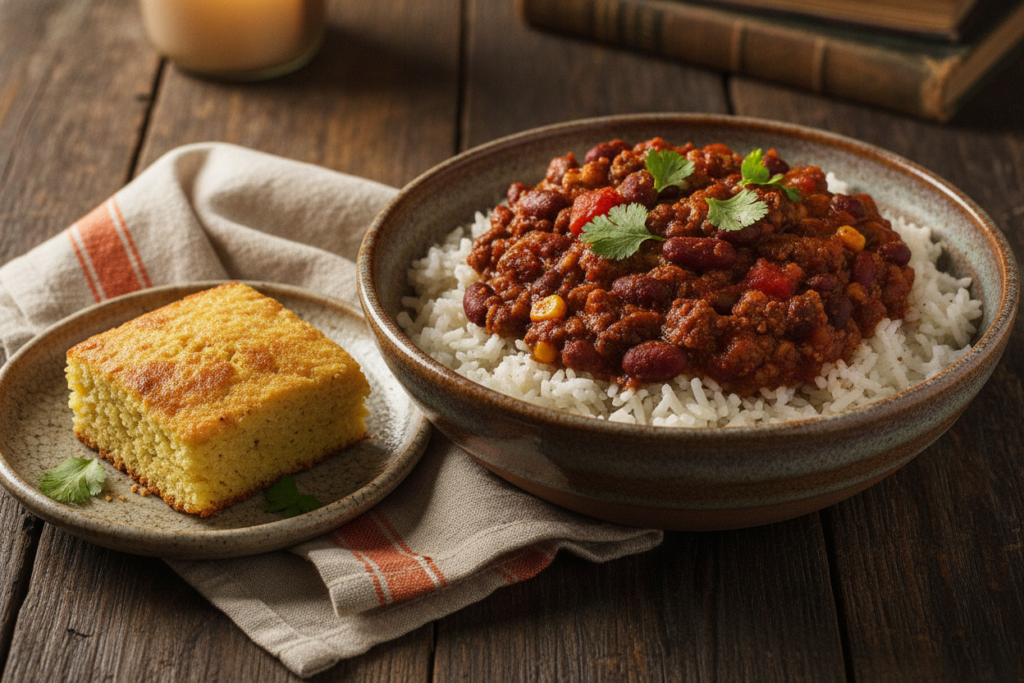
Quinoa makes an excellent gluten-free base. Its mild flavor does not compete with the chili.
Tortilla chips add satisfying crunch. Crumble them over the top or serve on the side for dipping.
Create Complete Plant-Based Meals
Master the art of pairing dishes and creating balanced vegan meals. Learn which flavors complement each other and how to plan menus that satisfy and nourish.
Creative Serving Methods
Use chili as a baked potato topping. Split baked potatoes and fill with generous amounts of chili.
Make chili cheese fries by pouring hot chili over crispy fries. Top with vegan cheese sauce and green onions.
Fill tacos or burritos with chili instead of traditional fillings. The thick consistency works perfectly in wraps.
Create chili mac by mixing with cooked pasta. Elbow macaroni is traditional, but any shape works.
Side Dish Recommendations
Simple green salad provides fresh contrast. Dress it lightly with vinaigrette to avoid competing flavors.
Roasted vegetables complement without overwhelming. Try Brussels sprouts, broccoli, or cauliflower.
Coleslaw adds cool crunch that balances hot, spicy chili. Make it with vegan mayo or oil-based dressing.
Health Benefits and Nutritional Information
This vegan chili delivers substantial nutrition along with satisfying flavor. Understanding the benefits helps you make informed meal choices.
Protein and Fiber Content
Beans provide complete protein when combined with grains. One bowl delivers approximately fifteen grams of plant protein.
The fiber content supports digestive health and promotes satiety. Each serving contains about twelve grams of dietary fiber.
This combination of protein and fiber stabilizes blood sugar levels. You will feel satisfied for hours after eating.
Key Nutrients Per Serving
- Calories: approximately 320
- Protein: 15 grams
- Fiber: 12 grams
- Iron: 25% daily value
- Folate: 20% daily value
- Potassium: 18% daily value
Health-Supporting Properties
- Low in saturated fat
- Cholesterol-free naturally
- Rich in antioxidants from spices
- Supports heart health
- Promotes digestive regularity
- Helps maintain stable energy
Vitamin and Mineral Profile
Bell peppers contribute significant vitamin C. One serving provides about forty percent of your daily requirement.
Tomatoes offer lycopene, an antioxidant linked to heart health. Cooking tomatoes actually increases lycopene availability.
Beans supply iron in quantities that rival meat sources. Plant iron absorbs better when consumed with vitamin C.
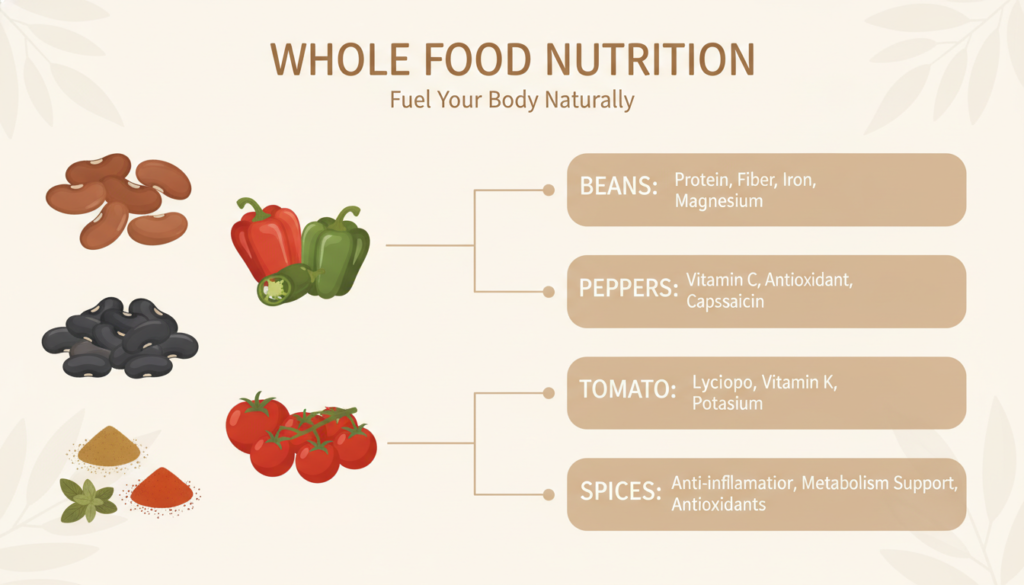
The combination of ingredients in this recipe naturally optimizes nutrient absorption. This is one advantage of whole-food plant-based cooking.
Adaptations for Specific Dietary Needs
For low-sodium diets, use no-salt-added canned goods. Replace regular soy sauce with low-sodium tamari.
Increase potassium by adding extra diced tomatoes or tomato sauce. This helps balance sodium naturally.
The recipe is naturally gluten-free when using certified gluten-free soy sauce or tamari. Check all packaged ingredients for hidden gluten.
For oil-free cooking, sauté vegetables in vegetable broth instead. Use a quarter cup and add more as needed to prevent sticking.
Common Problems and Solutions
Even experienced cooks encounter occasional issues. These solutions address the most common vegan chili challenges.
Fixing Consistency Issues
Watery chili results from too much liquid or insufficient simmering time. Continue cooking uncovered to evaporate excess moisture.
Add tomato paste one tablespoon at a time to thicken quickly. This also intensifies tomato flavor.
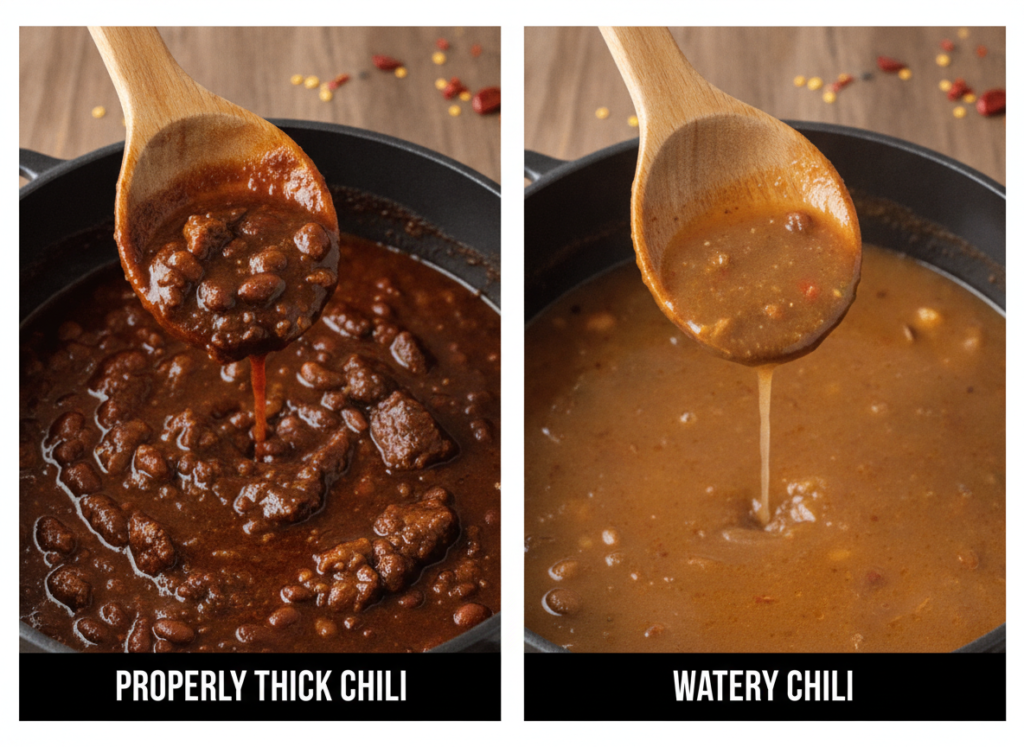
Mash some beans against the pot side with a potato masher. The released starches naturally thicken the liquid.
Overly thick chili needs gradual liquid addition. Add water or broth two tablespoons at a time while stirring.
Balancing Flavors
Too salty chili can be rescued by adding diced potatoes. They absorb excess salt during cooking.
Remove the potatoes before serving, or leave them in for extra heartiness. Both approaches work well.
Excessive heat requires balance rather than dilution. Add a tablespoon of sugar or maple syrup to counteract spiciness.
Bland chili needs both salt and acid. Add salt first, then brighten with vinegar or lime juice.
Texture Problems
Mushy beans indicate overcooking or using overly soft canned beans. Choose firm bean varieties and reduce cooking time.
Hard beans suggest undercooking or old dried beans. Extend simmering time or start with properly soaked beans.
Add crunchy toppings to compensate for soft texture throughout. Tortilla chips, fresh vegetables, and nuts all help.
Frequently Asked Questions About Vegan Chili
Can I make vegan chili in a slow cooker?
Yes, slow cookers work excellently for vegan chili. Sauté the vegetables and toast spices in a pan first for better flavor development.
Transfer everything to the slow cooker and cook on low for six to eight hours. The extended cooking time deepens flavors significantly.
Add delicate ingredients like fresh herbs during the last thirty minutes. This preserves their bright flavor and color.
How can I make vegan chili in an Instant Pot?
Use the sauté function to cook vegetables and toast spices first. This step remains important even with pressure cooking.
Add all remaining ingredients and pressure cook on high for fifteen minutes. Allow natural pressure release for ten minutes, then quick release.
The chili will be thinner initially but thickens as it cools. Use the sauté function again to reduce if needed.
What beans work best for vegan chili?
Kidney beans, black beans, and pinto beans create ideal texture variety. Each type contributes different characteristics to the final dish.
You can substitute with other varieties like navy beans or chickpeas. However, the texture and appearance will change.
Avoid using only one bean type. The variety creates more interesting texture and visual appeal.
Is vegan chili actually healthy?
Vegan chili provides excellent nutrition with high fiber and plant protein. It contains significantly less saturated fat than meat-based versions.
The combination of beans and vegetables delivers substantial vitamins and minerals. Lycopene from tomatoes and antioxidants from spices offer additional benefits.
Watch sodium levels if using canned ingredients. Choose low-sodium options when available for the healthiest version.
Can I freeze vegan chili?
Vegan chili freezes exceptionally well for up to three months. Cool completely before freezing to maintain the best texture.
Portion into individual servings for convenient meal prep. Leave headspace in containers to allow for expansion during freezing.
Thaw overnight in the refrigerator for best results. Reheat gently and add liquid as needed to restore consistency.
What makes vegan chili taste meaty without meat?
Umami-rich ingredients like soy sauce create savory depth. Mushrooms, tomato paste, and nutritional yeast also contribute meaty qualities.
Proper spice toasting releases oils that add complexity. This technique develops flavors that mimic the richness of meat.
Textured vegetable protein or lentils add satisfying chew. These ingredients provide substance that makes the dish feel hearty.
Start Making Amazing Vegan Chili Today
You now have everything needed to create restaurant-quality vegan chili at home. This recipe delivers bold flavor that satisfies vegans and omnivores equally.
The technique works with countless variations. Once you master the basic method, experimentation becomes easy and fun.

Remember that practice improves results. Your second batch will taste even better than your first as you learn your preferences.
This chili represents more than just a meal. It demonstrates how plant-based cooking can be satisfying, flavorful, and accessible to everyone.
The recipe scales easily for crowds or meal prep. Make a big batch and enjoy convenient, healthy meals throughout the week.
Share this recipe with friends and family. Good food brings people together regardless of dietary preferences.
Transform Your Entire Cooking Approach
This vegan chili recipe is just the beginning. Discover comprehensive cooking programs that teach you to create incredible plant-based meals for every occasion. Join thousands who have revolutionized their kitchens and health through better cooking skills.
Start cooking today and experience the difference quality ingredients and proper technique make. Your taste buds will thank you.