Make Birthday Cake Cookies: Delicious Homemade Treats
Surprising fact: nearly one in three home bakers try a new fun recipe each month, and these soft, from‑scratch treats are a top pick.
This Website contains affiliate links. That means I may earn a small commission if you purchase through my links, at no extra cost to you.
Start with pantry staples — unsalted butter, granulated and brown sugar, vanilla, flour, cornstarch, baking soda, salt, and rainbow jimmies for color. This simple recipe captures classic vanilla cake flavor in a soft, chewy bite without any boxed mix.
Quick method at a glance: cream butter and sugars, add egg and vanilla, whisk dry ingredients, fold in sprinkles, chill the dough, scoop and bake at 350°F. Pull when edges set and centers look puffy for the best chew.
Smart tips: chill dough 15–60 minutes to control spread, use rainbow jimmies to avoid color bleed, and swap white chocolate or classic chocolate chips if you like. Store in an airtight container at room temperature for 4–5 days, or freeze dough or baked treats up to 3 months.
Key Takeaways
- These birthday cake cookies are made from scratch with common ingredients and simple tools.
- Follow the 350°F bake temp and pull when centers are slightly puffy for chewiness.
- Chill dough 15–60 minutes to prevent excess spread and improve texture.
- Use rainbow jimmies to keep colors bright and avoid bleeding.
- Store at room temp for days or freeze for up to 3 months for make‑ahead ease.
Why You’ll Love These Chewy, Sprinkle‑Packed Cookies
These soft, sprinkle-studded treats pair nostalgic vanilla flavor with a chewy, bakery-style bite.
Flavor and texture: Expect a true vanilla birthday cake note with a tender center and lightly set edges. Creaming room-temperature butter with granulated and brown sugar creates lift and subtle caramel undertones. Bake at 350°F and pull the batch slightly underdone to keep chewiness.
From-scratch ease: No boxed mix is required. Pantry staples — flour, cornstarch, baking soda, real vanilla, and butter — deliver reliable results. Add a splash of almond extract if you want deeper cake-like notes.
| Feature | Why it matters | Quick tip |
|---|---|---|
| Vanilla flavor | Gives classic sweet base | Use real vanilla extract |
| Butter & sugars | Texture and caramel notes | Cream until light and fluffy |
| Sprinkles | Color without changing dough | Use rainbow jimmies to avoid bleed |
| Optional chips | Adds richness | White chocolate or chocolate chips |
- Simple method and short active time make these ideal for home baking.
- Results: tender centers, lightly set rims, and festive looks for any occasion.
Ingredient Notes and Smart Substitutions
Learn how each ingredient shapes texture so you can tweak the recipe with confidence.
Butter, sugars, and extracts: Use 1/2 cup (113 g) unsalted butter softened to room temperature — soft enough to indent but not greasy. Combine granulated sugar and light brown sugar for lift and chew. Flavor with 1.5 tsp vanilla and, if desired, 1/4–1/2 tsp almond extract while slightly reducing vanilla.
Dry ingredients that deliver structure: Measure all-purpose flour accurately, ideally by weight or spoon-and-level. Too much flour makes dry, cakey results; too little causes excess spread. Add 2 tsp cornstarch, 1/2 tsp baking soda, and 1/2 tsp sea salt (halve salt if using salted butter) for controlled spread and chew.
https://www.youtube.com/watch?v=KWnpoxIP0yE
Sprinkles, chips, and temperature
Choose rainbow jimmies or rainbow sprinkles that hold color. Avoid nonpareils that often bleed. White chocolate chips are optional; they add volume and a touch of sweetness but can be left out for a pure sprinkle version.
- Start with unsalted butter so you control salt; cream it with sugar in a bowl or a stand mixer.
- Measure flour by weight and use 1/2 cup measures carefully to keep the dough consistent.
- Keep butter and eggs at room temperature so wet ingredients form a smooth emulsion and an even bake.
Step‑By‑Step: How to Make the Cookie Dough and Bake
Get the oven warm and a parchment-lined pan set — this small step improves every batch.
Prep and preheat
Preheat oven to 350°F and line a baking sheet with parchment paper. This helps even baking and makes cleanup simple.
Creaming and mixing
In a bowl, cream softened unsalted butter with granulated and brown sugar using a mixer for 2–4 minutes until light and fluffy.
Beat in the egg and vanilla to the wet ingredients until glossy. In a separate bowl, whisk the dry ingredients—flour, salt, cornstarch, and baking soda—so leaveners distribute evenly.
Combine, chill, and portion
Fold dry into wet just until no streaks remain, then gently stir in rainbow sprinkles. Chill the dough 15–60 minutes; if chilled over an hour, let it sit 10 minutes before scooping.
Use a cookie scoop (about 1.5 tablespoons) and place mounds 2 inches apart on the parchment-lined baking sheet.
Bake and cool
Bake 9–12 minutes until edges are set and tops look slightly puffy. Let the cookies rest on the sheet 2–5 minutes, then transfer to a rack to finish setting for clean edges and chewy centers.
- Tip: Visual cues beat exact minutes — pull when edges are set.
- Time-saving: Prepare multiple baking sheets for continuous baking.
Pro Tips for Perfect Birthday Cake Cookie Results
Small technique changes make a big difference in how your batch behaves in the oven.
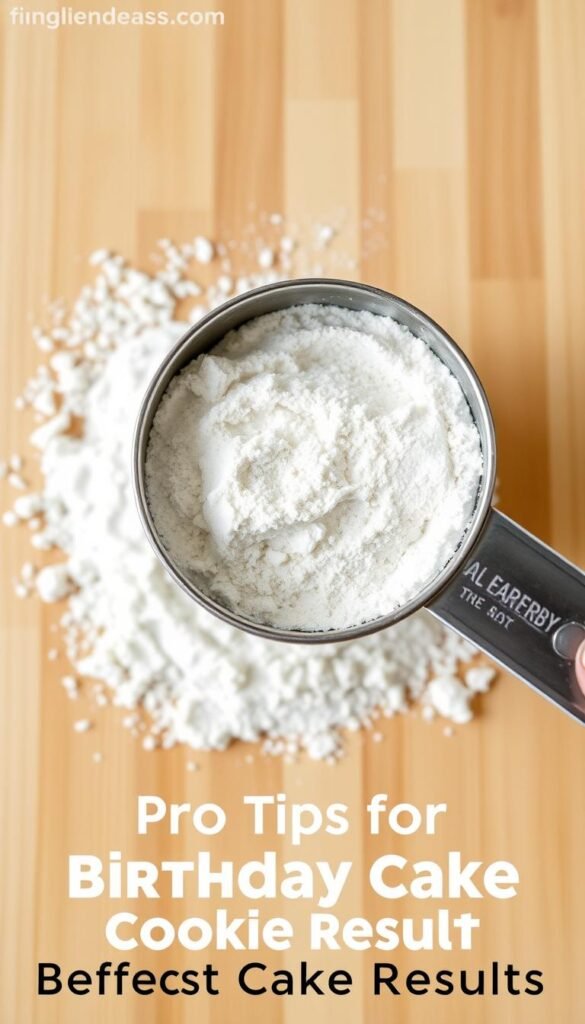
Measure flour right. Weighing flour gives the most reliable result. If you use cups, fluff the canister, spoon the flour into the cup, and level it off to avoid adding up to 25% extra.
Chill the dough to control spread. Plan for 15–30 minutes for a quick rest or up to 60 minutes for thicker centers. If dough firms too much, let it sit a few minutes at room temperature before scooping.
Use parchment paper, not grease, on your pans. Parchment promotes even lift and cleaner edges while greased sheets can cause excess spread and thin, lacy rims.
Pull slightly underdone. When the edges look set but centers are still glossy, remove the tray. Carryover heat finishes the baking and keeps the centers chewy.
- Weigh flour for consistency.
- Chill dough in minutes: 15–60 depending on desired thickness.
- Favor parchment for even baking and neat edges.
- Stop early so carryover temperature yields soft centers.
- Portion evenly to standardize bake time across the pan.
birthday cake cookies Variations and Fun Add‑Ins
A few simple add‑ins transform these soft rounds into crowd‑pleasing treats.
Mix‑ins: Stir in about 12 oz (340 g) of white chocolate chips for creamy sweetness, or swap some for semisweet chocolate chips for a richer bite. For a cleaner, classic funfetti vibe, skip chips and use sprinkles only.
Flavor twists: Add 1/4–1/2 tsp almond extract or a dash of cake batter extract to boost the cake‑like note without masking vanilla.
Color and occasions
Personalize sprinkle colors for team hues or holidays—red/green for Christmas or orange/black for Halloween. Rainbow jimmies resist bleeding and keep colors bright.
Frosted and mashup ideas
Top cooled cookies with a cake‑batter cream cheese frosting for a bakery feel. Or sandwich vanilla ice cream between two cookies and roll the edges in extra rainbow sprinkles for a handheld treat.
- Texture tip: Fold mix‑ins in last and gently to avoid breaking sprinkles.
- Use a slightly larger scoop for thicker cake cookies; add a minute or two to bake time.
- Crumbled cookies make a fun crunchy topping for layer cake or cupcakes.
Storage, Freezing, and Make‑Ahead Instructions
Plan ahead: proper storage saves time and keeps every bite tender and bright.
Room temperature: Cool baked treats completely, then place them in a tightly sealed container. They will stay soft and chewy for about 4–5 days. Add a slice of bread to the container to help maintain moisture; replace the bread when it dries out.
Freeze baked goods: For longer storage, freeze cooled items in a single layer on a baking sheet until firm (about 1 hour). Transfer to an airtight container and store for up to 3 months. Thaw at room temperature for about 30 minutes before serving.
Freeze dough balls: Portion cookie dough into 1–1.5 inch balls, pre‑freeze on a baking sheet, then move to a sealed container or bag. Keep the dough up to 3 months. When baking from frozen, maintain a 350°F temperature and add 1–2 extra minutes to the usual bake time.
Make‑ahead tips
Refrigerate unbaked dough (covered) for up to 3 days when you plan to bake within the week. If chilled dough gets too firm, let it sit a few minutes before scooping.
“Label containers with date and contents so you can rotate stock and plan events with confidence.”
- Use rigid containers for transport to protect edges and sprinkles.
- For parties, bake a day ahead and store in a container; flavor and texture are best within the first two days.
- If a recipe calls for a cup of mix-ins, add them last to preserve color and shape.
Troubleshooting: Spread, Dryness, and Texture Fixes
Small mistakes in dough temperature and measuring often cause the biggest texture problems.
Too much spread
If your cookies flatten into thin rounds, warm dough or greased pans are often to blame.
Fix: Chill the dough longer and stop using grease—use parchment paper instead. A cooler room and brief chill reduce spread and restore shape.
Not spreading enough
When treats stay tall, you probably added too much flour or packed it into cups.
Fix: Measure flour by weight or spoon-and-level. Check dry ingredients and mix cookie dough just until combined to allow proper rise.
Dry or cakey texture
Dry results come from cutting back butter, sugar, or egg, adding extra flour, or overbaking.
Fix: Keep wet ingredients balanced and pull the tray early. Bake one test piece to dial in oven time and avoid a chalky center.
Flat edges but puffy centers
This can signal weak leavening or wrong butter condition.
Fix: Test baking soda for activity and keep butter at true room temperature—not melted or fridge-cold. If dough is very firm from chilling, let it rest a few minutes before scooping.
- Chill dough longer if puddles form; let over-chilled dough sit briefly at room before baking.
- Rotate pans mid-bake to combat hot spots and uneven edges.
- Bake one trial to adjust minutes for your oven.
| Problem | Likely cause | Quick fix |
|---|---|---|
| Excess spread | Warm dough or greased sheet | Chill dough; use parchment paper |
| No spread | Too much flour / packed cups | Weigh flour; spoon-and-level |
| Dry, cakey | Overbaked or low fat/sugar | Reduce bake time; check wet ingredients |
| Flat edges, puffy center | Old baking soda or wrong butter temp | Use fresh baking soda; set butter to room temperature |
Recommended Tools for Easier Baking
A few reliable tools make every batch turn out even and stress-free.
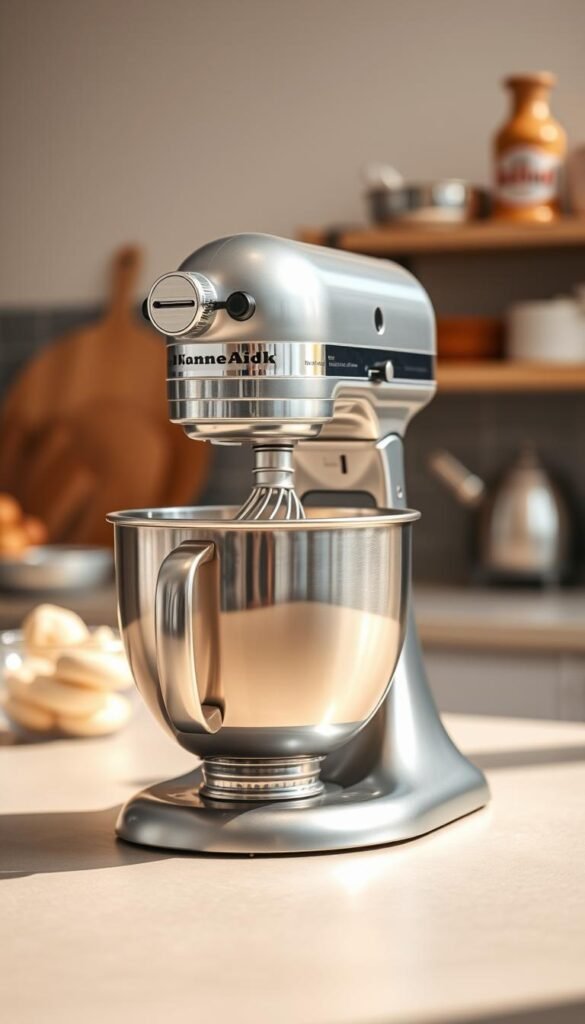
Good tools save time and improve texture. Start with a quality stand mixer or a hand mixer to cream butter and sugars until light. A consistent mix helps the dough rise and keeps centers chewy.
Portioning, pans, and measuring
Portion uniformly with a medium OXO cookie scoop (about 1.5 tablespoons). Use lined half sheet pans and parchment paper or silicone mats to reduce spread and simplify cleanup.
Accuracy and cooling
Weigh flour on a digital kitchen scale to avoid dry, cakey results. Move baked pieces to a cooling rack so air circulates and bottoms stay soft. Keep a bowl scraper and rubber spatula to gather every bit of dough.
- Use multiple baking sheets when batching to speed rotation.
- Store scoops, pans, and paper together for faster prep.
- Preheat oven fully before loading trays for predictable rise and timing.
| Tool | Why it helps | Tip |
|---|---|---|
| Stand mixer / mixer | Consistent aeration for better texture | Cream until light, 2–4 minutes |
| Cookie scoop | Uniform size and bake time | Use 1.5 tbsp OXO scoop |
| Half sheet / baking sheet | Even heat and roomy layout | Choose sturdy USA Pan or similar |
| Digital scale & cooling rack | Accurate measure and proper cooling | Weigh flour; cool on wire rack |
Conclusion
A reliable finish depends on correct chilling, a timely pull from the oven, and uniform scoops.
Core techniques—measure, cream, chill, scoop, and watch visual cues—make it easy to bake cake cookies that taste like the real thing.
Lean on vanilla (or add a touch of almond) and balance sugar and butter for tender, chewy results. Fold in chocolate or rainbow sprinkles to personalize each batch.
Store cooled treats in an airtight container for 4–5 days or freeze dough balls up to 3 months; bake frozen dough 1–2 extra minutes. With a mixer, a sturdy bowl, and a good scoop, this recipe delivers consistent, party‑ready results every time.