Frozen Chicken Crockpot Recipes: Simple Cooking Guide
Surprising fact: nearly one in three home cooks admit they don’t check poultry temperature, yet an instant-read thermometer cuts food-safety risk dramatically.
This Website contains affiliate links. That means I may earn a small commission if you purchase through my links, at no extra cost to you.
This guide lays out safe, practical ways to move from freezer to family table without losing flavor. USDA advice favors thawing before slow cooking, and we explain why that matters for safe, tender results.
You’ll find clear timing benchmarks for thawed poultry — LOW 4–5 hours or HIGH 2–3 hours until 165°F — plus tips to thicken sauces right in the cooker or on the stovetop. Learn when to choose thighs or breasts and how batch size and cooker models change time and texture.
Prefer not to thaw? We cover pressure-cooker alternatives like the Instant Pot for truly frozen pieces, so you can still make a quick, reliable dinner. Expect step-by-step instructions, flavor options like honey garlic, and simple make-ahead storage tips to help you save recipe ideas for later.
Key Takeaways
- Thaw poultry when possible for the safest slow-cooker results; use an instant-read thermometer to confirm 165°F.
- Typical thawed timing: LOW 4–5 hours or HIGH 2–3 hours; sauce can thicken in-cooker on HIGH 15–30 minutes.
- Instant Pot is a safe, fast alternative for truly frozen meat to lock in texture and speed up time.
- Choose thighs for richer, juicier results or breasts for leaner meals; adjust cook time by cut and batch size.
- Instructions focus on easy weeknight prep, flavor variety, and storage tips so dinner stretches into next-day meals.
Why Choose Frozen Chicken Crockpot Recipes for Easy Dinners
When time is tight, letting a cooker finish the job frees you to focus on family, work, or errands without sacrificing dinner.
Hands-off cooking is the main appeal. A slow cooker turns a few simple ingredients into shredded meat you can use across bowls, tacos, soups, casseroles, and sandwiches.
Many cooks place frozen chicken breasts straight into a crock pot on LOW 6–8 hours or HIGH 4–6 hours until 165°F. No extra liquid is usually needed because the meat releases juices as it cooks.
The method saves time and money. Buy in bulk, cook once, and stretch leftovers into multiple meals. That cuts waste and makes weekday dinners predictable.
- Set-it-and-forget-it convenience lets you handle other tasks while the cooker works.
- Basic seasonings—poultry seasoning, salt, and pepper—create a neutral base for many flavor profiles.
- If you’re rushed, quick thawing or using a pressure cooker is a safer, faster alternative to starting from fully frozen.
Batch-prepped breasts shred fast for instant assembly. This approach fits morning prep for evening meals or weekend cooking for workweek lunches. Future sections will cover step-by-step methods and safety tips so you can adapt the way to your household with confidence.
Food Safety First: Thawing, Temperatures, and USDA Guidance
Start with safe thawing and temperature checks to avoid foodborne risk in slow cooking.
USDA stance: do not put frozen chicken directly into a slow cooker. The cooker heats slowly, so meat and surrounding ingredients can linger in the danger zone before reaching safe internal temperature. That raises the risk of illness.
Safer, quicker options include sealing poultry in a bag and submerging in cold water until thawed (about an hour for small pieces), or defrosting in the microwave and cooking immediately. Never use hot water to speed thawing.
When you must cook from solid state: the Instant Pot is a better choice. Add 1 cup broth, keep pieces separated if possible, season, and pressure cook 10–15 minutes depending on size. Allow at least 5 minutes natural release, then rest 5–10 minutes before slicing or shredding.
Always verify doneness with an instant-read thermometer—the thickest part must read 165°F. Resting helps redistribute juices so the meat stays moist and shreds cleanly.
| Scenario | Recommended Action | Why it matters |
|---|---|---|
| Slow cooker with frozen chicken | Don’t start frozen; thaw first | Prevents long time in danger zone |
| Quick thaw needed | Cold-water bath or microwave defrost | Safe, fast, then cook immediately |
| Cooking frozen chicken quickly | Use Instant Pot: 1 cup broth, 10–15 min, natural release | Pressure raises temp fast for safety |
Essential Gear and Ingredients for Your Slow Cooker Chicken
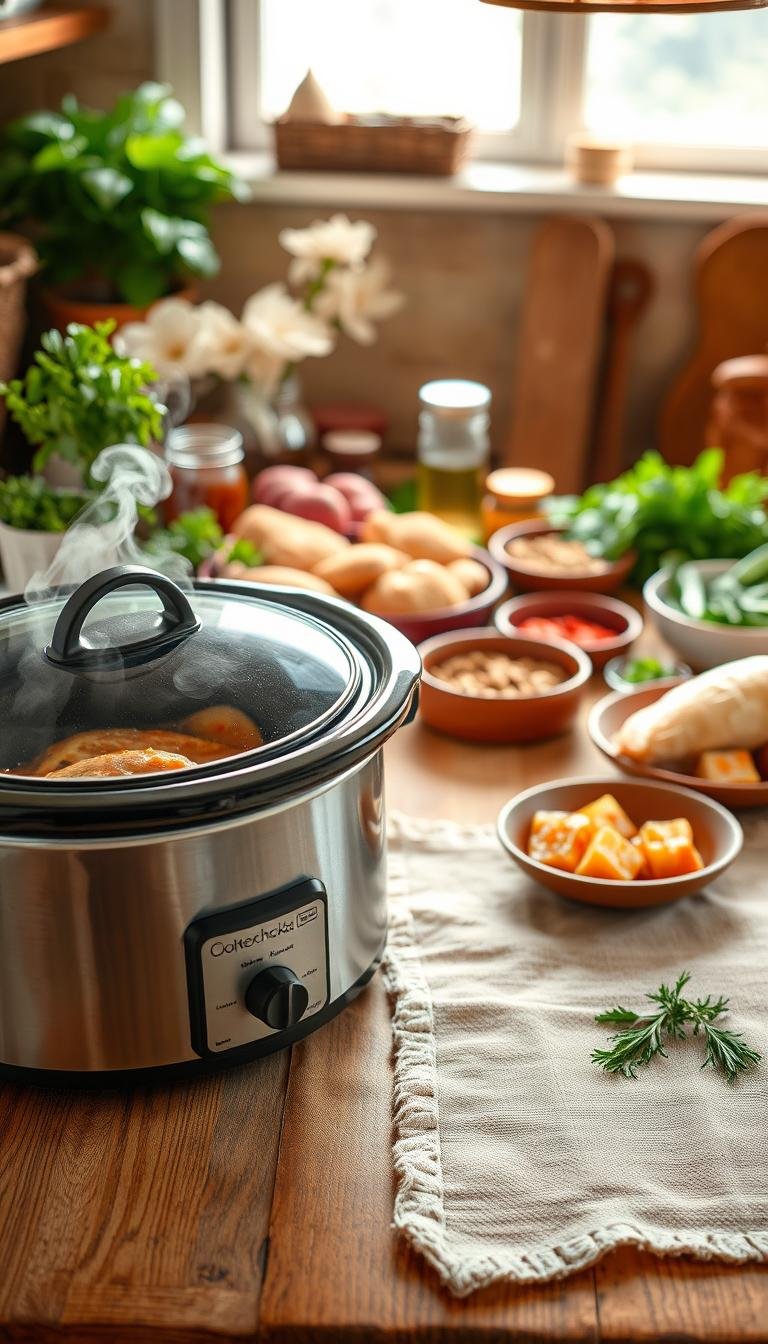
Good results start with simple tools. Pick the right slow cooker size and gather basic ingredients before you begin. That small prep step makes a big difference in texture and timing.
Choose a 6-quart unit for most households and step up to an 8-quart model for large batches. Avoid overcrowding so heat circulates and pieces cook evenly.
Programmable models with a Keep Warm setting protect against overcooking if you run late. They switch modes automatically and keep texture consistent.
Use an instant-read thermometer to confirm 165°F. A quick check is more reliable than guessing and saves waste.
Simple pantry ingredients work best: boneless skinless cuts, a pat of butter (optional), poultry seasoning, salt, and pepper. Most meat releases enough juices, so extra liquid is often not needed.
Helpful tools to have on hand:
- Small whisk for cornstarch or arrowroot slurries.
- Silicone-tipped tongs and two forks for shredding.
- Ladle and heatproof measuring cup to transfer cooking liquid for reduction.
Mise en place—pre-measure seasonings and thickeners. Label and date portions if you plan to save recipe elements for later.
| Item | Why it helps | Best use |
|---|---|---|
| 6-quart slow cooker | Fits most families; avoids overcrowding | Weeknight dinners for 3–5 people |
| 8-quart slow cooker | Handles bulk prep and larger roasts | Meal prep or large households |
| Instant-read thermometer | Fast, accurate doneness check to 165°F | Final check before serving |
| Small whisk & ladle | Smooth thickeners and easy sauce transfer | Finishing sauces on stovetop |
How to Cook Frozen Chicken in a Crock Pot Step by Step
A safety-first approach matters when you make frozen chicken in a slow cooker. If pieces are solid, quick-thaw in cold water or use a pressure cooker. Otherwise proceed at your own risk and always verify 165°F at the thickest point.
Seasoning basics: scatter poultry seasoning, salt, and pepper over breasts. Dot with thin slices of butter for extra moisture. These simple flavors create a flexible base for later sauces.
Choose a setting that fits your day. For thawed cuts, cook low for gentle texture or select hours high to finish sooner. Typical windows: LOW 4–5 hours or HIGH 2–3 hours for thawed pieces; home cooks report LOW 6–8 hours or HIGH 4–6 hours when starting from solid—check temperature, not minutes.
Avoid overcrowding so heat circulates evenly. Resist adding water; meat releases juices you can reduce later. To shred, rest the meat a few minutes, then pull with two forks.
“Always confirm doneness with an instant-read thermometer — it’s the best safety step you can take.”

Time and Temperature Guide for Chicken Breasts and Thighs
A clear time and temperature plan removes guesswork and helps every cut finish properly.
Internal targets: both chicken breasts and chicken thighs are safe at 165°F. Use an instant-read thermometer in the thickest part and avoid touching bone for an accurate reading.
Baseline timing: for thawed pieces, expect LOW commonly in the 4–5 hour range and HIGH in 2–3 hours. These low heat hours and high heat hours are guides; verify with the thermometer rather than the clock.
Dark meat like thighs tolerates a wider window and stays juicy longer. Lean breasts can dry out if held too long at high settings, so plan your finish accordingly.
Bone-in or oversized cuts often need extra time — sometimes 4–6 hours on LOW. Stacking or crowding the pot slows heat transfer and extends total time.
- Start checking early the first time you use a new cooker and record results for future batches.
- Rest meat briefly before slicing or shredding to retain juices.
- If thickening sauce with cornstarch, allow an extra 15–30 minutes on HIGH to reach a glossy finish.
“Confirm doneness with a thermometer, not just look or feel.”
Flavor Variations: From Simple Shredded to Honey Garlic
Use a basic shredded base as a canvas and add a high-impact sauce for dinner. Small swaps make the same method feel new each week. Below are easy, reliable options that work in a slow cooker or on the stovetop finish.
Simple shredded
- Dot boneless skinless chicken with butter and season with poultry seasoning, salt, and pepper.
- Cook until tender and shred for bowls, tacos, soups, or salads.
Takeout-style honey garlic
- Whisk low-sodium soy sauce, honey, tomato paste, minced garlic, rice vinegar, and a touch of chili paste.
- Cook thawed pieces on LOW 4–5 hours or HIGH 2–3 hours, then thicken: cornstarch slurry in the cooker on HIGH 15–30 minutes or reduce on the stovetop 5–10 minutes.
Swaps and thickening
- Use tamari for gluten-free and arrowroot instead of cornstarch for paleo.
- Dark cuts like chicken thighs stay juicier; breasts work if you watch timing closely.
- Finish with green onions and toasted sesame for a restaurant touch and remember to taste and adjust salt or heat at the end.
Tip: Shred extra and freeze portions so you can quickly save recipe variations for later meals.
Serving Ideas, Sides, and Meal Prep
Make one pot stretch into several meals by pairing sauced meat with grains and quick vegetables.
Easy serving combos
Spoon sauced chicken over brown rice, quinoa, or cauliflower rice for a fast, balanced dinner.
Add steamed broccoli or a sautéed stir-fry mix for color and fiber. A squeeze of citrus or fresh herbs lifts repeat meals without extra time.
Make-ahead, storage, and reheating
Portion shredded breasts with sauce into airtight containers for grab-and-go lunches. Label and date each container to save recipe choices clearly.
Refrigerate cooked meat within two hours and keep up to four days. Reheat gently on the stovetop with a splash of broth or in the microwave until hot.
Freeze cooled portions up to three months; thaw overnight before reheating to preserve texture.
“Batch cooking in a properly sized pot saves time and keeps results consistent.”
| Action | Storage | Best reheat |
|---|---|---|
| Refrigerate | Up to 4 days in airtight container | Stovetop with broth or microwave |
| Freeze | Up to 3 months once cooled | Thaw overnight, reheat gently |
| Portioning | Use 6-quart pot for batch sizes | Label portions; rotate oldest first |
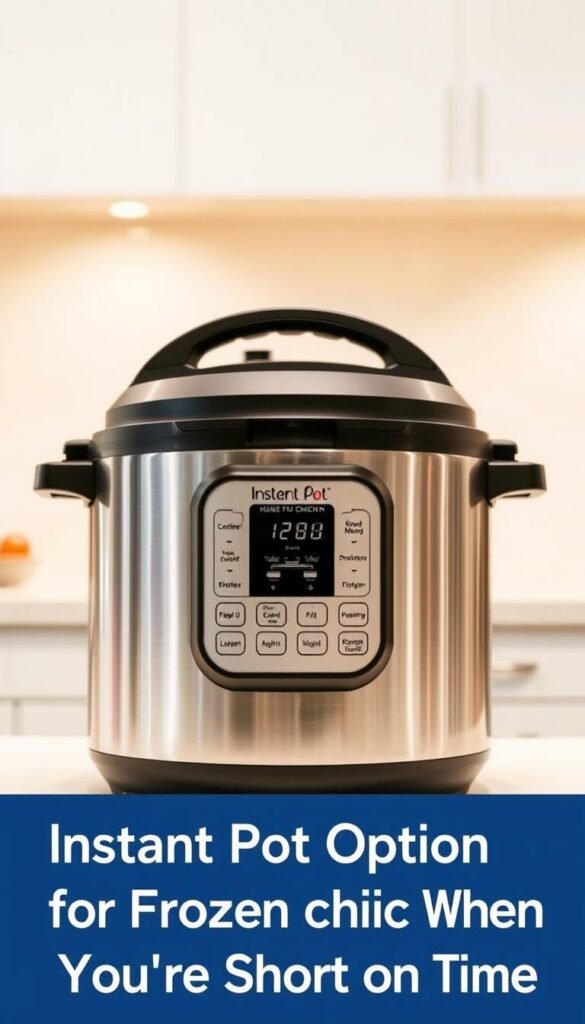
Instant Pot Option for Frozen Chicken When You’re Short on Time
When a planned slow-cooker dinner meets a frozen package, switch to pressure for a fast, safe finish.
Quick method: Pour 1 cup of chicken broth into the inner pot, place pieces on the trivet or directly in the pot, and season as you like. Arrange items separated when possible so heat circulates.
Pressure settings: Seal and pressure cook on High for 10–15 minutes depending on size. Use the lower end of the minutes range for small breasts and the higher end for thick cuts.
Release and rest: Allow at least 5 minutes natural release, then quick-release remaining pressure. Rest meat 5–10 minutes before slicing or shredding to keep juices locked in.
- Avoid heavy stacking; add a few minutes if pieces overlap.
- Use the cooking liquid to moisten shredded meat or reduce into a quick pan sauce.
- Record your preferred times and liquid amounts for consistent results next time.
Why this helps: Pressure cooking from solid is faster and safer than trying the same in a crock pot. It gives predictable timing and juicy results for weeknight meals.
Troubleshooting and Pro Tips for Crock Pot Success
Preventing dry meat and watery sauce starts with understanding how your cooker runs and when to check.
Avoid dry results: choose thighs for saucy meals or check white pieces earlier, since every crock pot varies in heat. Start checking doneness a bit before the expected time to avoid overcooking.
Fix thin sauce quickly: whisk a cornstarch slurry into hot cooking liquid and switch to HIGH for 15–30 minutes. Or transfer the liquid to a pan and reduce over medium heat for 5–10 minutes for faster control.
Prevent undercooking: don’t overfill the pot. Crowding slows heat transfer and can leave pockets of underdone chicken. Keep the lid closed to hold steady heat and avoid adding unexpected hours to cook time.
A few practical reminders
- Season after shredding if meat tastes flat; add a splash of cooking liquid to carry flavor.
- If meat is still frozen, pivot to pressure cooking or quick-thaw before returning to a slow cooker for safety.
- When running late, use Keep Warm instead of extra HIGH time to protect texture and sauce stability.
- Note your cooker’s tendencies and the thickening time so you can save recipe tweaks for next time.
“Always confirm internal heat with a thermometer — safe temps beat the clock every time.”
| Problem | Quick Fix | Why it works |
|---|---|---|
| Dry meat | Check earlier; add a splash of broth and finish on LOW | Limits exposure to excess heat and restores moisture |
| Thin sauce | Cornstarch slurry + HIGH 15–30 min or stovetop reduce 5–10 min | Thickens without changing flavor; faster reduction on stovetop |
| Undercooked center | Return to cooker until 165°F reached; use thermometer | Ensures food safety over relying on hours alone |
Conclusion
Keep safety first: thaw before using a slow cooker or choose the Instant Pot for truly frozen chicken to control temperature from the start.
For thawed pieces, expect low heat hours of 4–5 or high heat hours of 2–3 until the thickest part reaches 165°F. Use an instant-read thermometer, not minutes alone.
Boneless skinless chicken and chicken thighs adapt to many ingredients. Try a soy sauce–based honey garlic finish and thicken with cornstarch or arrowroot in a few minutes for clingy sauce.
Cook once, portion, and save recipe notes. Note your cooker’s tendencies so future batches hit the right heat, time, and texture every week.