6 Mexican Dip Recipes to Spice Up Your Table
Mexican food is loved all over the world. Its dips are especially popular at parties. A survey showed that almost 75% of homes in the U.S. enjoy Mexican dips weekly.
This Website contains affiliate links. That means I may earn a small commission if you purchase through my links, at no extra cost to you.
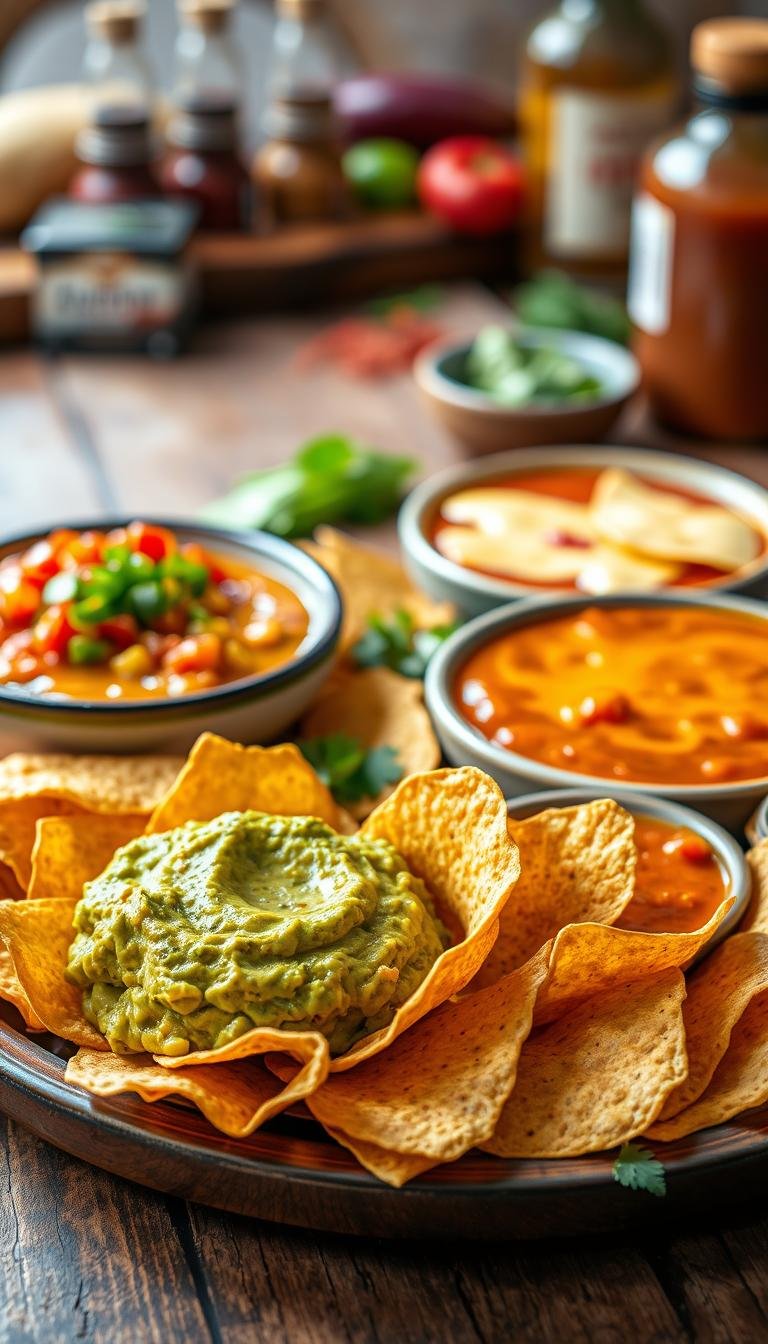
Mexican dips are tasty and easy to make. They’re perfect for parties or a quick snack. We’ll show you how to make classic dips like guacamole and salsa roja at home.
Key Takeaways
- Discover 6 authentic Mexican dip recipes to elevate your snack game
- Learn how to make homemade dips with fresh and flavorful ingredients
- Explore different variations of popular Mexican dips for parties and gatherings
- Get tips on how to serve and enjoy your favorite Mexican dips
- Find out how to accommodate different dietary preferences with simple substitutions
The Rich Tradition of Mexican Dips in American Cuisine
Mexican dips are loved in America for their bright tastes and flexibility. They have traveled from Mexico to America, thanks to close geography, people moving, and sharing cultures.
The Cultural Significance of Mexican Dips
Mexican dips like guacamole and salsa are more than snacks. They connect us to Mexico’s food history. These dips have won hearts worldwide, keeping their authentic Mexican flavors while fitting local tastes. They bring people together, creating a sense of community.
Key Ingredients in Authentic Mexican Dips
The heart of authentic Mexican dips is their ingredients. Chiles, tomatillos, cilantro, lime, and spices are key. Using these right is key to getting the true taste of Mexican food.
| Ingredient | Common Use |
|---|---|
| Chiles | Adding heat and depth to salsas and dips |
| Tomatillos | Creating the base for salsa verde and other green sauces |
| Cilantro | Adding freshness and herbal notes to various dips |
Essential Tools for Making Mexican Dips
To make Mexican dips, you need the right tools. A molcajete is great for grinding spices and making salsas. A food processor helps blend, and sharp knives are for chopping. Serving dishes that match the dips’ colors make the meal better.
Knowing about Mexican dips’ culture, ingredients, and tools helps us enjoy and make these tasty dishes. It brings a bit of Mexico to our homes.
Classic Guacamole: The Avocado Masterpiece
Guacamole’s story is as rich as its taste. It goes back to ancient Mesoamerican times. This dip has changed a lot, from the Aztecs to a favorite around the world.
History and Origins of Guacamole
The Aztecs called it “ahuacamolli,” a mix of avocado and sauce. The name comes from “ahuacatl” (avocado) and “molli” (sauce). It was a big part of Aztec food and culture.
As Mexican food grew, so did guacamole. It got new ingredients and ways to make it.
Ingredients for Perfect Guacamole
Choosing the right avocados is key. Look for ripe avocados that feel soft. You’ll also need lime juice, cilantro, onion, jalapeño, and salt.
Each part is important for the right taste. Lime juice adds a bit of sourness. Cilantro makes it fresh. Onion and jalapeño add depth and spice.

Step-by-Step Preparation
Making guacamole is easy but needs care. Cut the avocados in half or quarters and remove the pit. Put the flesh in a bowl and mash it a bit.
Some like it smooth, others chunky. Add lime juice, salt, and diced onion, tomato, cilantro, and jalapeño. Mix gently. Taste and adjust the seasoning if needed.
Dietary Adaptations and Variations
Guacamole can be changed for different diets. For a vegan version, leave out non-vegan stuff. To cut down on salt, use less.
You can also try different peppers for more or less heat.
Serving Suggestions and Storage Tips
Guacamole is best eaten fresh. But you can store it too. Press plastic wrap on the surface and chill it. Before serving, stir it gently and adjust the seasoning.
It’s often eaten with tortilla chips. But it’s also great on tacos or grilled meats.
Spicy Salsa Roja: The Tomato-Based Fiesta
Salsa Roja is a tomato sauce at the heart of Mexican cooking. It’s a spicy Mexican salsa loved for its rich taste. It’s great in many dishes.
Traditional Roots of Salsa Roja
Salsa Roja comes from deep in Mexican cooking history. This red salsa recipe has been shared for generations. Families add their own special touches.
Experts say Salsa Roja shows Mexican culture and tradition. Its roots show the creativity of Mexican cooks.
Fresh Ingredients List
To make a real authentic Mexican salsa, start with fresh stuff. You need ripe tomatoes, chile peppers, garlic, onions, and cilantro. Each one is key to the salsa’s taste.
- Ripe tomatoes give the base flavor
- Chile peppers make it spicy
- Garlic and onions add depth
- Cilantro brings freshness
Preparation Method
Making Salsa Roja uses old and new ways. Traditionally, ingredients are roasted on a comal. Now, blenders or food processors can be used for smoothness.
- Roast ingredients until charred
- Blend them into a smooth sauce
- Season with salt and adjust as needed
Dietary Adaptations
Salsa Roja can be made for different diets. For vegans, use animal-free ingredients. For gluten-free, choose the right vinegar.
Heat Levels and Pairing Recommendations
Salsa Roja’s heat can be changed. You can make it spicier or milder. It’s good with chips, tacos, meats, and eggs.
“Salsa Roja is a versatile condiment that can elevate a wide range of dishes, from traditional Mexican cuisine to modern fusion recipes.”
Knowing how to make Salsa Roja lets you add a fiesta to any meal. It’s a homemade salsa roja that’s full of flavor.
Creamy Queso Fundido: Melted Cheese Delight
Melted to perfection, queso fundido is more than just a dip. It’s an experience of Mexico’s vibrant culinary culture. This dish has gained popularity worldwide for its rich flavor and comforting warmth.
The Art of Mexican Cheese Dips
Queso fundido is different from the Americanized “queso” found in Tex-Mex. It’s a sophisticated dish with regional variations. It often features a blend of cheeses, meats, and spices.
The art lies in achieving a perfect melt. It’s about balancing flavors and selecting the right accompaniments.
Cheese Selection and Additional Ingredients
The choice of cheese is key for an authentic queso fundido. Traditional recipes use Mexican cheeses like Oaxaca, Chihuahua, or Asadero. If you can’t find these, mozzarella or Monterey Jack can be used, but the flavor will be different.
Additional ingredients like chorizo, rajas, mushrooms, or tomatoes add depth and complexity. They make the dish more interesting.
| Cheese Type | Characteristics | Substitutes |
|---|---|---|
| Oaxaca | Soft, stringy, mild flavor | Mozzarella |
| Chihuahua | Semi-soft, mild, creamy | Monterey Jack |
| Asadero | Semi-soft, white, mild | Monterey Jack or White Cheddar |
Cooking Instructions
To make perfect queso fundido, start by preheating your oven to 375°F (190°C). Cook any additional ingredients like chorizo or mushrooms until they’re nicely browned. Then, layer the cheese and cooked ingredients in a baking dish.
Bake until the cheese is melted and bubbly, about 15-20 minutes. Serve immediately to keep the cheese molten.

Vegetarian and Dietary Options
For vegetarians, queso fundido can be made without meat. Use roasted vegetables or beans instead. Those with lactose intolerance can try lactose-free cheeses or vegan alternatives.
Serving and Dipping Suggestions
Traditionally, queso fundido is served in hot clay dishes. This keeps it warm. Serve with warm tortillas or crispy tortilla chips.
The key is to serve it immediately. This way, it’s still molten and at its best texture.
Zesty Bean Dip: Protein-Packed Flavor
Beans are a big deal in Mexican food. They make tasty dips that are good for you. Beans are full of protein and fiber, making them a healthy choice for snacks.

Bean Varieties in Mexican Cuisine
Mexico loves its beans, and there are many kinds. Pinto beans and black beans are favorites. Pinto beans are creamy, while black beans are sweet and earthy.
- Pinto beans are great in refried beans and other dishes.
- Black beans have a strong flavor and a firm texture.
Ingredients for a Perfect Bean Dip
To make a great bean dip, start with cooked beans. Add onions, garlic, cumin, and chili powder. You can also add cheese or chorizo for extra flavor.
- Cooked beans (pinto, black, or a mix)
- Sautéed onions and garlic
- Cumin and chili powder for spice
- Optional: cheese, chorizo, or other desired additions
Preparation and Cooking Process
First, cook the beans until they’re soft. You can soak and boil dried beans or use canned ones. Then, blend the beans with onions, garlic, and spices.
Adjust the dip’s texture and taste. You might add lime juice or sour cream. Some like it smooth, others chunky.
Vegan and Gluten-Free Adaptations
Bean dips are great for many diets. For vegans, skip the cheese and sour cream. For gluten-free, choose gluten-free spices and ingredients. This makes bean dips perfect for all kinds of gatherings.
Garnishing and Serving Ideas
Make your bean dip pop with crema Mexicana, queso fresco, cilantro, or pickled jalapeños. Serve it warm or at room temperature. Enjoy it with tortilla chips, veggies, or toasted bread.
By adding these touches, you’ll make a tasty, healthy, and flexible dish. It’s perfect for any event.
Tangy Tomatillo Salsa Verde: The Green Sensation
Salsa verde is made with tomatillos. It adds a bright, tangy twist to Mexican food. It’s great as a dip and for cooking many Mexican dishes.

Understanding Tomatillos
Tomatillos are not green tomatoes. They have papery husks and a tart flavor. Pick firm tomatillos with no mold or soft spots.
Fresh Ingredients for Authentic Flavor
To make real tomatillo salsa verde, you need a few things. Tomatillos are the base, adding tanginess. Serrano or jalapeño peppers make it spicy. Cilantro adds freshness. Onion and garlic add depth.
Roasting and Blending Techniques
There are two ways to make tomatillo salsa verde. You can blend everything raw for a fresh taste. Or, roast the tomatillos, peppers, and garlic to make the flavors stronger.
Adjusting for Dietary Needs
To make tomatillo salsa verde for different diets, you can make some changes. For a vegan version, don’t use animal products. It’s already gluten-free. To make it less spicy, use fewer peppers. For more heat, add more peppers.
Complementary Foods and Occasions
Tomatillo salsa verde goes well with many foods. Try it with enchiladas verdes, grilled chicken, fish tacos, or on egg dishes. It’s also good with tortilla chips. It’s perfect for any time, from casual get-togethers to big celebrations.
6 Mexican Dip Recipes to Spice Up Your Table: Pico de Gallo
Pico de Gallo is a simple yet flavorful Mexican dish. It’s called ‘rooster’s beak’ and is loved at Mexican parties. It’s a fresh, raw salsa that’s different from cooked dips.
The Fresh Approach to Mexican Dips
Pico de Gallo is all about being fresh. It doesn’t need cooking to taste great. This makes it a true taste of Mexican food.
“The beauty of Pico de Gallo is in its simplicity and the quality of its ingredients.”
Simple Yet Flavorful Ingredients
The ingredients for Pico de Gallo are easy to find:
- Ripe tomatoes, diced
- Onion, finely chopped
- Jalapeño or serrano peppers, minced
- Cilantro, chopped
- Lime juice
- Salt
Using fresh ingredients is key. They make the dip taste amazing.
| Ingredient | Quantity | Preparation |
|---|---|---|
| Ripe Tomatoes | 2 | Diced |
| Onion | 1/2 | Finely Chopped |
| Jalapeño | 1 | Minced |
Chopping and Mixing Instructions
Getting the right dice is important. You want a mix of sweet tomatoes, spicy onion, and fresh cilantro. Mix gently to keep everything fresh.
- Chop the tomatoes, onion, and jalapeño.
- Mix with cilantro and lime juice.
- Season with salt to taste.
Seasonal Variations
You can change Pico de Gallo with the seasons. Add mango or pineapple in summer for sweetness. Use Roma tomatoes in winter for freshness.
Serving Suggestions and Storage Tips
Drain excess liquid before serving. Serve at room temperature for the best taste. It lasts a day or two in the fridge because of its raw ingredients.
Common Mistakes to Avoid When Making Mexican Dips
To make great Mexican dips, avoid common mistakes. These can ruin the flavor and texture. Making guacamole, salsa, or queso fundido right is key.
Ingredient Selection Errors
Choosing the right ingredients is very important. Using unripe avocados or old tomatoes can mess up your dip. Opt for ripe avocados and fresh, in-season ingredients.
If you can’t find fresh tomatillos, canned ones are okay. This way, your dip will still taste good.
Preparation and Seasoning Pitfalls
Even with the right ingredients, mistakes in making and seasoning can happen. Over-processing can make your dip too soft. Balance acidity and salt well.
Drain high-moisture ingredients to avoid watery dips. Making dips too early can lose flavor and texture. Guacamole is best made just before serving.
By avoiding these mistakes, you can make authentic, delicious Mexican dips. Your guests will love them.
How to Create a Mexican Dip Spread for Entertaining
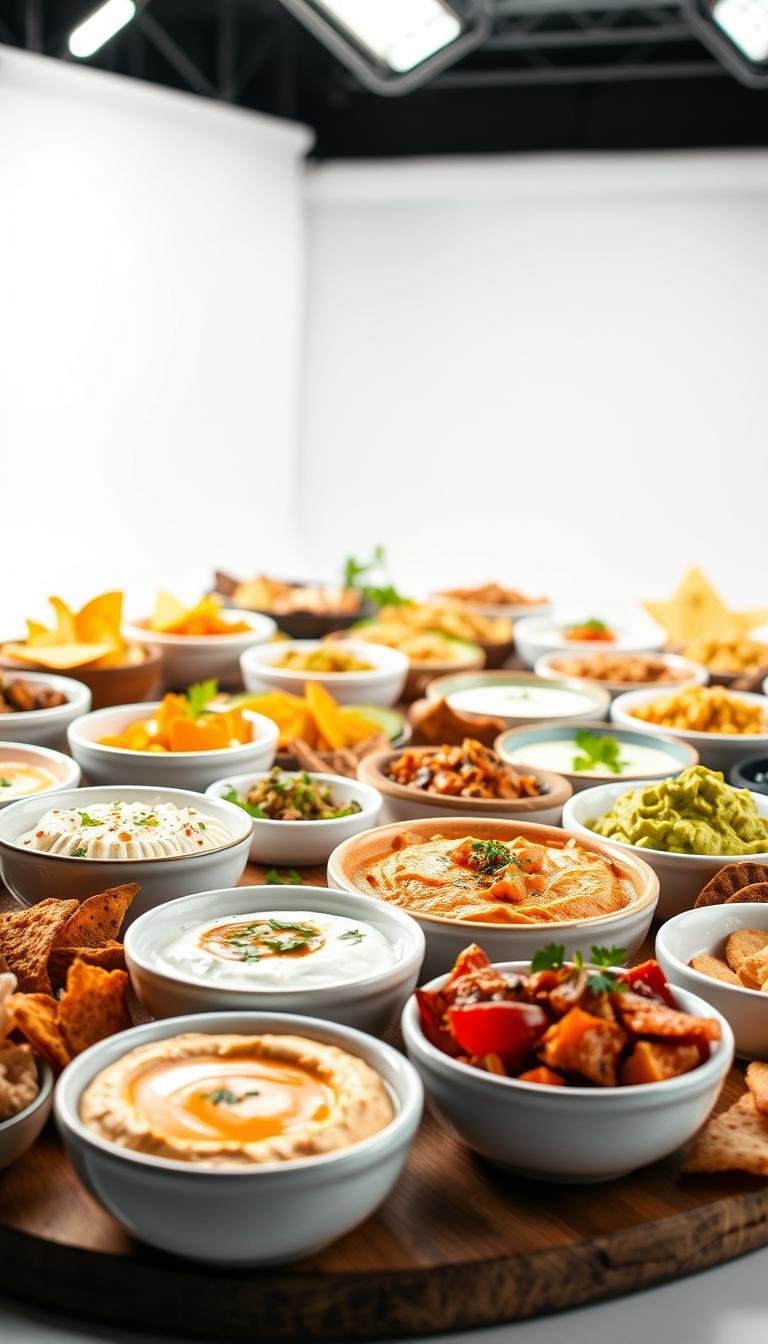
Hosting a memorable gathering? A Mexican dip spread can be the star. It needs good presentation, accompaniments, and drinks.
Presentation Tips for Multiple Dips
Make your Mexican appetizer spread look good. Use different serving vessels. This adds color and texture.
Color Coordination: Mix colors for a nice look. Put red salsa roja next to green guacamole. White queso fundido goes in between.
Temperature Control: Keep hot dips warm. Cold dips go in the fridge. This makes eating more fun.
Complementary Chips and Dippers
There are many chips to go with your dips. Try jicama sticks, cucumber slices, or endive leaves. For a treat, add chicharrones or fried tortilla chips.
- Thicker dips like queso fundido go with sturdy chips or fresh tortillas.
- Light dips like pico de gallo are best with thin, crisp chips.
Beverage Pairings for a Complete Experience
Choose drinks that match your dips. Margaritas, Mexican beer, and agua frescas are great.
Margarita Pairings: A classic margarita is good with spicy dips. Fruit-infused margaritas match pico de gallo’s freshness.
Non-Alcoholic Options: For no booze, try fresh limeade or flavored aguas frescas. They’re refreshing with spicy or rich dips.
Pairing flavors and temperatures with drinks makes your meal memorable.
Conclusion: Bringing Mexican Flavors to Your Table
Exploring Mexican dips is like a journey through rich flavors and traditions. The six dips in this article show a wide range of homemade Mexican appetizers. They can make any gathering or meal special.
Guacamole is creamy, while pico de gallo is fresh and zesty. Each dip has its own special taste. They show the unique sides of traditional dip recipes.
These dips are not just tasty; they also show Mexican food culture. They reflect the country’s history and different regions. By making and sharing these dips, you join a culinary tradition that brings people together.
Whether you’re having a party or just want to add some excitement to your snacks, these recipes are perfect. They let you dive into the world of Mexican cuisine easily.
As you get better at making these dips, try new ingredients and techniques. You can also look into other Mexican specialties. This way, you’ll bring Mexico’s vibrant flavors to your table and join a big culinary community.