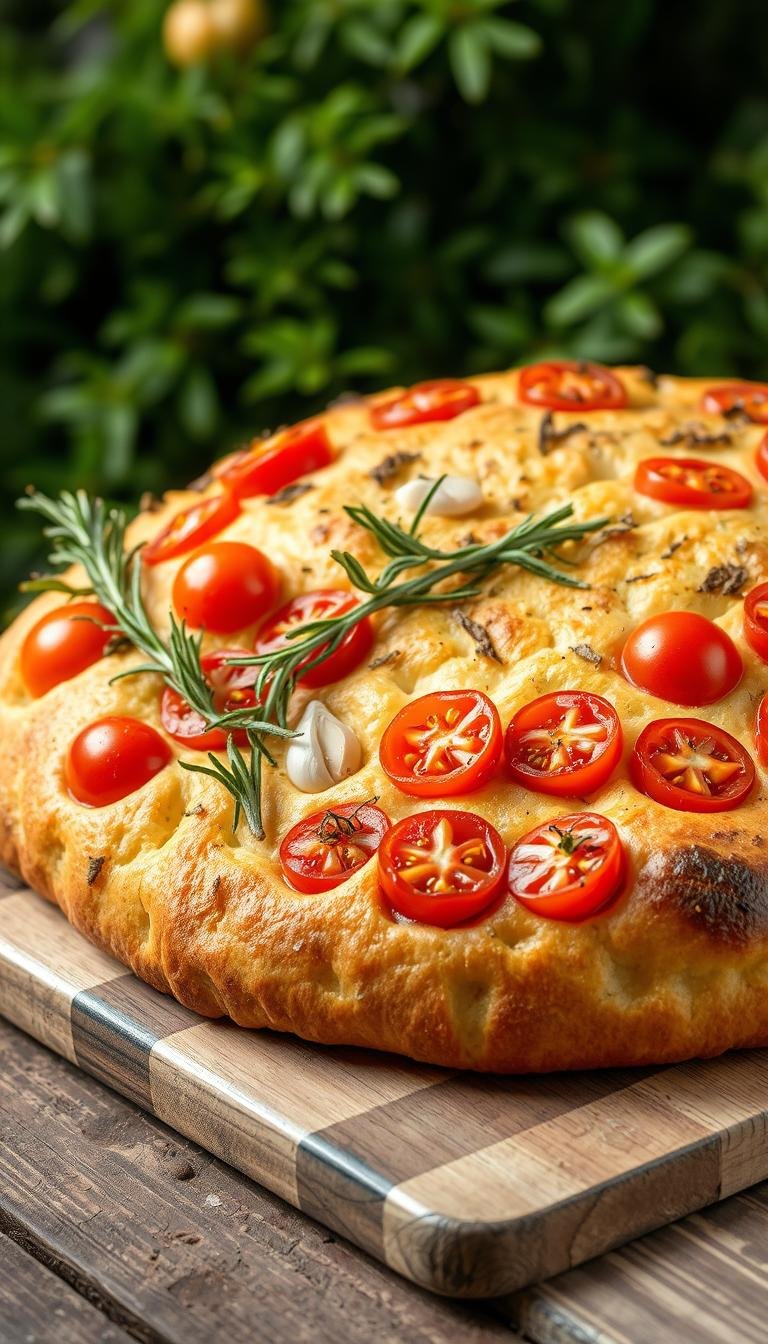
10 Focaccia Bread Recipes That Will Steal the Show at Dinner
Imagine transforming your dinner gatherings with a simple yet impressive staple: homemade focaccia. This classic Italian bread has become a favorite among home bakers for its versatility and stunning presentation.
This Website contains affiliate links. That means I may earn a small commission if you purchase through my links, at no extra cost to you.
Focaccia’s adaptability allows it to complement a wide range of meals, from soups to salads, and its aromatic flavors elevate any dinner setting. With various focaccia bread recipes available, you can experiment with different herbs, cheeses, and toppings to create a unique dinner bread that suits your taste.
Key Takeaways
- Discover 10 spectacular focaccia recipes to impress dinner guests.
- Learn essential techniques for making professional-quality focaccia.
- Explore unique flavor combinations and ingredient selections.
- Understand how to serve focaccia as a stunning visual element.
- Find recipes suitable for bakers of all skill levels.
The Art of Focaccia: Creating a Dinner Table Masterpiece
Focaccia’s journey from a simple flatbread to a dinner table masterpiece is a story worth telling. This traditional Italian bread has been a staple in Italian cuisine for centuries, with its origins tracing back to ancient times. The art of making focaccia is not just about following a recipe; it’s about understanding its rich heritage and mastering the techniques that make it so beloved.
The Italian Heritage of Focaccia Bread
Focaccia originated in Italy, specifically in the Liguria region, where it remains a culinary icon. Its history dates back to the ancient Romans, who baked flatbreads over open fires. Over time, focaccia evolved, incorporating various ingredients and cooking methods. Regional variations emerged, with different herbs, cheeses, and toppings being used across Italy.
The cultural significance of focaccia in Italy cannot be overstated. It’s a bread that is deeply ingrained in Italian cuisine and is often served alongside meals or used as a base for sandwiches. Understanding its heritage is key to appreciating the various focaccia recipes that exist today.
Basic Techniques for Perfect Texture
Achieving the perfect focaccia texture is a matter of mastering a few key techniques. The first is proper hydration. The dough must be hydrated to the right level to achieve that characteristic airy interior and crispy exterior. Too little water, and the focaccia will be dense; too much, and it will be soggy.
Another crucial factor is the fermentation process. A long, slow fermentation allows the dough to develop complex flavors and a tender crumb. This process also helps in creating the signature dimples on the surface of the focaccia, which are not just aesthetically pleasing but also help in creating a crispy crust.
Finally, gluten development is vital. The dough must be kneaded sufficiently to develop the gluten, which gives focaccia its chewy texture. However, over-kneading can lead to a tough focaccia, so finding the right balance is essential.
| Focaccia Type | Key Ingredients | Texture Characteristics |
|---|---|---|
| Classic Rosemary | Rosemary, olive oil, sea salt | Crispy crust, soft interior |
| Sun-Dried Tomato | Sun-dried tomatoes, basil, garlic | Chewy, with a slightly crispy crust |
| Garlic and Parmesan | Garlic, parmesan cheese, olive oil | Crusty, with a rich, savory flavor |
Classic Rosemary and Sea Salt Focaccia
Rosemary and sea salt focaccia is a classic combination that elevates any dinner gathering. This traditional Italian bread, with its characteristic dimples and aromatic herbs, serves as a perfect accompaniment to a variety of Italian dinner classics.
Key Ingredients for Traditional Flavor
The authenticity of rosemary and sea salt focaccia relies heavily on the quality of its ingredients. High-protein flour is essential for creating the right texture, while extra virgin olive oil adds depth to the flavor. Flaky sea salt and fresh rosemary sprigs are crucial for achieving the traditional taste profile. Using these high-quality ingredients ensures that the focaccia has the right balance of flavors and textures.
Mastering the Dimpling Technique
The dimpling technique is a signature step in making focaccia. To master it, gently press your fingers into the dough, creating deep dimples that will hold the olive oil. This technique not only adds to the bread’s visual appeal but also enhances its texture. Proper dimpling ensures that the oil is evenly distributed, resulting in a flavorful and aromatic focaccia. Practice makes perfect, so don’t be discouraged by initial attempts.
Pairing with Italian Dinner Classics
Classic rosemary and sea salt focaccia pairs beautifully with a range of Italian dinner classics. Serve it alongside rustic pasta dishes, such as spaghetti carbonara, or with hearty stews like osso buco. The bread’s simplicity allows it to complement rather than compete with the main courses, making it a versatile addition to any Italian-inspired meal.
Sun-Dried Tomato and Basil Focaccia
Combining the richness of sun-dried tomatoes with the freshness of basil, this focaccia is a culinary delight. It’s a perfect representation of Mediterranean flavors, bringing together the sweetness of tomatoes, the tanginess of olive oil, and the herbaceousness of basil.
Selecting Quality Sun-Dried Tomatoes
The key to a great sun-dried tomato focaccia lies in the quality of the tomatoes used. Oil-packed sun-dried tomatoes offer a richer flavor compared to their dry counterparts. When using dry tomatoes, rehydrating them in olive oil or broth can significantly enhance their flavor and texture. Look for tomatoes that are plump and have a vibrant color, indicating freshness and quality.
Incorporating Fresh vs. Dried Herbs
Basil is a crucial component of this focaccia, and the choice between fresh and dried basil can significantly impact the flavor. Fresh basil adds a bright, herbaceous note that complements the sun-dried tomatoes beautifully. However, it should be added towards the end of preparation to preserve its color and aroma. On the other hand, dried basil can be infused into the dough or used to flavor olive oil, providing a deeper, more subtle basil flavor.
Serving with Mediterranean Mains
This Sun-Dried Tomato and Basil Focaccia pairs exquisitely with a variety of Mediterranean dishes. Serve it alongside Greek salad, Provençal vegetable skewers, or as a complement to Italian antipasto. The focaccia’s flavors are versatile enough to enhance a range of dinner options, making it a great addition to any Mediterranean-themed dinner party.
Caramelized Onion and Gruyère Focaccia
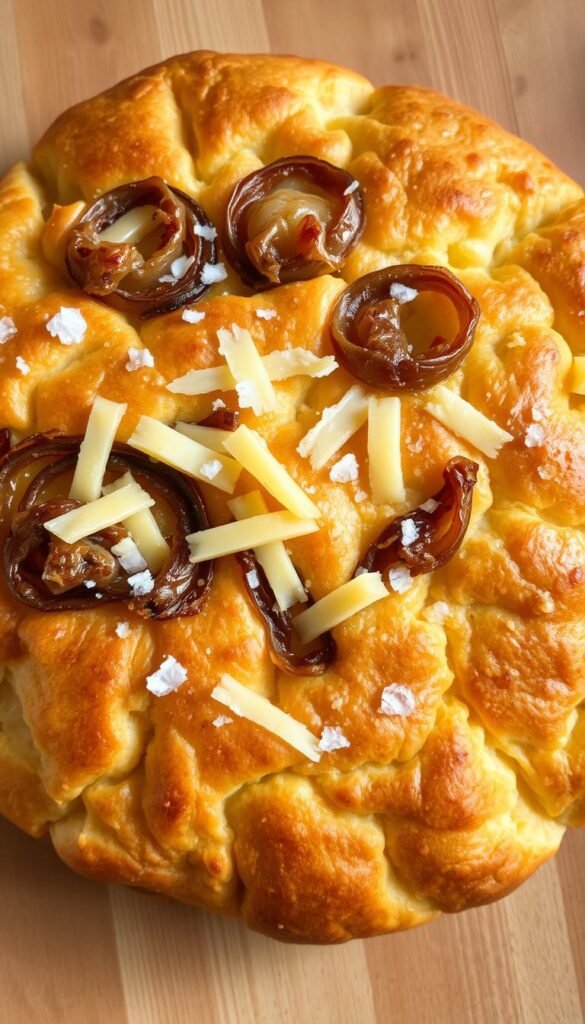
The sweet, deep flavor of caramelized onions paired with the nutty taste of Gruyère makes for a focaccia that’s ideal for hearty winter dinners. This combination elevates the traditional Italian bread to a new level, perfect for accompanying robust winter meals.
Perfecting the Onion Caramelization Process
Caramelizing onions is an art that requires patience and attention to detail. To achieve the perfect caramelization, it’s crucial to cook the onions slowly over low heat, stirring occasionally. This process can take up to 30-40 minutes, but the result is well worth the wait. The key is to develop a deep, rich flavor without burning the onions.
Choosing the right onion variety is also important. Sweet onions like Vidalia or Maui work well because of their naturally higher sugar content. When slicing the onions, aim for uniformity to ensure even cooking. The onions are done when they’re deep golden brown and have a jam-like consistency.
Cheese Selection and Layering
Gruyère is an excellent choice for focaccia due to its melting properties and nutty flavor profile. When selecting cheese, consider the age of the Gruyère; younger Gruyère melts more easily, while aged Gruyère has a more pronounced flavor. Besides Gruyère, other cheeses like Emmental or Comté can be used as alternatives, offering slightly different flavor profiles.
Layering the cheese within the focaccia dough or on top before baking affects the final product’s texture and flavor distribution. Mixing grated cheese into the dough provides an evenly cheesy crumb, while topping the focaccia with slices or shreds of cheese before baking creates a golden, bubbly crust.
Complementing Hearty Winter Dinners
Caramelized Onion and Gruyère Focaccia pairs beautifully with hearty winter dishes. It’s perfect alongside braised short ribs, beef stew, or roasted vegetable soups. The bread’s rich flavors complement the savory elements of these meals, while its texture adds a satisfying contrast.
For a well-rounded dinner, consider serving the focaccia with a selection of winter root vegetables or a crisp green salad. The versatility of this focaccia makes it a valuable addition to any winter dinner menu.
| Dish | Pairing Suggestion |
|---|---|
| Braised Short Ribs | Serve focaccia on the side to soak up the rich sauce. |
| Roasted Vegetable Soup | Use focaccia croutons to add texture to the soup. |
| Beef Stew | Enjoy focaccia as a side, perfect for dipping into the stew. |
Olive and Herb Mediterranean Focaccia
Olive and Herb Mediterranean Focaccia is more than just a bread – it’s a culinary journey through the Mediterranean, with each bite showcasing the perfect balance of olives and herbs. This flavorful focaccia captures the essence of Mediterranean cuisine, making it an ideal centerpiece for any dinner gathering.
Choosing the Right Olive Varieties
Selecting the right olives is crucial for creating an authentic Olive and Herb Mediterranean Focaccia. Kalamata and Castelvetrano olives are popular choices, offering distinct flavor profiles that enhance the bread. Kalamata olives bring a rich, fruity taste, while Castelvetrano olives add a sweet and slightly salty flavor. Proper preparation, including pitting and chopping, ensures that the olives are evenly distributed throughout the dough, maximizing their impact on the focaccia’s overall taste.
Herb Combinations for Maximum Flavor
The right herb combinations can elevate the flavor of Olive and Herb Mediterranean Focaccia. Classic pairings like rosemary and thyme complement the olives beautifully, while more adventurous blends incorporating oregano, marjoram, or za’atar can add depth and complexity. Balancing these potent flavors is key to creating a harmonious taste experience that doesn’t overwhelm the palate.
Creating a Mediterranean Dinner Experience
To create a complete Mediterranean dinner experience, Olive and Herb Mediterranean Focaccia can be paired with a variety of dishes and drinks. Serve it alongside a Greek salad, or use it to accompany a hearty Italian pasta dish. Pairing the focaccia with a glass of dry white wine, such as Pinot Grigio, can further enhance the dining experience, transporting your guests to the coastal regions of the Mediterranean.
Garlic and Parmesan Focaccia
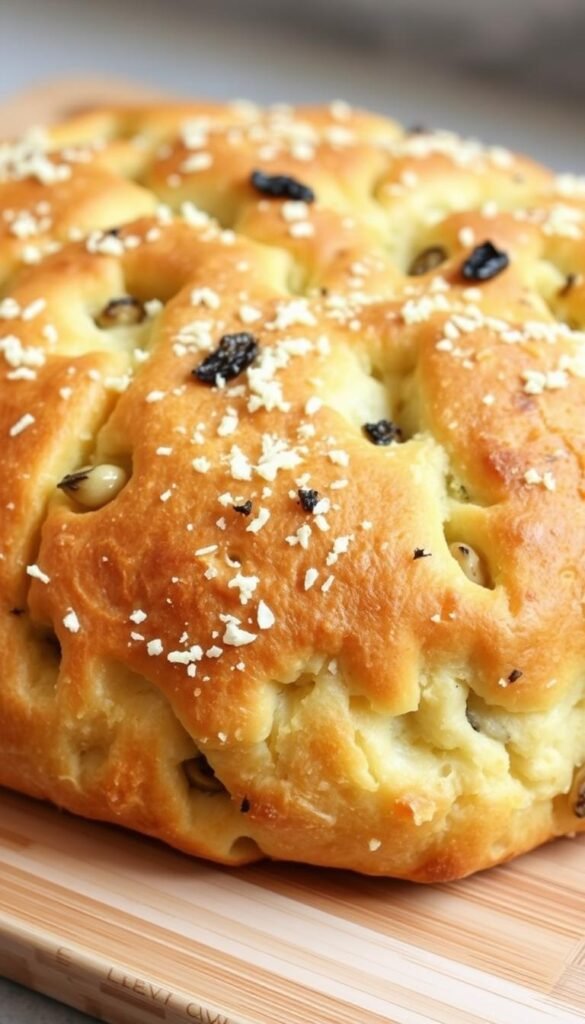
Garlic and Parmesan focaccia is a crowd-pleaser that can transform any ordinary dinner into a culinary experience. This flavorful bread combines the pungency of garlic with the richness of Parmesan, creating a delicious accompaniment to various Italian dishes.
Roasted vs. Fresh Garlic Methods
The method of garlic preparation significantly impacts the flavor profile of your focaccia. Roasting garlic mellows its flavor, creating a sweet and nutty taste, while using fresh garlic provides a sharper, more pungent character. To incorporate roasted garlic, simply slice the top off a whole head, drizzle with olive oil, and roast at 400°F (200°C) for about 30-40 minutes until soft and caramelized. Then, squeeze the garlic out of its skin and mix it into your dough or spread it on top before baking.
- Roasting garlic mellows its flavor.
- Fresh garlic provides a sharper taste.
- Garlic-infused oil can also be used for an intense flavor.
Achieving the Perfect Cheese Crust
Achieving a crispy, golden Parmesan crust on your focaccia requires precise timing and technique. Sprinkle Parmesan cheese on top of the dough during the last 10 minutes of baking to prevent it from burning. Ensure your oven is preheated correctly and consider broiling for an additional 1-2 minutes to achieve that perfect golden crust. The key is to balance the moisture in the dough with the crispiness of the cheese.
Elevating Simple Pasta Dinners
Garlic and Parmesan focaccia can elevate simple pasta dinners into special occasions. Serve it alongside spaghetti aglio e olio or cacio e pepe for a meal that’s both comforting and sophisticated. The bread’s garlicky flavor complements the pasta, while the Parmesan adds a rich, creamy element to the dish. Use it to mop up sauces or enjoy it on its own as a satisfying side.
10 Focaccia Bread Recipes That Will Steal the Show at Your Next Dinner Party
When it comes to dinner parties, the right bread can make all the difference, and focaccia is a top contender. A well-presented focaccia can elevate your dinner party and leave a lasting impression on your guests.
Presentation Techniques for Impressive Serving
The presentation of your focaccia can greatly impact the overall dining experience. Consider using creative cutting patterns, such as a crisscross or a grid, to add visual interest to your bread. You can also experiment with different serving vessels, like wooden boards or wicker baskets, to add a rustic touch to your presentation.
Garnishing your focaccia with fresh herbs, such as rosemary or thyme, can also enhance its appearance. Drizzling a high-quality olive oil over the bread can add a touch of sophistication. For a more dramatic presentation, try arranging your focaccia on a decorative platter or board, surrounded by complementary ingredients like cherry tomatoes or olives.
Make-Ahead Strategies for Stress-Free Entertaining
Preparing focaccia in advance can help reduce stress on the day of your dinner party. One effective strategy is to par-bake your focaccia, allowing you to complete the baking process just before serving. You can also freeze your focaccia dough or baked bread, making it easy to thaw and reheat as needed.
To reheat your focaccia, simply wrap it in foil and warm it in the oven at 350°F (175°C) for 5-10 minutes. This will help restore the bread’s freshness and texture. By preparing your focaccia in advance, you can enjoy a stress-free dinner party and impress your guests with your delicious bread.
| Make-Ahead Strategy | Description | Benefits |
|---|---|---|
| Par-baking | Bake focaccia partially before finishing on the day of serving | Reduces last-minute stress, allows for fresh-baked taste |
| Freezing | Freeze focaccia dough or baked bread for later use | Convenient for advance preparation, easy to thaw and reheat |
| Reheating | Reheat focaccia in the oven to restore freshness | Restores texture and flavor, easy to do just before serving |
As Giada De Laurentiis once said, “The key to a great dinner party is in the details, and bread is one of those details that can make or break the meal.” By using these presentation and make-ahead strategies, you can create a stunning and delicious focaccia that will impress your guests and elevate your dinner party.
“Bread is the foundation of every meal, and focaccia is one of the most versatile and delicious options.”
Fig, Honey, and Goat Cheese Focaccia
The union of caramelized figs, floral honey, and creamy goat cheese creates a focaccia that’s both elegant and delicious. This sophisticated bread is perfect for dinner parties or special occasions, offering a unique flavor profile that will impress your guests.
Balancing Sweet and Savory Elements
Achieving the perfect balance between sweet and savory flavors is crucial in this recipe. The natural sweetness of figs and the floral notes of honey complement the tangy complexity of goat cheese. To control the sweetness, it’s essential to select high-quality ingredients and apply them appropriately. For instance, using caramelized figs rather than raw ones intensifies their sweetness and depth of flavor.
Tips for Balancing Flavors:
- Use a moderate amount of honey to avoid overpowering the other ingredients.
- Select ripe but firm figs for the best texture and flavor.
- Crumble the goat cheese evenly to ensure a consistent tanginess throughout the focaccia.

Seasonal Variations with Different Fruits
While figs are a highlight of this recipe, other fruits can be used to create seasonal variations. For example, in the summer, sliced peaches or nectarines can add a juicy sweetness, while in winter, poached pears or cranberries can provide a lovely contrast. Adjust the quantity of fruit according to its sweetness and the desired balance with the goat cheese.
| Season | Fruit Options | Preparation Method |
|---|---|---|
| Summer | Peaches, Nectarines | Slice thinly and layer on top |
| Winter | Pears, Cranberries | Poach or simmer with sugar |
Pairing with Wine for Dinner Parties
Pairing this fig, honey, and goat cheese focaccia with the right wine can elevate the dining experience. A crisp white wine, such as Sauvignon Blanc, complements the tanginess of the goat cheese, while a dessert wine like Moscato d’Asti pairs beautifully with the sweetness of the figs and honey. Consider serving this focaccia as an appetizer or a cheese course alternative.
Wine Pairing Suggestions:
- Sauvignon Blanc for a refreshing contrast
- Moscato d’Asti for a sweet and celebratory feel
- Pinot Noir for a light-bodied red wine option
Potato and Rosemary Focaccia
In the realm of Italian bread, potato and rosemary focaccia stands out for its rich flavor and satisfying texture. This hearty variation combines the earthy sweetness of potatoes with the piney aroma of rosemary, creating a deliciously complex taste experience that’s perfect for accompanying a variety of dinner options.
Preparing Potatoes for Perfect Texture
To achieve the perfect texture in potato focaccia, it’s crucial to select the right potatoes and prepare them appropriately. High-starch potatoes like Russet or Idaho are ideal as they yield a lighter, fluffier texture. Cooking the potatoes until they’re tender, then cooling them, helps to preserve their starch content. Mashing or finely chopping the cooled potatoes before incorporating them into the dough ensures an even distribution of potato flavor and texture throughout the focaccia.
The method of preparing potatoes can significantly affect the final product. For a more rustic texture, leaving some chunkiness in the mashed potatoes can add a pleasant contrast to the soft bread. Conversely, for a smoother focaccia, ensuring the potatoes are well-mashed before adding them to the dough is key.
Regional Italian Variations
Italian cuisine is rich in regional variations, and potato focaccia is no exception. In Liguria, a region known for its traditional focaccia, the addition of potatoes creates a deliciously dense and flavorful bread known as “focaccia patate.” Similarly, in Puglia, potato breads are a staple, often featuring a crispy crust and a soft interior, showcasing the diversity of Italian bread-making traditions.
These regional interpretations not only highlight the versatility of potato focaccia but also underscore the cultural significance of bread in Italian cuisine. Whether it’s served as a side, used as a base for sandwiches, or enjoyed on its own, potato focaccia is a beloved component of Italian meals across different regions.
Serving with Roasted Meat Dinners
Potato and rosemary focaccia pairs exceptionally well with roasted meat dinners, complementing the rich flavors of meats like roasted chicken, beef, or lamb. The earthy sweetness of the potatoes and the aromatic rosemary enhance the savory flavors of the meat, creating a well-rounded and satisfying meal. Serving the focaccia warm, perhaps straight from the oven, adds to its appeal, making it a perfect accompaniment to hearty roasted dinners.
For a more contemporary twist, consider using the focaccia as a base for sandwiches featuring roasted meats, or tear it into chunks and serve alongside a robust stew or roasted vegetable dish. The versatility of potato and rosemary focaccia makes it a valuable addition to any dinner menu.
Pesto and Cherry Tomato Focaccia
The vibrant flavors of summer are perfectly captured in a Pesto and Cherry Tomato Focaccia. This Italian bread is not only a feast for the taste buds but also a visual delight, making it an ideal centerpiece for summer dinner gatherings.
Homemade vs. Store-Bought Pesto Options
When it comes to making Pesto and Cherry Tomato Focaccia, one of the key decisions is whether to use homemade or store-bought pesto. Homemade pesto offers a fresher, more vibrant flavor that can be tailored to personal taste preferences by adjusting the ingredients. A simple homemade pesto recipe includes basil, garlic, pine nuts, Parmesan cheese, and olive oil. However, when time is limited, high-quality store-bought pesto can be a convenient alternative.
Different pesto varieties can significantly impact the flavor profile of the focaccia. Traditional Genovese pesto provides a classic taste, while sun-dried tomato pesto adds a deeper, richer flavor. Arugula pesto, on the other hand, introduces a peppery note that complements the sweetness of cherry tomatoes.
Arranging Tomatoes for Visual Impact
The arrangement of cherry tomatoes on top of the focaccia is crucial for its visual appeal. To create an aesthetically pleasing pattern, consider the color and size of the tomatoes. A mix of red and yellow cherry tomatoes can add a pop of color, while halving or quartering the tomatoes can create a more intricate design.
| Tomato Arrangement | Visual Impact |
|---|---|
| Random scattering | Casual, effortless look |
| Concentric circles | Symmetrical, visually appealing |
| Patterned design | Artistic, creative expression |
Summer Dinner Menu Pairings
Pesto and Cherry Tomato Focaccia pairs well with a variety of summer dishes. It complements grilled vegetables and seafood, making it a versatile addition to any summer dinner menu. For a cohesive dining experience, consider pairing the focaccia with lighter fare that won’t overpower its fresh flavors.
Some ideal pairing suggestions include:
- Grilled lemon herb chicken
- Roasted vegetable salad
- Seafood skewers with a side of tzatziki sauce
By incorporating Pesto and Cherry Tomato Focaccia into your summer dinner menu, you can add a delicious and visually appealing element that enhances the overall dining experience.
Wild Mushroom and Truffle Oil Focaccia
The combination of wild mushrooms and truffle oil transforms focaccia into a gourmet masterpiece. This luxurious variation is perfect for special occasions or when you want to elevate your dinner gatherings.
Selecting and Preparing Gourmet Mushrooms
Choosing the right mushrooms is crucial for creating an exceptional Wild Mushroom and Truffle Oil Focaccia. Opt for a mix of wild mushrooms such as porcini, chanterelles, and shiitake for their unique flavors and textures. If wild mushrooms are not available, cremini and oyster mushrooms can be used as a substitute.
Proper preparation of the mushrooms is key to bringing out their full flavor. Start by cleaning the mushrooms with a soft brush to remove any dirt. Slice them thinly to ensure even cooking. Sauté the mushrooms in olive oil with a pinch of salt until they release their moisture and start to brown. This process enhances their natural umami flavor, which pairs beautifully with truffle oil.
| Mushroom Type | Flavor Profile | Preparation Tip |
|---|---|---|
| Porcini | Rich, earthy | Slice thinly for even cooking |
| Chanterelles | Fruity, slightly peppery | Sauté whole to preserve texture |
| Shiitake | Smoky, rich | Remove stems before slicing |
Using Truffle Oil for Maximum Flavor
Truffle oil adds a deep, luxurious flavor to the focaccia. When using truffle oil, it’s essential to choose a high-quality product. Look for truffle oil that is made with real truffles, as synthetic options may lack the depth of flavor you’re seeking.
To maximize the flavor of truffle oil, drizzle it over the focaccia towards the end of baking or immediately after it comes out of the oven. This allows the aroma to meld with the other ingredients without losing its potency. Start with a small amount, as truffle oil is potent, and adjust to taste.
Creating Upscale Dinner Experiences
Wild Mushroom and Truffle Oil Focaccia is more than just a side dish; it’s a centerpiece for an upscale dinner experience. Serve it alongside a charcuterie board or as a complement to a hearty soup for a sophisticated start to the meal.
For a truly memorable dinner, consider pairing the focaccia with a glass of wine. A rich, oaky Chardonnay or a bold Pinot Noir pairs beautifully with the earthy flavors of the mushrooms and the luxurious truffle oil. As you present the focaccia, garnish it with fresh herbs like thyme or rosemary to add a touch of elegance to your table setting.
Mastering Focaccia Techniques for Dinner Success
Mastering focaccia techniques is crucial for dinner success. Whether you’re a novice baker or an experienced one, understanding the nuances of focaccia preparation can elevate your dinner gatherings. This section provides practical guidance to ensure consistent success with all the preceding recipes.
Troubleshooting Common Focaccia Problems
Even experienced bakers encounter issues with focaccia. Common problems include dense texture, inadequate rise, uneven baking, and improper browning. Understanding the causes and solutions to these issues can significantly improve your baking results.
- Dense Texture: Often caused by overmixing the dough or insufficient proofing time. Ensure you mix ingredients just until they come together and allow adequate time for the dough to rise.
- Inadequate Rise: This can be due to old yeast, incorrect yeast quantity, or insufficient warmth during proofing. Check your yeast’s expiration date and ensure your proofing area is warm and draft-free.
- Uneven Baking: Caused by uneven oven temperature or incorrect baking sheet placement. Use an oven thermometer to verify temperature accuracy and rotate your baking sheet halfway through baking.
- Improper Browning: Can result from incorrect oven temperature or excessive topping. Adjust your oven temperature as needed and be mindful of the amount of topping used.

Equipment That Makes a Difference
The right equipment can significantly impact your focaccia baking results. While not necessary to invest in expensive gear, certain tools can improve your outcomes.
- Dough Scraper: Essential for handling sticky dough and ensuring clean countertops.
- Digital Scale: Accurate measurements are crucial in bread baking. A digital scale ensures you’re using the right quantities.
- Proofing Containers: Help maintain a consistent environment for dough rise, improving texture and flavor.
- Baking Sheets: Opt for heavy-duty, dark-colored sheets for even browning.
While specialized equipment can enhance your baking, technique remains paramount. Focus on mastering fundamental techniques, and then consider investing in tools that suit your baking frequency and style.
Conclusion
Focaccia bread has proven to be a versatile canvas for various flavors, transforming ordinary dinners into extraordinary experiences. Through the ten focaccia dinner recipes explored, it’s clear that this Italian bread making tradition offers endless possibilities for homemade focaccia that can complement any meal.
From classic rosemary and sea salt to innovative combinations like fig, honey, and goat cheese, each recipe has showcased the adaptability of focaccia to different seasons and dining occasions. Mastering basic techniques is key to bread baking success, allowing home bakers to experiment with confidence.
Whether you’re looking to impress guests or simply elevate your family’s dinner routine, focaccia is a practical and impressive addition to any baker’s repertoire. Its make-ahead potential and visual impact make it an ideal choice for dinner parties. By applying the essential techniques outlined in the previous sections, readers can continue to explore and create their own unique focaccia dinner recipes, pushing the boundaries of Italian bread making and homemade focaccia.