9 Easy Rosemary Bread Recipes You’ll Love
The smell of rosemary bread baking is amazing. It makes your home feel cozy and welcoming.
This Website contains affiliate links. That means I may earn a small commission if you purchase through my links, at no extra cost to you.
Making homemade bread recipes with rosemary is fun and rewarding. It’s great for both new and experienced bakers.
Herb bread recipes are flexible and tasty. We’ll show you how to make easy bread recipes that you’ll love.
Key Takeaways
- Discover the joy of baking rosemary-infused bread at home.
- Explore versatile herb bread recipes for different tastes.
- Learn how to make delicious focaccia and rustic loaves.
- Find easy homemade bread recipes suitable for all skill levels.
- Experience the satisfaction of sharing freshly baked bread with family and friends.
The Aromatic Appeal of Rosemary in Bread
Rosemary in bread is popular for its strong taste and health perks. It comes from the Mediterranean and is loved in Italian and French baking. Its pine-like smell and taste are perfect for making scented bread.
When rosemary is baked, its oils fill the bread with its unique smell and taste. Unlike soft herbs, rosemary keeps its flavor even when baked hot. This makes it a favorite among bakers.
Health Benefits of Rosemary
Rosemary is tasty in bread and good for you too. It’s full of antioxidants like rosmarinic acid and carnosic acid. These help fight stress in the body.
It also has anti-inflammatory properties. These might help your brain work better, like remembering things. Plus, rosemary is good for your stomach and fights off bad germs.
Why Rosemary and Bread Make a Perfect Pair
Rosemary’s strong, resinous taste goes well with bread’s yeasty flavor. Its piney and citrusy notes balance the richness of olive oil. It’s great in crusty loaves, soft focaccia, or quick breads.
Rosemary’s flavor is also good with garlic, sea salt, and cheese. This mix makes for a tasty and fragrant dish.
Essential Ingredients and Tools for Perfect Rosemary Bread
Great rosemary bread needs good ingredients and the right tools. Each part plays a big role in making the bread.
Must-Have Ingredients for Success
Start with the right ingredients for rosemary bread. Quality flour is key. You can pick from all-purpose, bread flour, or whole wheat flour.
Bread flour makes loaves chewy. All-purpose flour works for many bread types.
Yeast is also important. Know the difference between active dry, instant, and fresh yeast. Extra virgin olive oil adds flavor. Sea salt improves taste and controls yeast. Honey or sugar feed the yeast. Garlic, Parmesan cheese, or olives add to the rosemary taste.
| Ingredient | Purpose | Recommended Type |
|---|---|---|
| Flour | Structure and texture | Bread flour or all-purpose flour |
| Yeast | Leavening | Active dry yeast or instant yeast |
| Olive Oil | Flavor and moisture | Extra virgin olive oil |
| Salt | Flavor and yeast control | Sea salt |
Recommended Baking Tools
Right tools are key for bread baking. You’ll need measuring cups and spoons, mixing bowls, and baking sheets. For better baking, get a Dutch oven and a baking stone. A dough scraper helps with sticky dough.
Fresh vs. Dried Rosemary: Making the Right Choice
Choose between fresh and dried rosemary. Fresh rosemary tastes brighter. Dried rosemary is more intense. Use 1 tablespoon fresh for 1 teaspoon dried.
Chop fresh rosemary finely. Crush dried rosemary before using.
9 Easy Rosemary Bread Recipes You’ll Love
Start a baking journey with our guide to 9 easy rosemary bread recipes. They fit all skill levels. This collection shows how versatile rosemary is in bread making. You’ll find flavors and textures that will wow everyone.
Our rosemary bread recipes are not just varied. They’re also foolproof bread recipes that taste great and are simple to make. Whether you’re new to baking or have lots of experience, we have recipes for you.
What Makes These Recipes Special
These 9 rosemary bread recipes are special because they need minimal kneading and offer make-ahead options. They’re great for busy bakers. Each recipe has been tested and perfected to ensure you get great results every time.
Difficulty Levels Explained
We’ve sorted the recipes by baking skill levels. Recipes for beginners are easy and need simple ingredients. Intermediate recipes take longer and use some special techniques. Advanced recipes need precision and special tools, but we provide detailed instructions.
Classic Rosemary Focaccia
Classic Rosemary Focaccia is simple yet elegant. It’s a traditional Italian bread perfect for any time. It has an olive oil dough, a dimpled surface, and a soft inside.

Ingredients List
To make Classic Rosemary Focaccia, you need:
- 2 cups of bread flour for proper gluten development
- 1 teaspoon of active dry yeast for fermentation
- 1 cup of warm water at the correct temperature for yeast activation
- 2 tablespoons of extra virgin olive oil for authentic flavor
- 1 teaspoon of salt for flavor development
- 2 sprigs of fresh rosemary, chopped
- Optional: flaky sea salt for topping and additional flavor enhancers like garlic or olives
Using high-quality ingredients is key. Good extra virgin olive oil makes your focaccia taste better.
Step-by-Step Instructions
Here’s how to make your Classic Rosemary Focaccia:
- Mix the dough ingredients together until they form a shaggy mass, then knead for about 10 minutes until the dough becomes smooth and elastic.
- Allow the dough to rise in a warm, draft-free place until it has doubled in size, which should take about 1-2 hours.
- Preheat your oven to 425°F (220°C). Line a sheet pan with parchment paper.
- Stretch the risen dough onto the prepared sheet pan, creating the characteristic dimples with your fingertips.
- Drizzle herb-infused olive oil over the dough, making sure to get some into the dimples.
- Sprinkle chopped rosemary and sea salt over the top.
- Bake in the preheated oven for 15-20 minutes, or until golden brown.
Focus on the focaccia shaping and olive oil and rosemary application for the best taste.
Serving Suggestions and Variations
Classic Rosemary Focaccia is very versatile. Serve it warm with olive oil and balsamic vinegar for dipping. It’s great as a sandwich base, especially with Mediterranean fillings. It also goes well with soups, stews, and pasta.
Try adding sun-dried tomatoes, caramelized onions, or different cheeses to the basic recipe. You can also use thyme or sage instead of rosemary for new flavors.
No-Knead Rosemary Garlic Bread
Make a tasty No-Knead Rosemary Garlic Bread with little effort. This method, by Jim Lahey, uses time instead of kneading. It makes a loaf with an open crumb and a crunchy crust.
Ingredients List
To make this tasty bread, you need:
- 3 cups of bread flour
- 1/4 teaspoon of instant yeast
- 1 1/2 cups of water at around 90°F to 100°F
- 2 cloves of roasted garlic, minced
- 2 tablespoons of fresh rosemary leaves, chopped
- 1 1/2 teaspoons of coarse salt
- Optional: 1 tablespoon of honey, 1 tablespoon of olive oil
Choosing good ingredients is important. But, you can swap some for others if needed.
Step-by-Step Instructions
Start by mixing the ingredients until they just come together. The dough will be sticky, but that’s okay. Then, cover it and let it rest at room temperature for 12 to 24 hours.
After resting, shape the dough into a round or oblong loaf. Be gentle so you don’t push out the air. Put it in a hot Dutch oven, cover, and bake at 450°F for 30 minutes. Then, take off the cover and bake for another 15 to 20 minutes, until it’s golden.
Serving Suggestions and Variations
This bread is great with many things. Try it with soups or stews, as bruschetta base, or as a bread bowl for dips. For more taste, try lemon zest or honey butters. You can also add herbs, cheeses, or olives to make it your own.
This recipe is perfect for beginners or pros. It’s easy to make and tastes amazing. It’s a great choice for anyone wanting to bake delicious bread without much work.
Rustic Rosemary Olive Oil Bread
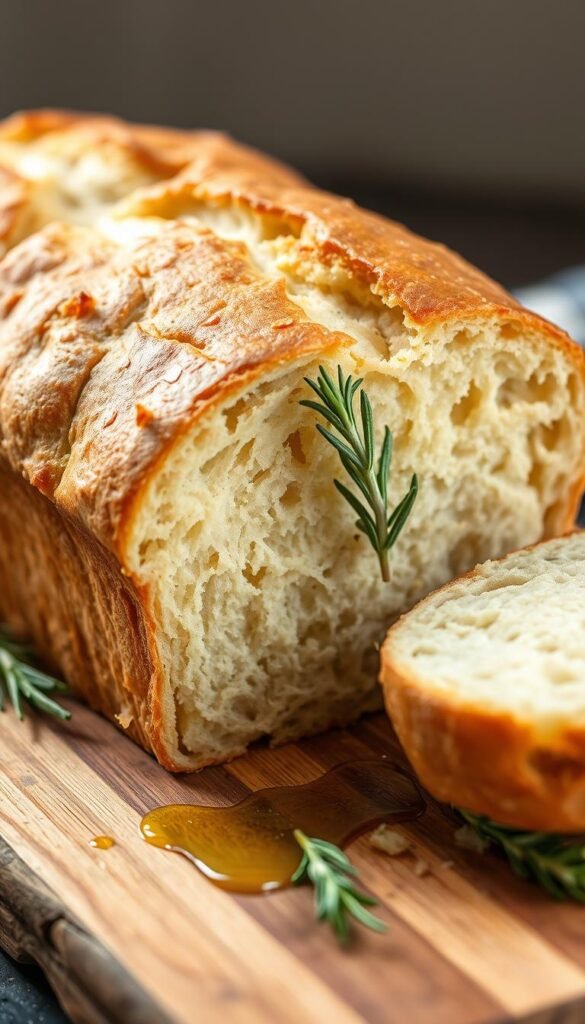
Rustic Rosemary Olive Oil Bread is special. It has a hearty texture and a deep, herbaceous flavor. This bread is a classic from the Mediterranean, where olive oil is key.
Ingredients List
To make this bread, you need:
- 2 cups of bread flour
- 1/2 cup of semolina flour
- 1/4 cup of extra virgin olive oil
- 1 tablespoon of fresh rosemary leaves (or 1 teaspoon dried)
- 1 teaspoon of salt
- 1/2 teaspoon of sugar
- 1/2 teaspoon of active dry yeast
- 1 cup of warm water
Good ingredients make great bread. Choose fresh, high-quality ones for the best taste and texture.
| Ingredient | Quantity | Notes |
|---|---|---|
| Bread Flour | 2 cups | Use unbleached, unbromated flour for best results |
| Semolina Flour | 1/2 cup | Provides texture and a hint of yellow color |
| Extra Virgin Olive Oil | 1/4 cup | Use a good quality oil for flavor |
| Fresh Rosemary | 1 tablespoon | Chop leaves finely to release oils |
Step-by-Step Instructions
Start by mixing dry ingredients in a big bowl. Then add olive oil and water slowly. Mix until it’s shaggy, then knead for 10-15 minutes until it’s smooth.
Let the dough rise slowly. This step is key for flavor and texture. After rising, shape it into a rustic loaf. Proof it, then bake in a hot oven with steam for a crispy crust.
- Mix dry ingredients and rosemary.
- Incorporate olive oil and water.
- Knead the dough.
- Let the dough rise.
- Shape into a loaf.
- Bake with steam.
Serving Suggestions and Variations
This bread is great with Mediterranean dishes. Try dipping it in olive oil or use it for bruschetta. You can also add olives, sun-dried tomatoes, or roasted garlic for more flavor.
Try different shapes like dinner rolls or breadsticks. Top it with coarse sea salt and sesame seeds before baking. This recipe is perfect for bread lovers.
Tangy Rosemary Sourdough Bread
This tangy rosemary sourdough bread is a mix of old and new. It has a special flavor from sourdough and rosemary. Making it is fun and a great way to learn more about baking.
Ingredients List
You need a few things to make this bread. First, an active sourdough starter is key. It makes the bread rise and taste special. You also need bread flour for strength and water for the dough. Salt adds flavor and controls yeast. Rosemary gives it a nice smell and taste. You can also add olive oil for extra flavor.
- 1 cup active sourdough starter
- 3 cups bread flour
- 1 cup water
- 1 tsp salt
- 2 tbsp fresh rosemary leaves (or 1 tsp dried rosemary)
- 1 tbsp olive oil (optional)
Step-by-Step Instructions
First, get your sourdough starter ready. Then, mix flour and water, add the starter, salt, and rosemary. Let it rest and do stretch and fold to make the dough strong. Shape it, chill it, and score it before baking.
- Mix flour and water, then rest for 20 minutes.
- Add sourdough starter, salt, and rosemary; mix until combined.
- Perform stretch and fold operations every 30 minutes for 2 hours.
- Shape the dough and place it in a proofing basket.
- Cold proof in the refrigerator for 12-24 hours.
- Score the dough and bake at 450°F (230°C) with steam for 25-30 minutes.
Serving Suggestions and Variations
This bread is great for many things. Try it with cultured butter or as a base for fancy toast. It’s also good with soups and stews. You can add garlic, lemon zest, or black pepper for more taste. Try different flours or shapes to make it your own.
By trying new things, you can make a delicious tangy rosemary sourdough bread. It will show off your baking skills.
Gluten-Free Rosemary Bread
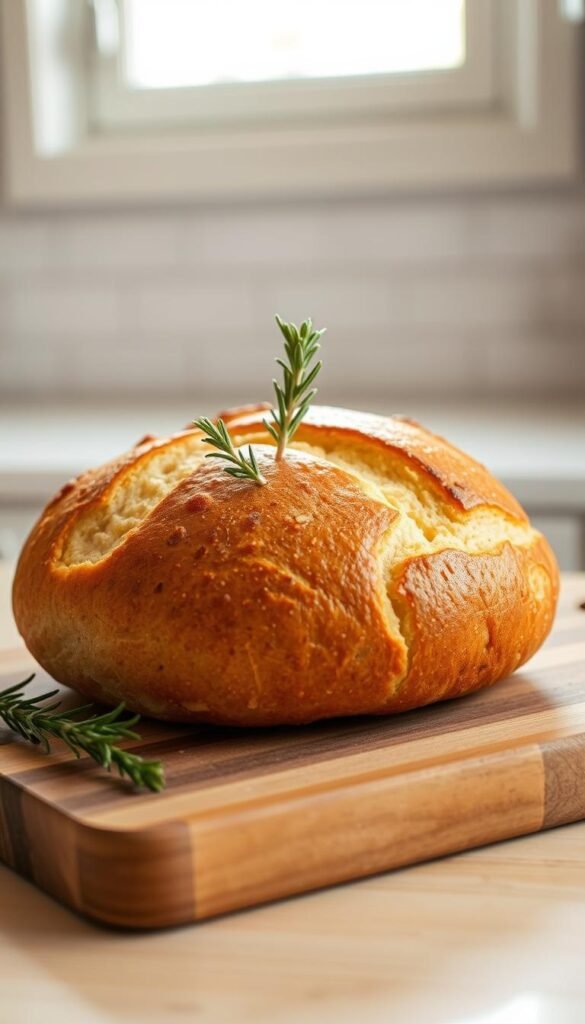
Learn how to make a tasty gluten-free rosemary bread. It’s great for any event. This recipe is for those who can’t eat gluten. It lets everyone enjoy the yummy taste of rosemary in bread.
Ingredients List
You’ll need special ingredients for this bread. Use a gluten-free flour blend, which you can buy or make. It often has rice flour, tapioca starch, and potato starch.
Binding agents like xanthan gum or psyllium husk are also needed. They help the bread feel like regular bread. You’ll also need rosemary, garlic, olive oil, salt, and sugar. Yeast is key for rising, and a bit of egg or apple cider vinegar helps too.
- 1 1/2 cups gluten-free flour blend
- 1/4 cup tapioca starch
- 1/4 cup potato starch
- 1 teaspoon xanthan gum
- 2 teaspoons dried rosemary
- 1 teaspoon salt
- 1 tablespoon sugar
- 1 packet active dry yeast
- 1 cup warm water
- 2 tablespoons olive oil
- 1 egg, beaten (optional)
Step-by-Step Instructions
Making gluten-free rosemary bread is a bit different. First, mix your dry ingredients well. Then, mix the wet ingredients separately before adding them to the dry ones. The dough will be more like a batter.
Beat it well to make it strong. Let it rise in a warm, draft-free spot. Shape it into a loaf or rolls, and bake until it’s golden. Cool it well to keep it soft.
- Combine dry ingredients in a large bowl.
- Mix wet ingredients in a separate bowl.
- Combine wet and dry ingredients, beating until smooth.
- Let the dough rise for about an hour, or until doubled in size.
- Shape into a loaf or rolls.
- Bake at 375°F (190°C) for 35-40 minutes, or until golden brown.
Serving Suggestions and Variations
This bread is very flexible. Enjoy it warm with olive oil for dipping. Or, use it for open-faced sandwiches. Toast it to refresh it after storing.
Try adding thyme or oregano for more flavor. Cheese or dairy-free options can also enhance it. Sun-dried tomatoes add a nice taste. Play with shapes like dinner rolls or focaccia, adjusting baking times as needed.
With the right ingredients and steps, you can make delicious gluten-free rosemary bread. It’s perfect for any meal or event.
Quick Rosemary Bread Machine Recipe
Bread machines make making rosemary bread easy for everyone. You can have fresh bread without spending hours in the kitchen.
Ingredients List
To make tasty rosemary bread, you need these ingredients:
- 2 cups of bread flour
- 1 teaspoon of salt
- 1 tablespoon of sugar
- 1 packet (2 1/4 teaspoons) of bread machine yeast
- 1 cup of water
- 2 tablespoons of olive oil
- 2 tablespoons of fresh rosemary leaves, chopped
Make sure ingredients are at room temperature. Accurate measurements are key for great bread.
| Ingredient | Measurement |
|---|---|
| Bread Flour | 2 cups |
| Salt | 1 teaspoon |
| Sugar | 1 tablespoon |
| Yeast | 2 1/4 teaspoons |
| Water | 1 cup |
| Olive Oil | 2 tablespoons |
| Rosemary | 2 tablespoons |
Step-by-Step Instructions
To make the bread, follow these steps:
- Put ingredients in the bread machine in order: liquids first, then dry ingredients, and yeast last.
- Choose the basic bread cycle and crust color you like.
- If your machine has a “mix-in” feature, add rosemary during the beep.
- After the cycle ends, take out the bread and cool it on a wire rack.
Tips for Best Results: Keep ingredients at room temperature. Measure flour and liquids carefully. If dough feels off, adjust liquid during mixing.
Serving Suggestions and Variations
Enjoy warm rosemary bread with butter or olive oil. It’s great for sandwiches or toasted for more flavor. Try adding olives, sun-dried tomatoes, or cheese for different tastes.
Timing is everything: Use the delayed start for fresh bread when you need it. Just set the timer and enjoy your bread whenever.
Savory Rosemary Parmesan Bread
This Italian-inspired rosemary Parmesan bread is a masterpiece. It mixes the smell of rosemary with the taste of Parmesan cheese. It’s perfect for many dishes or just on its own.

Ingredients List
To make this bread, you need top-quality ingredients. Start with aged Parmesan cheese, grated fresh for the best taste. You’ll use Parmesan for the dough and on top. Other key items are:
- Flour
- Yeast
- Water
- Rosemary
- Olive oil
- Garlic
- Black pepper
You can swap Parmesan for other hard cheeses like Pecorino Romano or Grana Padano. The cheese and olive oil you choose will really affect the bread’s taste.
Step-by-Step Instructions
First, make your dough with rosemary and some Parmesan. It’s important to fold in the cheese so it’s in pockets, not spread out. This makes the bread special.
When shaping the loaf, leave some cheese on top. Use an egg wash or water to help the cheese brown in the oven. Watch the temperature and where you place the loaf to get a nice crust.
Let the bread cool down completely before cutting. This helps the cheese inside set right.
Serving Suggestions and Variations
Rosemary Parmesan bread is great with many dishes. Enjoy it with Italian meals, use it to soak up sauces, or just with olive oil. Try it warm for a stronger cheese smell.
Try mixing different cheeses like mozzarella or asiago into the dough. Add sun-dried tomatoes or olives for a new taste. You can also make breadsticks or a pull-apart loaf to show off the cheese layers.
30-Minute Rosemary Beer Bread
This quick bread recipe is a lifesaver for those short on time. It’s easy to make and perfect for sudden gatherings or weeknight meals. You don’t need yeast or to knead it, saving you precious minutes.
Beer is the secret ingredient here. It makes the bread light and adds flavor. The beer’s carbonation gives the bread its texture. At the same time, the malt in the beer brings out the rosemary’s taste, making the bread taste complex and rustic.
Ingredients List
To make this quick rosemary beer bread, you’ll need:
- 2 cups of self-rising flour (or all-purpose flour with 2 teaspoons of baking powder and 1 teaspoon of salt)
- 1/4 cup of granulated sugar
- 1/2 cup of beer (style of your choice, but lighter beers produce a milder flavor)
- 2 tablespoons of melted butter
- 2 tablespoons of chopped fresh rosemary
- Optional: 1/2 cup of grated cheese, 1/4 cup of chopped garlic, or other desired mix-ins
Choosing the right beer can change the bread’s taste. Lighter beers like lagers or pilsners add a subtle flavor. But, ales or stouts can make the bread taste more robust.
Step-by-Step Instructions
First, heat your oven to 375°F (190°C). Grease a 9×5-inch loaf pan. In a big bowl, mix the flour, sugar, and rosemary. Then, add the beer and stir until it’s just combined. The batter should be sticky.
Put the batter in the loaf pan and smooth it out. Drizzle the melted butter over the dough. Bake for 30-35 minutes, or until it’s golden and sounds hollow.
After baking, let the bread cool in the pan for 5 minutes. Then, move it to a wire rack to cool off completely.
Serving Suggestions and Variations
This rosemary beer bread is great with honey butter and soups or stews. It’s also perfect for a quick charcuterie board. For a special touch, pair it with the same beer used in the recipe.
| Beer Style | Flavor Profile | Pairing Suggestions |
|---|---|---|
| Lager | Mild, crisp | Cheese platter, charcuterie |
| IPA | Hoppy, bitter | Spicy soups, robust cheeses |
| Stout | Rich, malty | Beef stew, chocolate desserts |
Try different beers and mix-ins for unique tastes. Adding cheese, caramelized onions, or bacon bits can enhance the rosemary and beer flavors.
Sweet Rosemary Honey Wheat Bread
This bread is made with whole wheat, rosemary, and honey. It’s healthy and tastes great. The whole wheat gives it a strong taste. Rosemary and honey make it sweet and savory.
Ingredients List
You need whole wheat and bread flour for this bread. Vital wheat gluten makes it strong. You can use different types of honey for flavor.
Fresh or dried rosemary is used. Adjust it to taste. Olive oil, milk, and seeds or nuts are optional.
| Ingredient | Quantity | Notes |
|---|---|---|
| Whole Wheat Flour | 2 cups | Use a high-protein whole wheat flour for better texture. |
| Bread Flour | 1 cup | All-purpose or bread flour works well. |
| Honey | 1/4 cup | Choose a high-quality, raw honey for the best flavor. |
| Rosemary | 2 tbsp | Fresh or dried rosemary can be used; adjust to taste. |
| Olive Oil | 2 tbsp | Use a mild olive oil to avoid overpowering the bread. |
Step-by-Step Instructions
First, mix the dry ingredients. Then, mix the wet ingredients. Chop the rosemary finely.
Combine the wet and dry ingredients. Knead the dough well. Let it rise until it doubles.
Shape the dough into a loaf. Bake it in a hot oven. Brush with honey for a golden crust.
Serving Suggestions and Variations
This bread is great for breakfast or sandwiches. It’s also good with cheese. Try adding different grains or honey for a twist.
Seasonal ingredients like orange zest or lavender can make it even better.
Troubleshooting Common Rosemary Bread Problems
Baking rosemary bread is fun, but it has its own set of challenges. Even skilled bakers sometimes run into problems. Knowing how to fix these issues is key to making perfect bread every time.
Fixing Texture Issues
Texture problems in rosemary bread can come from not kneading enough, wrong rising time, or oven temperature. To fix dense bread, knead the dough well. For gummy centers, check your oven temperature and use a thermometer if needed. Crumbly bread can be fixed by adding more water or fat.
Crust problems, like it being too light or dark, can be solved by adjusting baking time and temperature.
Proper kneading and correct oven temperature are important for the right crumb. Fixing these can greatly improve your bread’s texture.
Balancing Rosemary Flavor
Getting the rosemary flavor just right can be hard. If it’s too mild, bruise the herbs before adding them. If it’s too strong, use less rosemary or add garlic or cheese. Make sure the rosemary is evenly spread in the dough for consistent flavor.
Try different ways to prepare rosemary, like infusing it in oil, to get the flavor you want without bitterness. By mastering rosemary flavor, you can make a bread that’s full of aroma and taste. Proper measurement and distribution techniques are crucial for this.
Perfect Pairings for Your Rosemary Bread
Rosemary bread is more than just a side dish. It’s a centerpiece for various culinary pairings. The distinctive herbal notes of rosemary bread can enhance a meal when paired thoughtfully with complementary foods and beverages.
Soups and Stews
Rosemary bread is perfect with soups and stews. It pairs well with Tuscan white bean soup. You can use the bread to soak up the broth.
It also complements hearty beef stew. The rosemary in the bread enhances similar herbs in the dish. You can serve it by floating toasted rosemary bread croutons on creamy soups. Or use hollowed-out rosemary bread as an edible bowl for chowders.
| Soup/Stew | Pairing Suggestion |
|---|---|
| Tuscan White Bean Soup | Use bread to soak up the broth |
| Hearty Beef Stew | Complements herbs in the stew |
Dips and Spreads
Rosemary bread’s flavor and texture are showcased with dips and spreads. Try high-quality olive oil infused with garlic and herbs for dipping. Or simple compound butters.
Cheese-based options like whipped ricotta with honey, herbed goat cheese, or aged pecorino are also excellent. Mediterranean dips such as hummus variations, baba ganoush, and tapenade pair well with rosemary bread.
- Olive oil infused with garlic and herbs
- Compound butters
- Whipped ricotta with honey
- Herbed goat cheese
- Mediterranean dips like hummus and baba ganoush
Storing and Freezing Your Rosemary Bread
To enjoy your rosemary bread for days, store it right. The right storage keeps your bread fresh. This is true for all types of bread.
Keeping Bread Fresh
Storing rosemary bread right keeps it fresh. Bread gets stale when it loses moisture and starches change. To slow this, store it in a way that keeps moisture in.
For crusty bread, store it cut-side down. This keeps the crust good. For softer bread, use airtight containers to keep it moist.
Environmental factors affect bread storage too. In humid places, bread gets soggy. In dry places, it dries out. Adjust your storage to fit your area’s climate.
Freezing and Reheating Tips
Freezing is great for long-term storage. Cool the bread first. Then wrap it in plastic or foil and bag it.
Label the bags with the date. This helps you remember how long it’s been stored. To thaw, let it sit at room temperature or reheat it.
There are many ways to reheat frozen bread. For a crispy crust, bake it at 350°F (175°C) for 10-15 minutes. Wrap it in foil for moisture. Or, slice and toast it for a quick fix.
Use old bread in new ways. Make rosemary bread crumbs or croutons. Season them with herbs and spices for more flavor.
Conclusion
Baking rosemary bread is a fun and rewarding thing to do. It lets you create something special and share it with others. By trying out the nine recipes in this article, you can become great at making herb bread.
Rosemary bread is very versatile. You can make quick and easy bread or more complex loaves. This helps you learn a lot about bread baking. You’ll also learn about the health benefits and the nice smell of rosemary.
This article will help you make delicious homemade bread. It doesn’t matter if you’re new to baking or very experienced. The recipes here are a good place to start your own baking journey. Pick a recipe that looks good to you and start baking today.