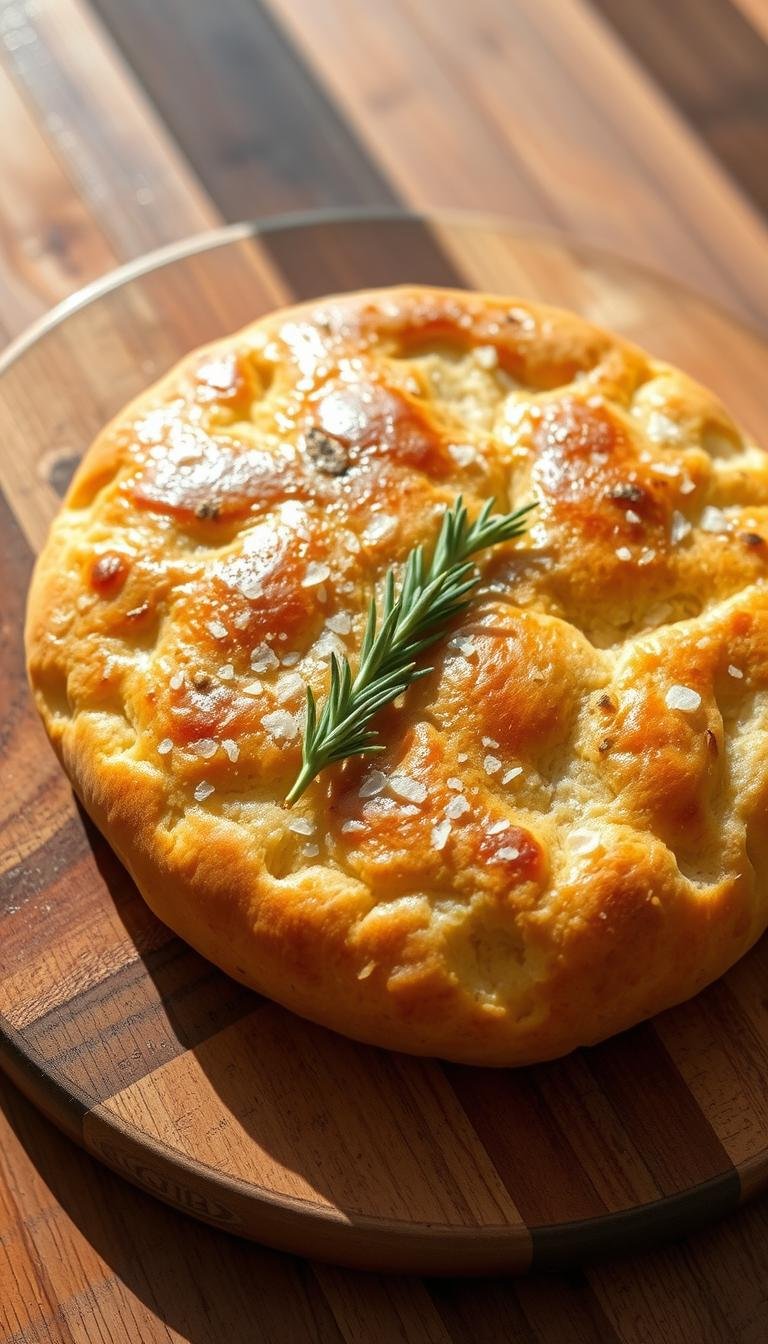
6 Easy Focaccia Bread Recipe Variations You’ll Love
The art of baking Italian bread at home just got a whole lot easier. Focaccia, a classic Italian flatbread, has been a staple in Italian cuisine for centuries. Its versatility and delicious flavor have made it a favorite among bread enthusiasts. With the rise of home baking, more people are discovering the joy of making homemade focaccia.
This Website contains affiliate links. That means I may earn a small commission if you purchase through my links, at no extra cost to you.
Did you know that focaccia originated in ancient Italy, where it was baked in the hearth? Today, you can achieve similar results in your own kitchen with a simple focaccia bread recipe. Whether you’re a novice or an experienced baker, the world of focaccia offers endless possibilities for creativity and experimentation.
Key Takeaways
- Learn the fundamental techniques for creating perfect focaccia at home.
- Discover six creative and flavorful focaccia variations to try.
- Understand the basics of making easy focaccia with simple ingredients.
- Get tips on seasonal adaptations and pairing recommendations.
- Troubleshoot common issues in focaccia baking.
The Art of Focaccia: An Italian Bread Classic
Focaccia, a staple in Italian cuisine, has been a beloved bread for centuries. Its rich history and unique characteristics have made it a favorite among bread enthusiasts. In this section, we will explore what makes focaccia special and the basic ingredients and equipment needed to make it.
What Makes Focaccia Special
Focaccia is distinguished by its dimpled surface, generous use of olive oil, and versatility as a canvas for various toppings. Originating in ancient Rome, focaccia has evolved throughout Italian culinary history, particularly in the Liguria region where it remains a staple. The bread occupies a special place between bread and pizza, with its airy interior, crisp exterior, and flavorful crust.
Focaccia’s versatility is one of its most appealing characteristics. It can be topped with a variety of ingredients, from simple olive oil and herbs to more complex combinations like caramelized onions and cheese.
Basic Ingredients and Equipment
To make authentic focaccia, you will need a few fundamental ingredients: high-quality flour, extra virgin olive oil, salt, yeast, and water. The quality of these ingredients can significantly impact the final product.
| Ingredient | Purpose |
|---|---|
| High-quality flour | Provides structure and texture |
| Extra virgin olive oil | Adds flavor and moisture |
| Salt | Enhances flavor |
| Yeast | Facilitates fermentation |
| Water | Hydrates the dough |
In addition to ingredients, having the right equipment is crucial. This includes proper baking sheets, mixing bowls, and optional tools like bench scrapers and digital scales.
Essential Equipment:
- Baking sheets
- Mixing bowls
- Bench scraper
- Digital scale
Master the Basic Focaccia Bread Recipe
The journey to perfect focaccia begins with understanding and mastering the basic focaccia bread recipe. This foundational recipe serves as the backbone for various delicious variations, allowing bakers to experiment with different toppings and flavors while maintaining the authentic essence of Italian focaccia.
Essential Ingredients for Perfect Focaccia
Crafting the perfect focaccia starts with selecting the right ingredients. High-protein bread flour is crucial for creating a robust dough that can hold its shape and support the characteristic dimples. The choice between active dry yeast and instant yeast depends on personal preference and the desired fermentation time. Salt enhances the flavor, while high-quality olive oil contributes to the authentic taste and tender texture of focaccia.
| Ingredient | Quantity | Purpose |
|---|---|---|
| Bread Flour | 2 cups | Provides structure |
| Yeast | 1 packet (2 1/4 teaspoons) | Facilitates fermentation |
| Salt | 1 teaspoon | Enhances flavor |
| Olive Oil | 1/4 cup | Contributes to texture and flavor |
Step-by-Step Basic Focaccia Method
To make focaccia, start by mixing the dough in a large bowl, combining flour, yeast, and salt. Gradually add water and olive oil, mixing until a shaggy dough forms. Knead the dough for about 10 minutes until it becomes smooth and elastic. Place the dough in a lightly oiled bowl, cover it, and let it rise in a warm place for about an hour, or until it has doubled in size.
After the first rise, punch down the dough and transfer it to a baking sheet coated with olive oil. Shape the dough into a rectangle or circle, depending on preference. Let it rise again for about 30 minutes. Use your fingers to create the characteristic dimples, then bake in a preheated oven at 425°F (220°C) for 15-20 minutes, or until golden brown.
Tips for Achieving the Perfect Texture
Achieving the perfect focaccia texture requires attention to detail. Ensure the dough is properly hydrated to facilitate even fermentation. Handle the dough gently during shaping to preserve air bubbles. The dimpling technique not only creates the characteristic appearance but also helps in achieving a crispy exterior and airy interior.
6 Easy Focaccia Bread Recipe Variations You’ll Love
The beauty of focaccia lies in its adaptability to various toppings and ingredients, making it a canvas for culinary creativity. This Italian bread classic can be transformed into a multitude of delicious variations, each offering a unique flavor profile and texture. By understanding how to customize your focaccia, you can create a wide range of recipes that cater to different tastes and dietary preferences.
How to Customize Your Focaccia
Customizing focaccia involves more than just adding toppings; it’s about understanding when and how to incorporate different ingredients to achieve the desired flavor and texture. Some ingredients, like herbs and cheese, can be mixed into the dough itself, while others, such as caramelized onions or olives, are best pressed into the surface before baking. Timing is crucial, as adding ingredients too early or too late can affect the final product’s quality.
To balance flavors and textures, consider the intensity and moisture content of your chosen ingredients. For example, strong flavors like garlic or rosemary can be balanced by milder ingredients, while moist ingredients like sun-dried tomatoes may require adjustments to the baking time. By thoughtfully combining ingredients, you can create creative focaccia recipes that are both delicious and visually appealing.
Choosing the Right Toppings and Add-ins
Selecting the right toppings and add-ins is crucial for creating successful focaccia variations. Consider the flavor profile you want to achieve and choose ingredients that complement each other. For instance, Mediterranean ingredients like olives, artichoke hearts, and feta cheese can create a savory and tangy flavor profile. Prepare your ingredients properly before adding them to your focaccia. This may involve pre-roasting vegetables, chopping herbs to the right consistency, or marinating certain components to enhance their flavor.
When choosing toppings, also consider their moisture content and how they might change during the baking process. This will help you achieve the perfect balance of flavors and textures in your focaccia variations. By following these guidelines, you can confidently experiment with your own creative combinations, using the six variations provided as inspiration.
1. Classic Rosemary and Sea Salt Focaccia
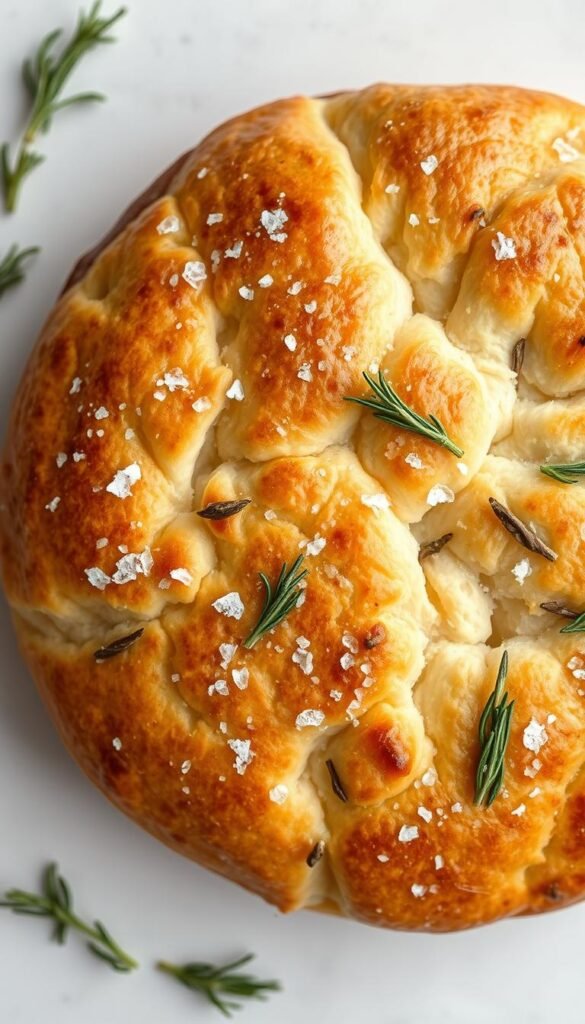
Rosemary and sea salt focaccia is a classic variation that embodies the essence of Italian baking. This traditional recipe combines the aromatic flavors of fresh rosemary with the subtle saltiness of sea salt, all tied together with the richness of high-quality olive oil.
Ingredients List
To make this classic focaccia, you will need the following ingredients:
- 2 cups of warm water
- 2 teaspoons of active dry yeast
- 3 tablespoons of olive oil
- 1 teaspoon of salt
- 4 cups of all-purpose flour
- 2 sprigs of fresh rosemary, chopped
- 1 tablespoon of flaky sea salt
The quality of your ingredients, particularly the olive oil and rosemary, will significantly impact the final flavor of your focaccia.
Key Ingredient: Quality Olive Oil
Using high-quality olive oil is crucial in this recipe. The oil’s flavor becomes prominent, so investing in a good extra virgin olive oil with fruity or peppery notes will complement the rosemary beautifully.
Fresh vs. Dried Rosemary
While fresh rosemary provides superior aromatic qualities, dried rosemary can be a suitable substitute when fresh is not available. However, be sure to adjust the quantity accordingly, as dried rosemary is more potent.
Preparation Method
To prepare the dough, start by combining the warm water and yeast, letting it sit until frothy. Then, add the olive oil, salt, and gradually incorporate the flour until a shaggy dough forms. Knead the dough for about 10 minutes until it becomes smooth and elastic.
Once the dough has risen, dimple the surface with your fingers, then sprinkle the chopped rosemary and sea salt evenly across the top. Drizzle with olive oil, ensuring it pools in the dimples.
Baking Instructions
Preheat your oven to 425°F (220°C). Place the focaccia on a baking sheet lined with parchment paper, positioning it in the center of the oven. Bake for 20-25 minutes, or until the focaccia is golden brown and sounds hollow when tapped.
Serving Suggestions
This classic rosemary and sea salt focaccia is perfect for serving alongside antipasto platters, soups, or as a side to your favorite Italian dishes. It also pairs well with a variety of wines, such as Pinot Grigio or Chianti.
For an authentic Italian experience, consider serving the focaccia with olive oil and balsamic vinegar for dipping.
2. Mediterranean Olive and Herb Focaccia
Transport your taste buds to the Mediterranean with our olive and herb focaccia recipe. This delicious variation combines the salty, savory flavors of Kalamata and green olives with the freshness of herbs like oregano, thyme, and basil, all baked into a crusty Italian bread.
Ingredients List
To make this Mediterranean olive and herb focaccia, you will need the basic focaccia ingredients plus:
- Kalamata olives, pitted
- Green olives, pitted
- Fresh oregano leaves
- Fresh thyme leaves
- Dried basil
- Garlic, minced (optional)
Selecting the Best Olives
Choosing the right olives is crucial for the best flavor. Kalamata olives are recommended for their rich, fruity taste, while green olives add a nice contrast in texture. Ensure they are pitted and drained before use.
Complementary Herbs
Oregano and thyme are classic Mediterranean herbs that pair well with olives. Fresh oregano adds a pungency, while thyme contributes a slightly earthy note. Dried basil can be used for convenience and still packs a flavorful punch.
| Herb | Flavor Profile | Usage |
|---|---|---|
| Oregano | Pungent, earthy | Fresh or dried |
| Thyme | Earthy, slightly minty | Fresh or dried |
| Basil | Sweet, aromatic | Dried |
Preparation Method
Incorporate the olives and herbs into the dough during the final stages of mixing. You can also sprinkle some on top before baking for added flavor and texture. Ensure the olives are evenly distributed to avoid dense pockets.
To prepare, mix the olives and herbs into the dough, then shape it into a round or rectangle. Dimple the dough and drizzle with olive oil. If desired, sprinkle additional olives and herbs on top.
Baking Instructions
Bake the focaccia in a preheated oven at 425°F (220°C) for about 20-25 minutes, or until golden brown. The moisture from the olives may slightly affect the baking time, so keep an eye on it.
Serving Suggestions
This Mediterranean olive and herb focaccia is perfect as part of a meze platter, served alongside Greek salad, hummus, or tzatziki. It can also be used as a base for sandwiches or served as a side to your favorite Mediterranean dishes.
3. Caramelized Onion and Garlic Focaccia
This caramelized onion and garlic focaccia recipe brings together the perfect balance of sweet and savory, creating a richly flavored bread that’s ideal for accompanying soups, serving as a base for sandwiches, or enjoying on its own.
Ingredients List
To make this delicious focaccia, you will need the basic ingredients for focaccia bread, plus some additional items to give it that special caramelized onion and garlic flavor. The key ingredients include:
- 1 large yellow or red onion, thinly sliced
- 3-4 cloves of garlic, depending on whether you prefer roasted or raw
- 2 tablespoons of olive oil
- 1 teaspoon of salt
- 1/2 teaspoon of black pepper
- 1 tablespoon of balsamic vinegar or brown sugar (optional)
- Fresh thyme leaves for garnish
Perfecting Caramelized Onions
Caramelizing onions is a process that requires patience, as it involves cooking the onions slowly over low heat to bring out their natural sweetness. To achieve perfectly caramelized onions, cook them for about 30-40 minutes, stirring occasionally, until they are golden brown and sweet.
Roasted vs. Raw Garlic
The choice between using roasted or raw garlic depends on your flavor preference. Roasted garlic provides a sweeter, more mellow flavor, while raw garlic delivers a more pungent punch. For this recipe, you can choose either based on your taste.
Preparation Method
To prepare the focaccia, start by making the dough using your basic focaccia recipe. While the dough is rising, caramelize the onions and prepare the garlic according to your preference. Once the dough is ready, shape it into a round or rectangle and dimple it with your fingers. Spread the caramelized onions and garlic over the dough, leaving a small border around the edges.
Baking Instructions
Bake the focaccia in a preheated oven at 425°F (220°C) for about 15-20 minutes, or until it’s golden brown and cooked through. Keep an eye on it to prevent the onions from burning.
Serving Suggestions
This caramelized onion and garlic focaccia is versatile and can be served in various ways. It pairs wonderfully with soups like French onion, makes an excellent base for sandwiches, or can be served alongside roasted meats. You can also enjoy it on its own as a flavorful snack.
| Serving Idea | Description |
|---|---|
| With Soups | Pairs well with French onion soup or creamy broths |
| As a Sandwich Base | Use it as the base for savory sandwiches with meats and cheeses |
| Alongside Roasted Meats | Serve it alongside roasted chicken or beef for a hearty meal |
4. Sun-Dried Tomato and Parmesan Focaccia
Elevate your bread game with a sun-dried tomato and Parmesan focaccia that’s bursting with Mediterranean flavors. This variation of the classic Italian bread is not only delicious but also versatile, making it perfect for a variety of occasions.
Ingredients List
To make this sun-dried tomato and Parmesan focaccia, you’ll need the following ingredients in addition to the basic focaccia dough:
- 1 cup sun-dried tomatoes (oil-packed or dry)
- 1/2 cup freshly grated Parmesan cheese
- 2 cloves garlic, minced
- 1 tablespoon olive oil
- 1 teaspoon dried oregano
- Salt and pepper to taste
Oil-Packed vs. Dry Tomatoes
When it comes to sun-dried tomatoes, you have two options: oil-packed or dry. Oil-packed tomatoes are packed in olive oil and have a softer texture, while dry tomatoes are drier and chewier. To use oil-packed tomatoes, simply drain the oil and chop them up. For dry tomatoes, you’ll need to rehydrate them by soaking them in hot water or olive oil before chopping.
Cheese Selection Tips
Parmesan cheese is a popular choice for focaccia due to its nutty, savory flavor. When selecting Parmesan, look for a high-quality, aged Parmigiano-Reggiano. To incorporate the cheese into the dough, grate it finely to ensure it distributes evenly. You can also sprinkle additional Parmesan on top of the focaccia before baking for an extra burst of flavor.
Preparation Method
To prepare the sun-dried tomato and Parmesan focaccia, start by chopping the sun-dried tomatoes and mixing them into the dough along with the minced garlic and dried oregano. After the dough has risen, punch it down and transfer it to a baking sheet. Dimple the dough with your fingers and sprinkle the grated Parmesan cheese on top.
Baking Instructions
Bake the focaccia in a preheated oven at 425°F (220°C) for 15-20 minutes, or until the bread is golden brown and the cheese is melted and bubbly. Keep an eye on the focaccia during the last few minutes to prevent the cheese from burning.
Serving Suggestions
This sun-dried tomato and Parmesan focaccia is perfect for serving alongside Italian dishes, such as pasta with tomato sauce or as a sandwich bread. You can also use it as an appetizer or snack by topping it with additional ingredients like fresh basil or a drizzle of balsamic glaze.
5. Sweet Grape and Rosemary Focaccia
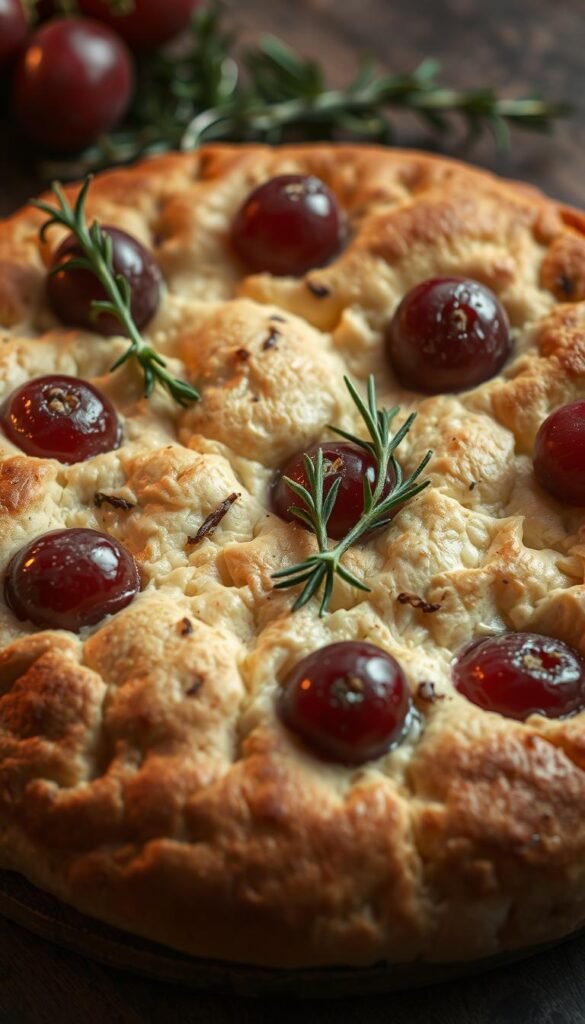
Indulge in the Sweet Grape and Rosemary Focaccia, where the sweetness of grapes meets the earthiness of rosemary. This unique focaccia variation is perfect for those looking to experiment with sweet and savory flavors.
Ingredients List
To make this delightful focaccia, you will need the basic focaccia ingredients, plus fresh grapes, rosemary, a light sprinkle of sugar, and a finishing touch of honey.
- 2 cups of warm water
- 2 teaspoons of active dry yeast
- 3 tablespoons of olive oil
- 1 teaspoon of salt
- 3 cups of all-purpose flour
- 1 cup of fresh grapes (halved)
- 2 sprigs of fresh rosemary
- 1 tablespoon of sugar
- 1 tablespoon of honey
Best Grape Varieties to Use
For the best results, use small, seedless red grapes or Champagne grapes. Their natural sweetness and tender skin make them ideal for baking.
Balancing Sweet and Savory
Achieving a balance between the sweetness of grapes and the savory flavor of rosemary is key. Adjust the amount of salt and rosemary to your taste, and consider adding a drizzle of honey to enhance the contrast.
Preparation Method
To incorporate grapes into your focaccia, gently press them into the dough after the first rise, being careful not to deflate the dough. Sprinkle chopped rosemary over the top for an aromatic flavor.
- Prepare the dough according to the basic focaccia recipe.
- After the first rise, dimple the dough and press in the halved grapes.
- Sprinkle chopped rosemary and a light dusting of sugar over the top.
- Let the dough rise again before baking.
Baking Instructions
Bake the focaccia in a preheated oven at 425°F (220°C) for 20-25 minutes, or until golden brown. Monitor the focaccia to prevent the grapes from burning.
Serving Suggestions
This Sweet Grape and Rosemary Focaccia is versatile and can be served as an appetizer, a side dish, or even as a sophisticated breakfast option. Pair it with cheese boards, charcuterie, or ricotta for a delightful experience.
| Serving Idea | Pairing Suggestion |
|---|---|
| Appetizer | Blue cheese or goat cheese |
| Side Dish | Charcuterie or soups |
| Breakfast | Ricotta or honey |
6. Potato and Herb Focaccia
Indulge in the comforting taste of potato and herb focaccia, a perfect blend of Italian tradition and rustic charm. This variation of focaccia combines the softness of potatoes with the fragrance of herbs, creating a deliciously hearty bread.
Ingredients List
To make potato and herb focaccia, you will need the basic focaccia ingredients along with thinly sliced potatoes and a selection of herbs like rosemary, thyme, and sage. Additional ingredients may include garlic and grated hard cheese for extra flavor.
- 2-3 large potatoes, thinly sliced
- 2 tbsp olive oil
- 2 tbsp fresh rosemary leaves
- 1 tbsp fresh thyme leaves
- 1 tsp garlic powder
- 1 cup grated hard cheese (optional)
- Salt and pepper to taste
Potato Preparation Techniques
For the best results, slice the potatoes extremely thin using a mandoline for consistency. You can either par-boil or roast the potato slices before adding them to the focaccia. Leaving the skins on can add texture and visual appeal.
Herb Combinations
Classic herb pairings that complement potatoes include rosemary and thyme, sage and rosemary, or thyme and garlic. Experiment with different proportions to achieve a balanced flavor.
Preparation Method
To incorporate potatoes into your focaccia, start by arranging the potato slices on top of the dough in an attractive pattern. Ensure even distribution and prevent moisture issues by not overloading the dough. You can drizzle olive oil over the potatoes and sprinkle with herbs and cheese.
Baking Instructions
Baking potato and herb focaccia may require slightly longer baking times due to the added moisture from the potatoes. To achieve crispy edges on the potatoes, bake at a moderate temperature (around 425°F) and keep an eye on the focaccia towards the end of the baking time.
Serving Suggestions
This substantial focaccia is an excellent accompaniment to hearty meals like stews and roasts. It can also serve as a complete light meal when paired with a salad or used as a unique base for open-faced sandwiches.
| Serving Idea | Description |
|---|---|
| Alongside Stews | Serve warm focaccia with a hearty stew for a comforting meal. |
| With Salads | Use the focaccia as a base for a bread salad or serve it on the side. |
| Open-Faced Sandwiches | Top the focaccia with your favorite ingredients for a satisfying snack. |
Seasonal Focaccia Variations
Seasonal ingredients offer a world of possibilities for creating unique and delicious focaccia variations throughout the year. By adapting your focaccia recipes to the freshest ingredients of each season, you can ensure that your baking remains exciting and flavorful, reflecting the best that each time of year has to offer.
Spring and Summer Ingredients
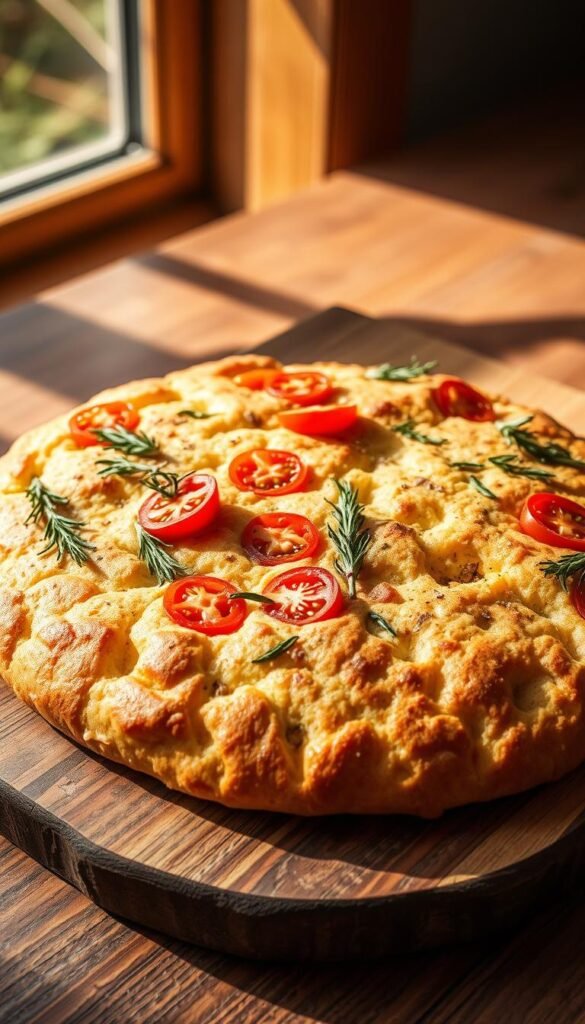
Spring and summer bring a bounty of fresh, vibrant ingredients perfect for creating lighter, more refreshing focaccia. Consider incorporating cherry tomatoes, zucchini blossoms, fresh basil, young garlic, asparagus tips, and edible flowers into your recipes. When using delicate spring and summer ingredients, it’s essential to prepare them in a way that preserves their flavor and color. For vegetables with high water content, partial pre-cooking can help prevent a soggy texture in your focaccia.
| Ingredient | Preparation Tip |
|---|---|
| Cherry Tomatoes | Halve or quarter to release juices |
| Zucchini Blossoms | Gently tear to preserve delicate petals |
| Fresh Basil | Chop just before adding to dough |
For a visually appealing and flavorful spring focaccia, try combining fresh herbs like basil or rosemary with edible flowers. This not only adds a pop of color but also a subtle floral note that complements the herbs.
Fall and Winter Ingredients
As the weather cools, fall and winter ingredients can transform your focaccia into hearty, comforting treats. Ingredients like roasted squash, caramelized root vegetables, hardy herbs such as sage and rosemary, nuts, and dried fruits are perfect for creating robust focaccia variations. These ingredients not only add depth of flavor but also texture, making your focaccia more satisfying for colder weather meals.
| Ingredient | Flavor Profile |
|---|---|
| Roasted Squash | Sweet, nutty |
| Caramelized Root Vegetables | Deep, earthy |
| Hardy Herbs (Sage, Rosemary) | Piney, aromatic |
To create a standout fall or winter focaccia, consider pairing roasted squash with caramelized onions and a sprinkle of sage. This combination brings together the sweetness of the squash, the depth of the onions, and the earthy note of sage, making for a truly comforting and seasonal focaccia.
Pairing Your Focaccia with Meals
Transform your meals with the perfect focaccia pairing, whether as an appetizer, with soups, or in sandwiches. Homemade focaccia can elevate any dining experience, making it a versatile addition to your culinary repertoire.
Focaccia as an Appetizer
Serve your focaccia as an elegant appetizer by pairing it with high-quality olive oil and balsamic vinegar for dipping. You can also incorporate it into antipasto platters or top it with fresh ingredients like tomatoes and basil for a quick bruschetta-style starter. To create an impressive spread, consider arranging your focaccia on a wooden board, surrounded by cured meats, cheeses, and olives. As Giada De Laurentiis once said, “The key to a great antipasto is variety and balance.”
Focaccia with Soups and Stews
Focaccia’s sturdy texture and rich flavor profile make it an ideal accompaniment to a variety of soups and stews. For instance, pair your rosemary focaccia with a hearty white bean soup or match your potato focaccia with a comforting beef stew. The key is to balance the flavors and textures, ensuring that the focaccia complements the soup without overpowering it.
Focaccia Sandwiches
Transform your focaccia into memorable sandwiches by cutting it to the right thickness and filling it with complementary ingredients. For example, use your Mediterranean olive focaccia to make Greek-inspired sandwiches with lamb or your sun-dried tomato focaccia to create Italian-style paninis with cold cuts. The key is to balance the flavors so that the focaccia enhances the filling without being overwhelmed.
By incorporating your homemade focaccia into your meals, you can add a touch of elegance and creativity to your dining experience. Experiment with different pairings and serving ideas to discover your favorite ways to enjoy focaccia.
Troubleshooting Common Focaccia Problems
Making focaccia can sometimes be fraught with difficulties, from dough problems to baking mishaps. Whether you’re a novice or an experienced baker, understanding how to address these issues is crucial for achieving perfect focaccia every time.
Dough Issues
Dealing with dough issues is a critical aspect of focaccia baking. Problems such as sticky or dry dough, inadequate rising, or poor texture can be challenging. The science behind these issues relates to factors like hydration levels, yeast activity, and gluten development.
Sticky Dough: If your dough is too sticky, it may be due to overhydration. Try adding a small amount of flour and knead until the dough reaches the right consistency.
Dry Dough: Conversely, dry dough can result from insufficient water. Gradually add water while kneading until you achieve a smooth, elastic dough.

Fixing Baking Mistakes
Baking mistakes can significantly impact the final result of your focaccia. Issues like dense focaccia, uneven baking, or lack of browning can be attributed to factors such as oven temperature, positioning, and baking time.
Oven Temperature: Ensure your oven is at the correct temperature. An oven that’s too hot or too cold can affect the focaccia’s texture and browning.
“The key to a perfectly baked focaccia lies in understanding your oven’s quirks and adjusting your technique accordingly.”
Baking Time: Keep an eye on your focaccia while it’s baking. Adjust the baking time as needed to prevent overcooking or undercooking.
Storing and Reheating Your Focaccia
Maintaining the quality of your homemade focaccia beyond the day it’s baked requires careful storage and reheating techniques. Whether you’re looking to enjoy your focaccia over several days or store it for later use, understanding the best practices for storage and reheating can make a significant difference.
Best Storage Practices
To keep your focaccia fresh, it’s crucial to store it correctly. For short-term storage (1-2 days), keeping it at room temperature in a paper bag or wrapped in a clean kitchen towel is ideal. This method maintains the crust’s integrity while preventing moisture loss. For medium-term storage (3-4 days), placing the focaccia in an airtight container or plastic bag and refrigerating it is recommended. Although refrigeration may cause some textural changes, you can minimize these effects by wrapping the focaccia tightly. For longer storage, freezing is the best option. Wrap your focaccia tightly in plastic wrap or aluminum foil, portion it into manageable sizes if needed, and label it before placing it in the freezer. Frozen focaccia can be stored for up to three months.
Tips for Freezing: When freezing, it’s helpful to portion your focaccia into individual servings. This way, you can thaw and reheat only what you need, preserving the rest for later. Always label your stored focaccia with the date to keep track of how long it’s been stored.
Reheating Methods
Reheating focaccia can revive its freshly baked qualities. There are several methods to reheat focaccia, each with its benefits. Oven reheating is one of the best methods for maintaining texture; simply preheat your oven to 375°F (190°C), place the focaccia on a baking sheet, and heat for 5-10 minutes, or until it’s warmed through and slightly crispy. For individual portions, using a toaster or toaster oven is convenient and quick. Microwave reheating is another fast option, though it may slightly compromise the texture; wrap the focaccia in a damp paper towel to help retain moisture. Stovetop reheating, such as pan-toasting with a bit of olive oil, can also add a delicious crispy crust to your focaccia.
Reheating Tips: Regardless of the reheating method, keeping an eye on your focaccia is crucial to prevent overcooking. For microwave reheating, start with short intervals (20-30 seconds) and check the focaccia until it’s heated through to your liking.
Conclusion
With the variety of easy focaccia recipes explored, it’s clear that homemade focaccia is within everyone’s reach. From classic rosemary and sea salt to sweet grape and rosemary, the possibilities for focaccia variations are endless, making Italian bread baking a fun and creative experience.
By mastering basic techniques such as proper hydration, using good olive oil, allowing adequate rising time, and the signature dimpling, home bakers can produce high-quality focaccia. Whether you’re making it as an appetizer, pairing it with soups and stews, or using it for sandwiches, homemade focaccia is sure to impress.
As you continue your Italian bread baking journey, don’t be afraid to experiment with new ingredients and flavors. Try out different focaccia variations based on seasonal ingredients and personal preferences. With practice and patience, you’ll become proficient in making delicious homemade focaccia that’s perfect for any occasion.
The joy of sharing freshly baked focaccia with family and friends is a simple pleasure that connects us to centuries of culinary tradition. So, get baking and enjoy the process of creating your own signature focaccia recipes.