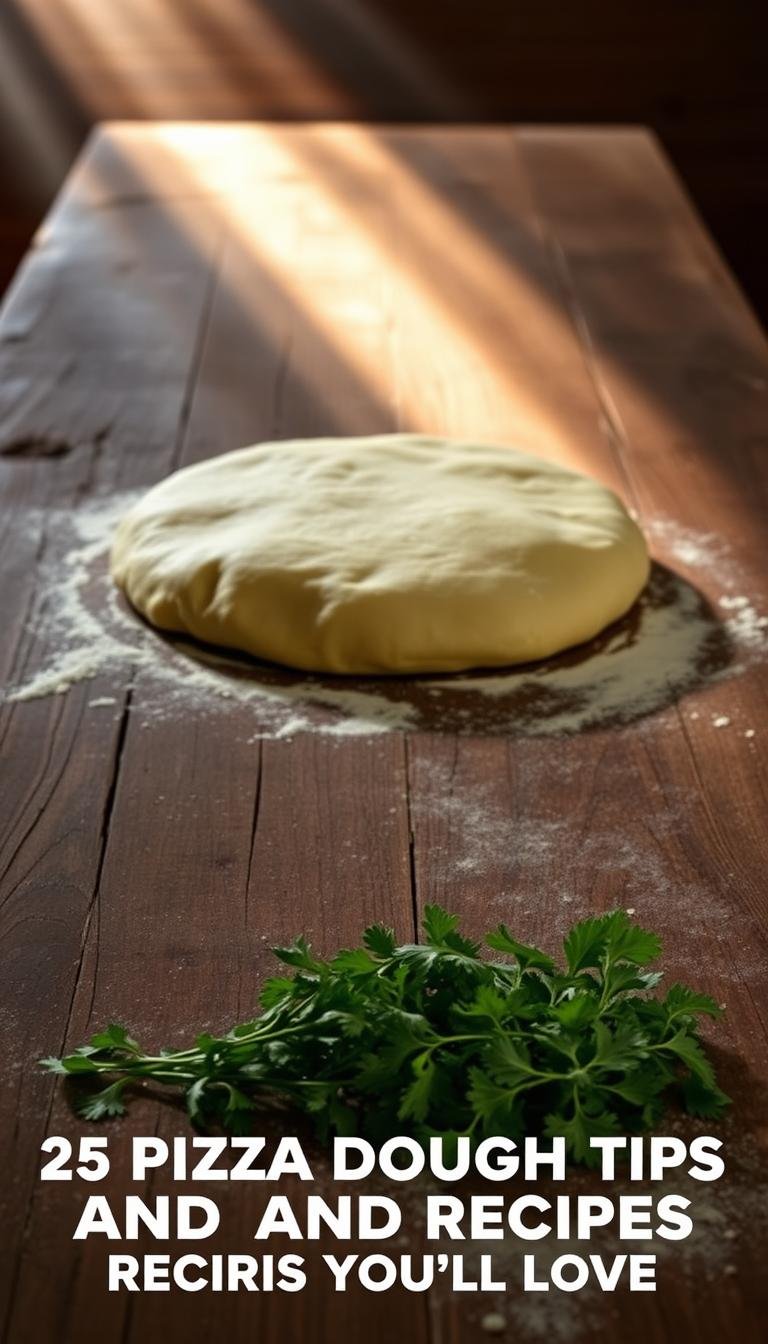
25 Pizza Dough Tips and Recipes You’ll Love
Making homemade pizza dough from scratch can be a game-changer for any pizza enthusiast. With the right techniques and recipes, you can achieve a delicious, restaurant-quality crust that rivals your favorite pizzeria.
This Website contains affiliate links. That means I may earn a small commission if you purchase through my links, at no extra cost to you.
Did you know that the key to a perfect pizza crust lies in the dough preparation? By mastering a few simple pizza making tips, you can elevate your homemade pizzas to the next level.
From classic Neapolitan to modern gourmet styles, having the right pizza recipes at your disposal can help you create a wide variety of mouth-watering pizzas. Whether you’re a beginner or an experienced home cook, this comprehensive guide will provide you with the tools and expertise needed to make exceptional homemade pizzas.
Key Takeaways
- Mastering homemade pizza dough from scratch
- Understanding the importance of dough preparation
- Learning simple pizza making tips for a perfect crust
- Exploring various pizza recipes for different styles
- Achieving restaurant-quality homemade pizzas
The Art of Perfect Pizza Dough
Crafting the perfect pizza dough is an art that elevates homemade pizzas to a whole new level. The process of making pizza dough from scratch allows for a depth of flavor and texture that is hard to achieve with store-bought alternatives. By controlling the ingredients and the preparation process, individuals can tailor their dough to suit their personal preferences, whether that’s a crispy crust or a chewy center.
Why Homemade Pizza Dough Makes All the Difference
Homemade pizza dough offers several benefits over its store-bought counterpart. Firstly, it allows for control over ingredients, enabling individuals to avoid preservatives and additives commonly found in commercial dough. Secondly, homemade dough can be made fresh, ensuring optimal flavor and texture. Lastly, the ability to customize recipes means that pizza enthusiasts can experiment with different flavors and ingredients to create unique pizzas.
The difference in taste and texture between homemade and store-bought dough is significant. Homemade dough has a freshness and depth of flavor that is often lacking in commercial products. Moreover, the satisfaction of creating something from scratch adds to the overall pizza-eating experience.
Essential Equipment for Pizza Dough Success
To achieve success with pizza dough, having the right equipment is crucial. Essential tools include a large mixing bowl for combining ingredients, measuring cups and scales for accuracy, and a pizza stone or steel for achieving a perfectly cooked crust. Additionally, a pizza peel is helpful for transferring dough to the oven, and a stand mixer or food processor can simplify the dough kneading process.
Investing in the right equipment not only makes the pizza-making process more efficient but also enhances the overall quality of the final product. With the proper tools, individuals can focus on perfecting their dough recipe and technique, leading to consistently delicious homemade pizzas.
Pizza Dough Fundamentals
Crafting the perfect pizza dough begins with understanding its fundamental components. The quality and characteristics of pizza dough are determined by the type of flour used, the role of yeast in fermentation, and the impact of water temperature and hydration levels.
Understanding Flour Types for Pizza
The type of flour used is crucial in determining the texture and flavor of the pizza crust. Different types of flour, such as “00” flour, bread flour, all-purpose flour, and semolina flour, have varying protein contents that affect the dough’s strength and elasticity. For instance, “00” flour, with its low protein content, is ideal for Neapolitan-style pizzas, while bread flour, with its higher protein content, is better suited for crusts that require more chew.
| Flour Type | Protein Content | Best Use |
|---|---|---|
| “00” Flour | 9-11% | Neapolitan-style pizzas |
| Bread Flour | 12-14% | Pizzas requiring chewy crusts |
| All-purpose Flour | 10-12% | General-purpose pizzas |
| Semolina Flour | 12-15% | Sicilian-style pizzas |
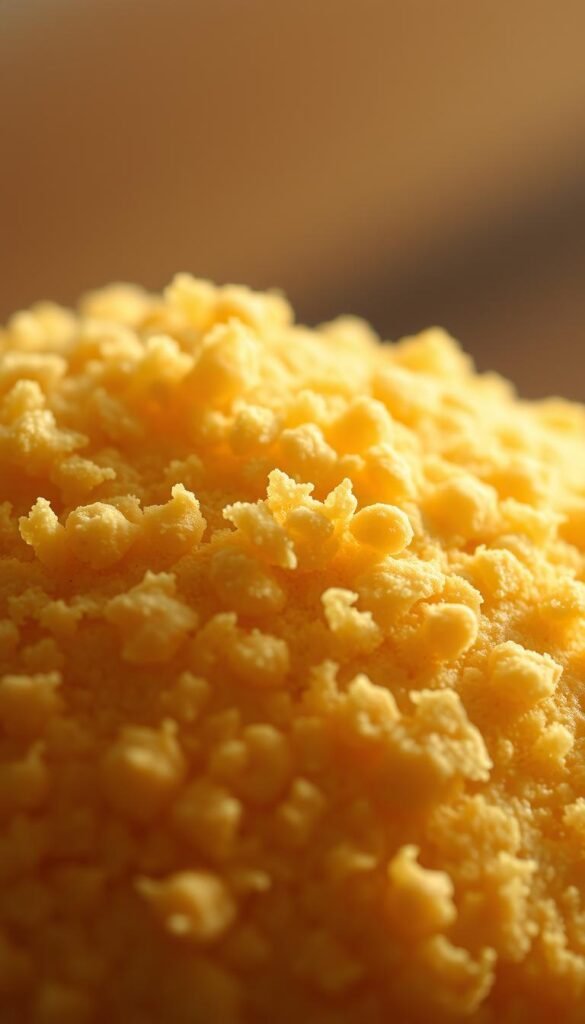
The Role of Yeast in Pizza Dough
Yeast is a critical ingredient in pizza dough, responsible for fermentation and the development of flavor and texture. Different types of yeast, including active dry yeast, instant yeast, and fresh yeast, can be used depending on the desired fermentation time and flavor profile. Proper activation of yeast is essential for successful dough rise.
Water Temperature and Hydration Levels
Water temperature and hydration levels significantly impact dough development and final crust characteristics. The ideal water temperature for pizza dough is between 90°F and 100°F, which helps to activate yeast and facilitate dough development. Hydration levels, expressed as a percentage of water relative to flour weight, affect the dough’s workability and crust texture.
- Low hydration (50-60%): Results in a denser crust
- High hydration (70-80%): Produces a lighter, airier crust
25 Pizza Dough Tips and Recipes You’ll Love
Elevate your pizza game by learning the essential tips for making exceptional pizza dough. Mastering these techniques will help you create delicious, authentic pizzas at home.
Tip 1: Weighing Ingredients for Consistency
To achieve consistent results, it’s crucial to weigh your ingredients accurately. Using a kitchen scale to measure flour and water ensures that your dough is made with the right proportions. This precision helps in achieving a reliable texture and flavor in your pizzas.
- Invest in a digital kitchen scale for accurate measurements.
- Measure flour and water by weight, not volume, for consistency.
Tip 2: Proper Kneading Techniques
Kneading is a critical step in developing the gluten in your pizza dough. Whether you knead by hand or using a machine, the goal is to achieve a smooth, elastic dough. Proper kneading techniques help distribute yeast evenly and develop the dough’s structure.
Key kneading tips:
- Knead for the right amount of time (usually 5-10 minutes).
- Use a stand mixer with a dough hook attachment for efficient kneading.
Tip 3: The Windowpane Test for Perfect Gluten Development
The windowpane test is a simple method to check if your dough has been kneaded enough. By stretching a small piece of dough to a thin, translucent sheet, you can determine if the gluten is properly developed. This test helps prevent over-kneading, which can lead to a tough crust.
Tip 4: Cold Fermentation for Enhanced Flavor
Cold fermentation involves letting your dough rise in the refrigerator, which slows down the fermentation process. This technique enhances the flavor and texture of your pizza crust, making it more complex and chewy.
Benefits of cold fermentation:
- Improved flavor development.
- Better texture and crust structure.
Tip 5: Room Temperature Resting Before Shaping
Before shaping your dough, let it rest at room temperature to allow it to relax. This step makes the dough easier to shape and helps prevent tearing.
Tip 6: Proper Dough Stretching Methods
Stretching your dough correctly is crucial for achieving the desired thickness and preserving gas bubbles. Gentle stretching techniques help maintain the dough’s structure, resulting in a lighter crust.
Tip 7: Creating the Perfect Crust Edge
The crust edge, or crust rim, is an essential part of a pizza’s appearance and texture. Techniques for creating the perfect crust edge include proper shaping and crimping methods.
Tips for a perfect crust edge:
- Use a consistent shaping technique.
- Crimp the edges to create a decorative border.
Tip 8: Using a Pizza Stone or Steel
Using a pizza stone or steel in your oven can significantly improve your pizza’s crust. These tools absorb moisture and distribute heat evenly, resulting in a crispy bottom crust.
Benefits of pizza stones and steels:
- Crispy crust bottom.
- Even cooking and browning.
Tip 9: Preheating Your Oven Properly
Preheating your oven to the right temperature is crucial for cooking pizzas quickly and evenly. Ensure your oven is at the correct temperature before baking.
Tip 10: Storing and Freezing Pizza Dough
Knowing how to store and freeze pizza dough is essential for making pizza at your convenience. Proper storage techniques help maintain the dough’s quality.
Storage tips:
- Store dough in an airtight container in the refrigerator.
- Freeze dough balls for up to 3 months.
Troubleshooting Common Pizza Dough Problems
Mastering pizza dough is an art, but it’s not without its challenges, and knowing how to troubleshoot common issues can elevate your pizza game. Whether you’re a seasoned pizza enthusiast or just starting out, encountering problems with your dough can be frustrating. However, understanding the causes and solutions to these issues can significantly improve your pizza-making skills.
When Your Dough Is Too Sticky
Sticky pizza dough is a common issue that can be caused by excessive hydration or insufficient kneading. To fix this, you can try adding a small amount of flour to balance the hydration level. It’s essential to incorporate the flour gradually to avoid over-flouring the dough.
Another approach is to adjust your environment. High humidity can contribute to sticky dough, so working in a cooler, drier area or using a dehumidifier can help. Additionally, ensuring your dough is kneaded adequately will help develop the gluten, making the dough less sticky and more manageable.
| Cause | Solution |
|---|---|
| Excessive hydration | Add flour gradually |
| Insufficient kneading | Knead adequately to develop gluten |
| High humidity | Work in a drier environment or use a dehumidifier |
Fixing Tough or Dense Dough
Tough or dense pizza dough can result from overworking the dough, using improper ingredient ratios, or not allowing sufficient proofing time. To address this, first, check your ingredient ratios and ensure you’re not overworking the dough during the mixing and kneading process.
Allowing the dough adequate time to proof is crucial. Underproofed dough can lead to a dense crust. Ensure you’re giving your dough enough time to rise, and consider using a slower, colder fermentation process to enhance flavor and texture.
- Check ingredient ratios
- Avoid overworking the dough
- Allow sufficient proofing time
Dealing with Dough That Won’t Rise
Dough that won’t rise can be due to several factors, including inactive yeast, incorrect yeast quantity, or unfavorable environmental conditions. First, ensure your yeast is active and not past its expiration date.
Check the temperature of your environment; yeast thrives in warm, draft-free areas. If your dough isn’t rising, try adjusting the temperature or using a proofing box to create a more favorable environment.
Preventing Dough from Tearing During Stretching
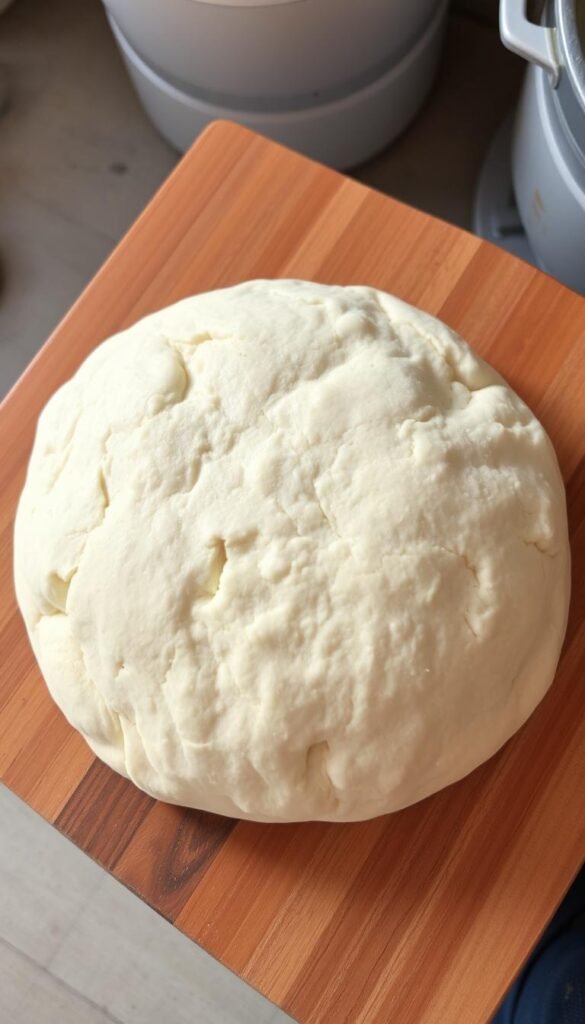
Tearing during stretching can be prevented by ensuring your dough is at the right temperature and has been allowed to rest adequately. Cold dough is more prone to tearing, so letting it come to room temperature before shaping can help.
Gently handling the dough and using the right stretching techniques can also minimize tearing. Supporting the dough as you stretch it and avoiding over-stretching will help maintain its integrity.
- Bring dough to room temperature
- Handle dough gently
- Avoid over-stretching
Classic Pizza Dough Recipes
From Neapolitan to Sicilian, each classic pizza dough recipe tells a story of its origin and the techniques that make it unique. In this section, we’ll explore five iconic pizza dough recipes that have gained popularity worldwide, each representing different regional styles and techniques.
1. Authentic Neapolitan Pizza Dough
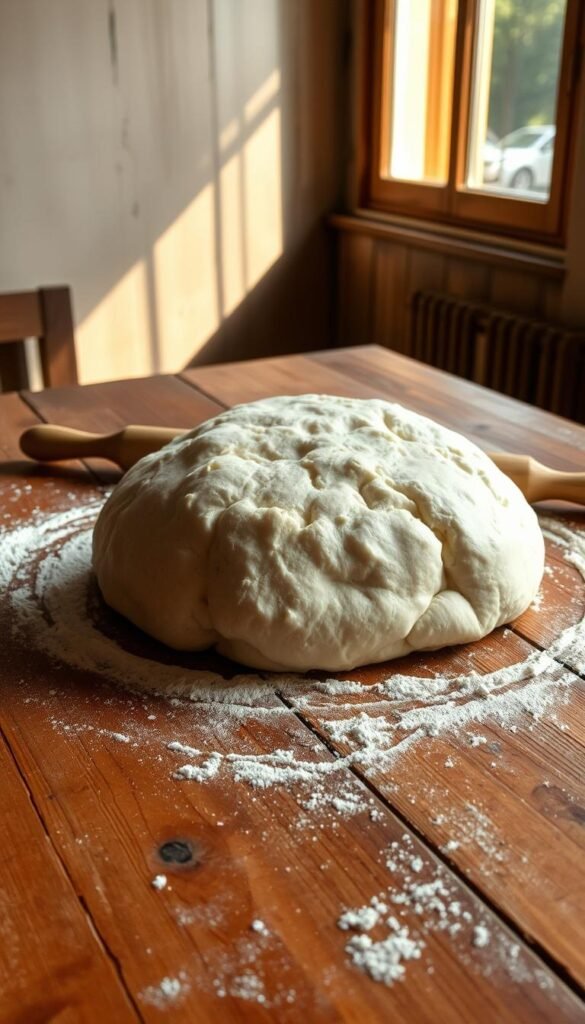
Neapolitan pizza, originating from Naples, Italy, is known for its soft, chewy crust with charred spots. The simplicity of its ingredients and the fermentation process contribute to its characteristic taste.
Ingredients and Equipment
- 00 flour: 1 kg
- Water: 625 ml
- Salt: 20 grams
- Active dry yeast: 1 gram
- Equipment: Wood-fired oven or a domestic oven with a pizza stone
Step-by-Step Instructions
- Mix flour, water, salt, and yeast to form a dough.
- Knead the dough for 10 minutes until smooth.
- Let it ferment at room temperature for 12-24 hours.
- Shape into balls and let them rest before shaping into disks.
- Bake in a preheated oven at the highest temperature for 10-12 minutes.
2. New York-Style Thin Crust Dough
New York-style pizza is famous for its large, thin, and foldable slices. The dough includes oil and sugar to enhance flexibility and browning.
Ingredients and Equipment
- Bread flour: 1 kg
- Water: 570 ml
- Salt: 20 grams
- Sugar: 20 grams
- Olive oil: 20 grams
- Active dry yeast: 1 gram
- Equipment: Stand mixer, pizza peel, and a deck oven or a domestic oven with a baking steel
Step-by-Step Instructions
- Combine flour, water, salt, sugar, and yeast in a mixer.
- Knead until the dough is smooth and elastic.
- Let it rise for 1-2 hours until doubled in size.
- Divide into portions, shape into balls, and let them rest.
- Stretch into disks and top with ingredients.
- Bake at high temperature for 10-15 minutes.
3. Chicago Deep Dish Pizza Dough
Chicago Deep Dish pizza is known for its thick crust and thick layers of cheese, meats, and vegetables. The dough is made with cornmeal and is rich in butter.
Ingredients and Equipment
- Bread flour: 500 grams
- Cornmeal: 250 grams
- Water: 350 ml
- Salt: 10 grams
- Unsalted butter, melted: 100 grams
- Active dry yeast: 1 gram
- Equipment: Deep-dish pizza pan, mixing bowl
Step-by-Step Instructions
- Mix flour, cornmeal, water, salt, and yeast.
- Knead until combined, then let it rest.
- Roll out the dough and place it in a greased deep-dish pan.
- Top with ingredients and bake at 425°F (220°C) for 25-35 minutes.
4. Sicilian-Style Square Pizza Dough
Sicilian pizza is characterized by its thick, square crust, often topped with a thick layer of sauce, cheese, and various meats or vegetables.
Ingredients and Equipment
- Bread flour: 1 kg
- Water: 700 ml
- Salt: 20 grams
- Active dry yeast: 1 gram
- Olive oil: for greasing
- Equipment: Square baking pan
Step-by-Step Instructions
- Mix flour, water, salt, and yeast to form a high-hydration dough.
- Let it rise until doubled, then pour into a greased square pan.
- Let it rise again, then top with sauce, cheese, and toppings.
- Bake at 400°F (200°C) for 25-30 minutes.
5. Sourdough Pizza Crust
Sourdough pizza crust is made using a natural starter culture instead of commercial yeast, giving it a unique tangy flavor and chewy texture.
Ingredients and Equipment
- Bread flour: 1 kg
- Sourdough starter (active): 200 grams
- Water: 650 ml
- Salt: 20 grams
- Equipment: Mixing bowl, proofing basket, pizza peel
Step-by-Step Instructions
- Mix flour, sourdough starter, water, and salt to form a dough.
- Knead until smooth, then let it ferment for several hours or overnight.
- Shape into balls and let them rest before shaping into disks.
- Bake in a preheated oven at high temperature for 12-15 minutes.
Each of these classic pizza dough recipes offers a unique pizza experience, from the soft Neapolitan crust to the thick, cheesy Chicago Deep Dish. Experimenting with these recipes can help you find your perfect pizza.
Quick and Easy Pizza Dough Recipes
For those who crave homemade pizza but are short on time, quick and easy pizza dough recipes are a game-changer. These recipes are designed to help busy home cooks achieve delicious, homemade pizza without the lengthy preparation time. Whether you’re looking for a speedy solution for a weeknight dinner or a recipe that can be prepared ahead of time, we’ve got you covered.
6. Quick 1-Hour Pizza Dough
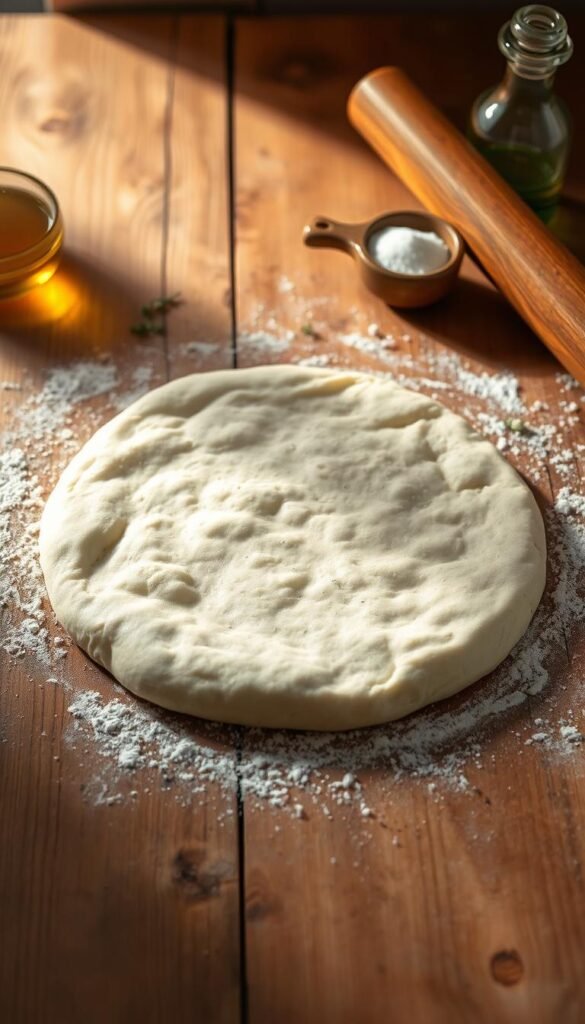
This recipe is perfect for when you need pizza in a hurry. By using a bit more yeast and warm water, you can have a delicious homemade pizza ready in just one hour.
Ingredients and Equipment
To make this quick dough, you’ll need 2 cups of warm water, 2 teaspoons of sugar, 1 tablespoon of active dry yeast, 3 1/2 cups of all-purpose flour, 1 teaspoon of salt, and 2 tablespoons of olive oil. You’ll need a large mixing bowl, a measuring cup, and a baking sheet or pizza stone.
Step-by-Step Instructions
Start by combining the warm water, sugar, and yeast in a large bowl. Let it sit for 5-10 minutes until the yeast is activated. Then, add the flour, salt, and olive oil, and mix until a dough forms. Knead the dough for 5-7 minutes until it becomes smooth and elastic. Let it rest for 10-15 minutes before shaping it into your pizza crust. Top with your favorite ingredients and bake in a preheated oven at 425°F (220°C) for 15-20 minutes.
7. Overnight No-Knead Pizza Dough
This recipe is ideal for those who prefer to plan ahead. By letting the dough rest overnight, you can achieve a delicious, crusty pizza with minimal effort.
Ingredients and Equipment
You’ll need 1 1/2 cups of warm water, 1 teaspoon of sugar, 1/4 teaspoon of active dry yeast, 3 1/2 cups of all-purpose flour, 1 teaspoon of salt. A large mixing bowl and a Dutch oven or a heavy-duty pot with a lid are necessary.
Step-by-Step Instructions
Combine the warm water, sugar, and yeast in a bowl. Add the flour and salt, and mix until just combined. Cover the bowl with plastic wrap and let it rest at room temperature for 12-24 hours. Preheat your oven to 450°F (230°C) with a Dutch oven or a heavy-duty pot inside. Shape the dough into a ball, place it in the preheated pot, and bake for 25-35 minutes.
8. Food Processor Pizza Dough
Using a food processor can significantly reduce the time and effort needed to make pizza dough. This method produces a smooth, elastic dough in just a few minutes.
Ingredients and Equipment
Gather 2 cups of all-purpose flour, 1 teaspoon of salt, 1 tablespoon of sugar, 1 packet of active dry yeast, 1 cup of warm water, and 2 tablespoons of olive oil. A food processor with a dough blade attachment is required.
Step-by-Step Instructions
Combine the flour, salt, sugar, and yeast in the food processor bowl. Process for a few seconds to mix. With the processor running, slowly add the warm water and olive oil. Process until the dough forms a ball. Let it rest for 1-2 hours before shaping and topping. Bake in a preheated oven at 425°F (220°C) for 15-20 minutes.
9. Beer Pizza Dough
Adding beer to your pizza dough can enhance the flavor and help with rising, creating a unique and delicious crust.
Ingredients and Equipment
You’ll need 2 cups of all-purpose flour, 1 teaspoon of salt, 1 tablespoon of sugar, 1 packet of active dry yeast, 1 cup of beer, and 2 tablespoons of olive oil. A large mixing bowl and a baking sheet or pizza stone are necessary.
Step-by-Step Instructions
Combine the flour, salt, sugar, and yeast in a bowl. Add the beer and olive oil, and mix until a dough forms. Knead the dough for 5-7 minutes until it becomes smooth and elastic. Let it rest for 1-2 hours before shaping and topping. Bake in a preheated oven at 425°F (220°C) for 15-20 minutes.
Specialty Pizza Dough Recipes
For those looking to diversify their pizza-making skills, specialty pizza dough recipes offer a world of flavor and innovation. Whether you’re catering to dietary restrictions or simply looking to try something new, these recipes provide a range of options to enhance your pizza experience.
Gluten-Free Pizza Dough
Creating a gluten-free pizza dough that’s both delicious and structurally sound can be challenging, but with the right blend of flours and techniques, it’s entirely achievable. The key is using a combination of rice flour, tapioca flour, and potato starch, along with xanthan gum to help with dough elasticity.
Ingredients and Equipment
To make gluten-free pizza dough, you’ll need rice flour, tapioca flour, potato starch, xanthan gum, yeast, salt, sugar, and warm water. A stand mixer with a dough hook attachment is highly recommended for mixing.
Step-by-Step Instructions
Begin by combining dry ingredients in the mixer, then gradually add warm water and mix until a dough forms. Knead for about 5 minutes until smooth, then let it rise before shaping and baking.
Whole Wheat Pizza Dough
Whole wheat pizza dough offers a nutritious alternative to traditional white flour crusts, with a nuttier flavor and denser texture. To prevent heaviness, it’s essential to balance whole wheat flour with some white flour and to use proper kneading techniques.
Ingredients and Equipment
You’ll need whole wheat flour, all-purpose flour, yeast, salt, sugar, olive oil, and warm water. A food processor or stand mixer is useful for kneading.
Step-by-Step Instructions
Combine dry ingredients, then add wet ingredients and mix until a dough forms. Knead for about 10 minutes until the dough is smooth and elastic, then let it rise before shaping and baking.
Herb-Infused Pizza Dough
Infusing pizza dough with herbs like rosemary, basil, or oregano can add a delightful aromatic flavor. The key is to balance the amount of herbs so they complement rather than overpower the other flavors.
Ingredients and Equipment
You’ll need all-purpose flour, yeast, salt, sugar, olive oil, warm water, and your choice of fresh or dried herbs.
Step-by-Step Instructions
Mix dry ingredients, then add wet ingredients and herbs. Knead until the dough is smooth and elastic, let it rise, then shape and bake.
Garlic Butter Pizza Dough
Garlic butter pizza dough combines the richness of butter with the pungency of garlic, creating a deliciously aromatic crust. The challenge is incorporating these ingredients without affecting yeast activity.
Ingredients and Equipment
You’ll need all-purpose flour, yeast, salt, sugar, garlic, unsalted butter, and olive oil.
Step-by-Step Instructions
Make the dough as usual, then brush with garlic butter before baking. To make garlic butter, mix softened butter with minced garlic.
Cauliflower Pizza Crust
A cauliflower pizza crust is a low-carb alternative that’s surprisingly satisfying. The trick is to remove as much moisture as possible from the cauliflower to prevent a soggy crust.
Ingredients and Equipment
You’ll need cauliflower, cheese, egg, and seasonings. A food processor and cheesecloth or a clean kitchen towel are essential.
Step-by-Step Instructions
Process cauliflower into “rice,” cook, and squeeze out moisture. Mix with cheese, egg, and seasonings, shape into a crust, and bake until golden.
Keto-Friendly Pizza Dough
A keto-friendly pizza dough uses almond flour, coconut flour, and psyllium husk to create a low-carb crust that’s still satisfying. The key is getting the right balance of ingredients for texture and flavor.
Ingredients and Equipment
You’ll need almond flour, coconut flour, psyllium husk, eggs, and cheese. A mixing bowl and baking sheet are necessary.
Step-by-Step Instructions
Combine dry ingredients, then add eggs and mix until a dough forms. Shape into a circle or rectangle, and bake until firm and lightly golden.
Creative Pizza Dough Variations
The world of pizza dough is vast and exciting, with numerous creative variations waiting to be discovered. As we continue our journey into the realm of pizza making, it’s time to push the boundaries of traditional pizza dough and explore new flavors and techniques.
Stuffed Crust Pizza Dough
Stuffed crust pizza is a crowd-pleaser, and with the right technique, you can achieve a perfectly sealed crust filled with your favorite ingredients. To make a stuffed crust pizza dough, you’ll need to create a ring of dough around the edge of your pizza, fill it with cheese or other fillings, and then seal it with another ring of dough.
Ingredients and Equipment
You’ll need pizza dough, cheese or fillings of your choice, and a pizza peel or baking sheet. Ensure your dough is at room temperature for easier handling.
Step-by-Step Instructions
1. Roll out your pizza dough to the desired thickness. 2. Create a ring around the edge of the dough. 3. Fill the ring with your chosen filling. 4. Seal the ring with another piece of dough. 5. Bake until golden brown.
Grilled Pizza Dough
Grilling pizza dough adds a smoky flavor and a crispy texture that’s hard to achieve with traditional baking. To grill pizza dough, you’ll need to adjust your dough recipe to include a higher oil content to prevent sticking.
Ingredients and Equipment
You’ll need pizza dough with a higher oil content, a grill, and a pizza peel or tongs. Preheating your grill is crucial for a perfectly cooked crust.
Step-by-Step Instructions
1. Preheat your grill to high heat. 2. Roll out your pizza dough to the desired thickness. 3. Place the dough on the grill and cook for 1-2 minutes. 4. Flip and top with your favorite ingredients. 5. Cook until the crust is golden brown.
Dessert Pizza Dough
Dessert pizzas are a sweet twist on traditional savory pizzas. To make a dessert pizza dough, you’ll need to modify your traditional dough recipe with sweeteners and fats.
Ingredients and Equipment
You’ll need a sweetened pizza dough, fruit or chocolate toppings, and a pizza stone or baking sheet. Sweet dough requires a shorter baking time.
Step-by-Step Instructions
1. Roll out your sweetened pizza dough. 2. Top with your chosen dessert toppings. 3. Bake until the crust is golden brown. 4. Serve with whipped cream or ice cream.
| Dough Variation | Key Ingredients | Baking Instructions |
|---|---|---|
| Stuffed Crust | Cheese or fillings, pizza dough | Bake at 425°F for 15-20 minutes |
| Grilled Pizza | Higher oil content dough, toppings | Grill at high heat for 1-2 minutes per side |
| Dessert Pizza | Sweetened dough, fruit or chocolate | Bake at 400°F for 10-15 minutes |
Pretzel Pizza Dough
Pretzel pizza dough combines the best of both worlds, offering a salty, chewy crust with the flexibility of pizza dough. To make pretzel pizza dough, you’ll need to use an alkaline bath, typically made with baking soda or food-grade lye.
Ingredients and Equipment
You’ll need pizza dough, baking soda or lye, and a large pot for the alkaline bath. Handling lye requires caution and protective gear.
Step-by-Step Instructions
1. Prepare your alkaline bath. 2. Shape your dough into pretzel forms. 3. Bathe the dough in the alkaline solution. 4. Bake until golden brown.
Focaccia-Style Pizza Dough
Focaccia-style pizza dough is dimpled and rich with olive oil, making it a perfect base for a variety of toppings. To make focaccia-style pizza dough, you’ll need to adjust your hydration levels and handling techniques.
Ingredients and Equipment
You’ll need a high-hydration pizza dough, olive oil, and a baking sheet. Dimpling the dough is crucial for the characteristic focaccia texture.
Step-by-Step Instructions
1. Prepare your high-hydration dough. 2. Dimple the dough with your fingers. 3. Drizzle with olive oil. 4. Bake until golden brown.
Advanced Pizza Dough Techniques
The art of pizza making is elevated significantly by incorporating advanced dough techniques into your repertoire. Mastering these sophisticated methods can transform your homemade pizzas into culinary masterpieces. Professional pizzaiolos around the world swear by these techniques to create dough that’s not just a base for toppings, but a flavorful foundation that enhances the entire pizza-eating experience.
Long Fermentation Methods
Long fermentation is a game-changer for pizza dough, allowing for complex flavors to develop through enzymatic activity. A multi-day cold fermentation process, often exceeding 72 hours, can significantly enhance the dough’s flavor profile. To achieve this, maintain a consistent refrigerator temperature between 38°F to 42°F (3°C to 6°C). Visual indicators of proper development include a dough that has doubled or tripled in size, with a smooth, shiny surface and a slightly sour aroma. As Franco Pepe, a renowned Neapolitan pizzaiolo, once said, “The longer you let the dough ferment, the more complex the flavor will be.”
Experimenting with Artisanal Flours
Venturing beyond basic white flour can significantly impact your pizza dough’s texture and flavor. Artisanal flours such as heritage wheat varieties or regional Italian flours offer unique characteristics that can elevate your pizza. For instance, “Caputo ’00’ flour” is a popular choice among pizzaiolos for its fine texture and superior performance. Experimenting with custom blending techniques can also help achieve specific texture and flavor profiles. As you explore different flours, pay attention to how they affect the dough’s hydration levels and kneading requirements.
Adding Flavor Enhancers to Your Dough
To add depth and complexity to your pizza dough, consider incorporating advanced flavor enhancers. Ingredients like diastatic malt powder, various honey types, olive oil infusions, and sourdough discard can significantly enhance the dough’s flavor. For example, adding a small amount of diastatic malt powder can improve the dough’s browning and crust flavor. As
“The key to a great pizza crust is in the details, like the type of malt you use,”
notes
. Experiment with different combinations to find your perfect blend.
Professional Stretching Techniques
Achieving the perfect crust requires mastering professional stretching techniques. The authentic Neapolitan hand-stretching method is particularly effective, preserving gas bubbles while creating a thickness gradient from center to edge. To practice this technique, start by gently lifting and rotating the dough, gradually increasing the tension as you shape it. The goal is to create a crust that’s thin and crispy on the edges while remaining soft and airy in the center.
Baking with High Heat Methods
To replicate the intense heat of professional pizza ovens at home, explore various high heat baking methods. Using a pizza steel or stone can significantly improve your oven’s performance. Preheating these surfaces to extremely high temperatures (500°C/932°F or more) can achieve a perfectly cooked crust in a matter of minutes. Additionally, utilizing your oven’s broiler can add an extra layer of browning and crispiness to your crust. Experiment with different oven modifications and cooking techniques to find what works best for you.
Conclusion
Achieving homemade pizza mastery is within reach with the right combination of fundamental knowledge, practical tips, and diverse recipes. By understanding the importance of quality ingredients, proper fermentation, and technique development, you can create truly personalized pizzas that surpass commercial alternatives.
The pizza dough techniques outlined in this article provide a solid foundation for experimenting with various styles and flavors. From classic Neapolitan and New York-style to gluten-free and keto-friendly options, the best pizza dough recipes offer endless possibilities for creativity and innovation.
As you continue to practice and refine your skills, you’ll discover that pizza-making is both a science and an art that improves with experience. Start with basic recipes and gradually experiment with more advanced methods to develop your unique style.
Share your experiences, adaptations, and questions with the community to further enhance your homemade pizza mastery. Explore new sauce creations, topping combinations, and cooking equipment to take your pizza game to the next level.